Yellow Belly Ball Python Scientific Classification
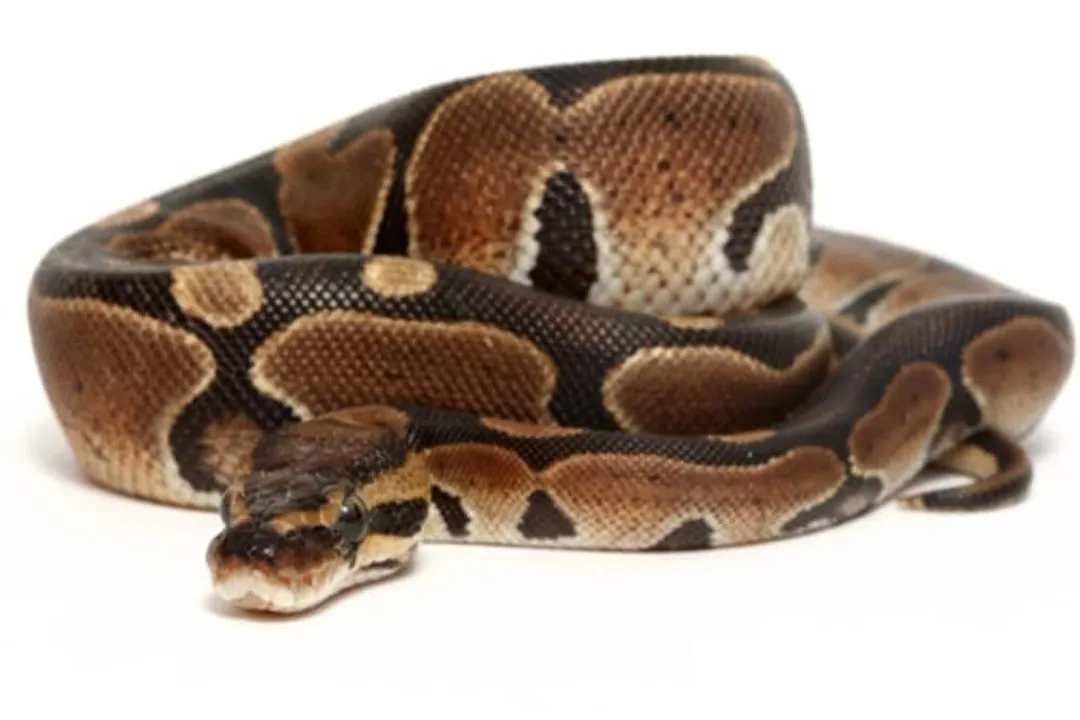
The lineage of the Yellow Belly Ball Python, a sought-after color variation in the reptile-keeping hobby, begins deep within the formal structure of biological classification. While hobbyists often focus on the visual appeal of specific color morphs, understanding where this animal fits into the grand scheme of life provides essential context for its biology, conservation status, and husbandry requirements. The creature known widely as the Ball Python, or sometimes the Royal Python in various regions, holds the scientific designation of Python regius. To grasp the "Yellow Belly" aspect fully, one must first trace the path of its parent species through the established ranks of taxonomy, from the broadest grouping down to the species level.
# Hierarchical Ranks
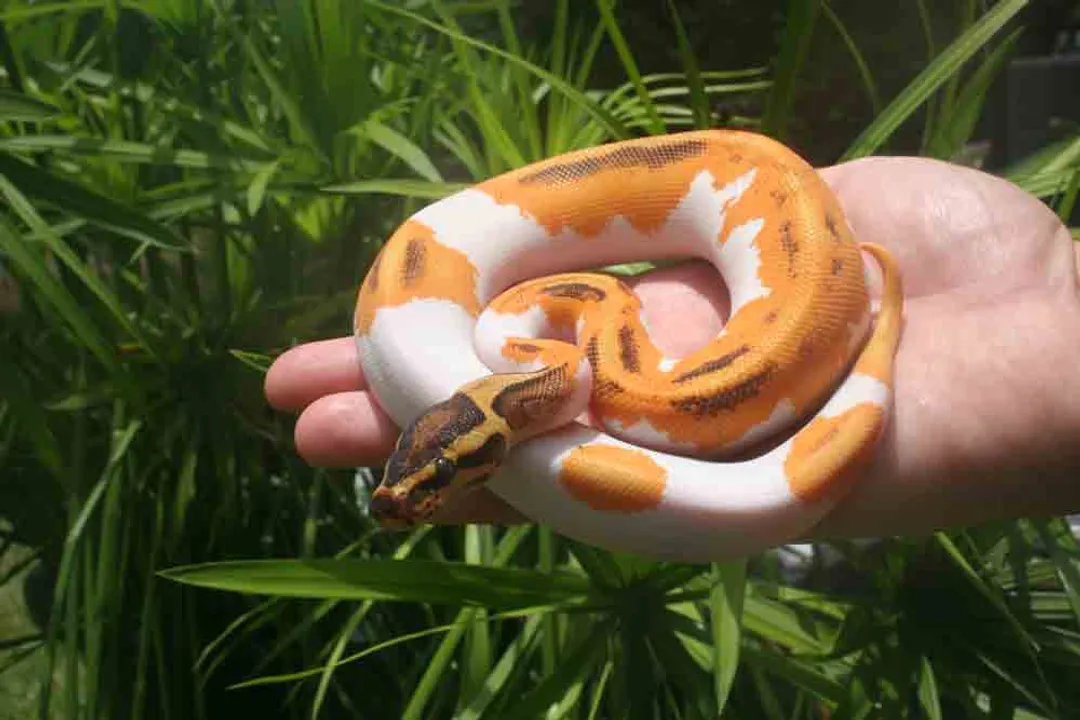
Biological classification, or taxonomy, organizes living things based on shared characteristics and evolutionary relationships, using a system of nested ranks that moves from general to specific. For the Ball Python, this system places it firmly within the animal kingdom and the scaled reptiles.
The classification starts at the highest level:
- Kingdom: Animalia. This signifies that the Ball Python is a multicellular, heterotrophic organism, meaning it consumes other organisms for energy.
- Phylum: Chordata. Members of this phylum possess a notochord at some stage of their development, which in vertebrates like the Ball Python has developed into a backbone.
- Class: Reptilia. This group includes animals that are primarily cold-blooded (ectothermic), breathe air with lungs, and typically have scales or bony plates, such as snakes and lizards.
- Order: Squamata. This is the order encompassing all lizards and snakes. They are characterized by having a kinetic skull and scales or scutes covering their bodies.
- Family: Pythonidae. This places the snake among the pythons, a family known for being non-venomous constrictors. Snakes within the Pythonidae family generally exhibit certain anatomical similarities that distinguish them from other snake families.
- Genus: Python. This genus contains several large, Old World constrictor snakes.
- Species: Python regius. This is the binomial nomenclature that specifically identifies the Ball Python.
When visualizing this structure, it becomes clear that the entire group shares a common ancestor at each level descending from Animalia. For instance, every Python regius shares the defining characteristics of the Pythonidae family, such as having vestiges of a pelvis and hind limbs, though these are externally invisible.
Here is a summary of the accepted Linnaean hierarchy for the species:
| Rank | Classification |
|---|---|
| Kingdom | Animalia |
| Phylum | Chordata |
| Class | Reptilia |
| Order | Squamata |
| Family | Pythonidae |
| Genus | Python |
| Species | P. regius |
# Species Identity
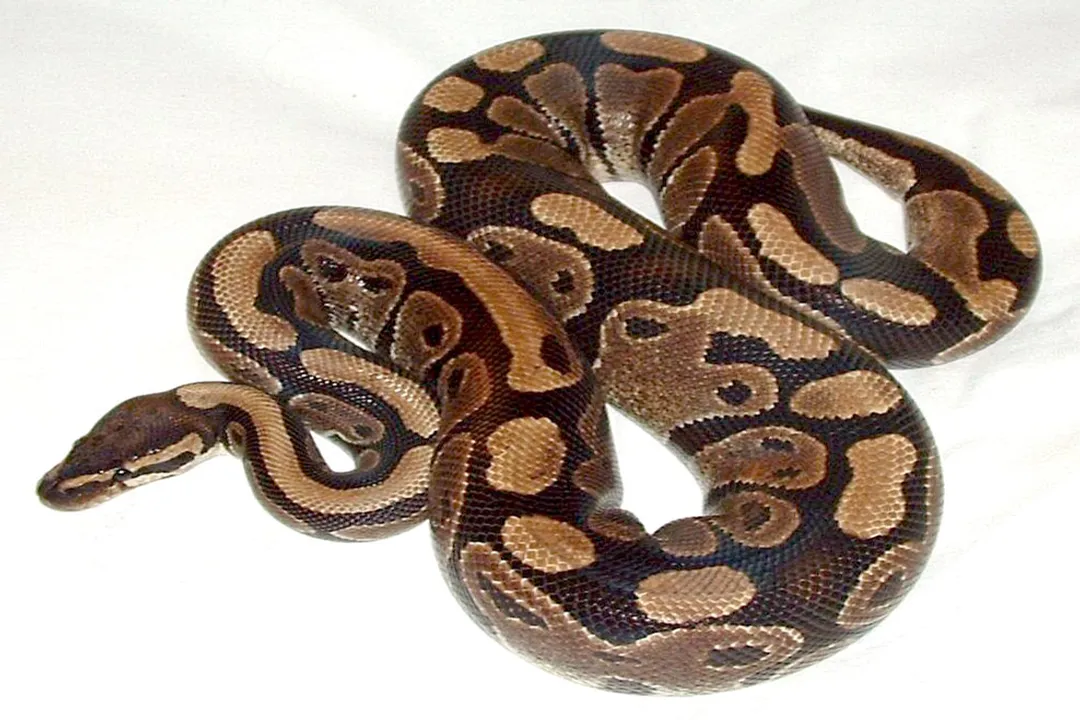
The species name, Python regius, translates roughly to "Royal Python". This common name, Royal Python, is frequently used in Europe and other parts of the world, contrasting with the more common American term, Ball Python. The latter name, Ball Python, originates from the species' defense mechanism of curling into a tight ball when stressed or frightened, tucking its head safely in the center. This behavior is a key indicator of the animal's natural temperament, often described as docile even in the wild.
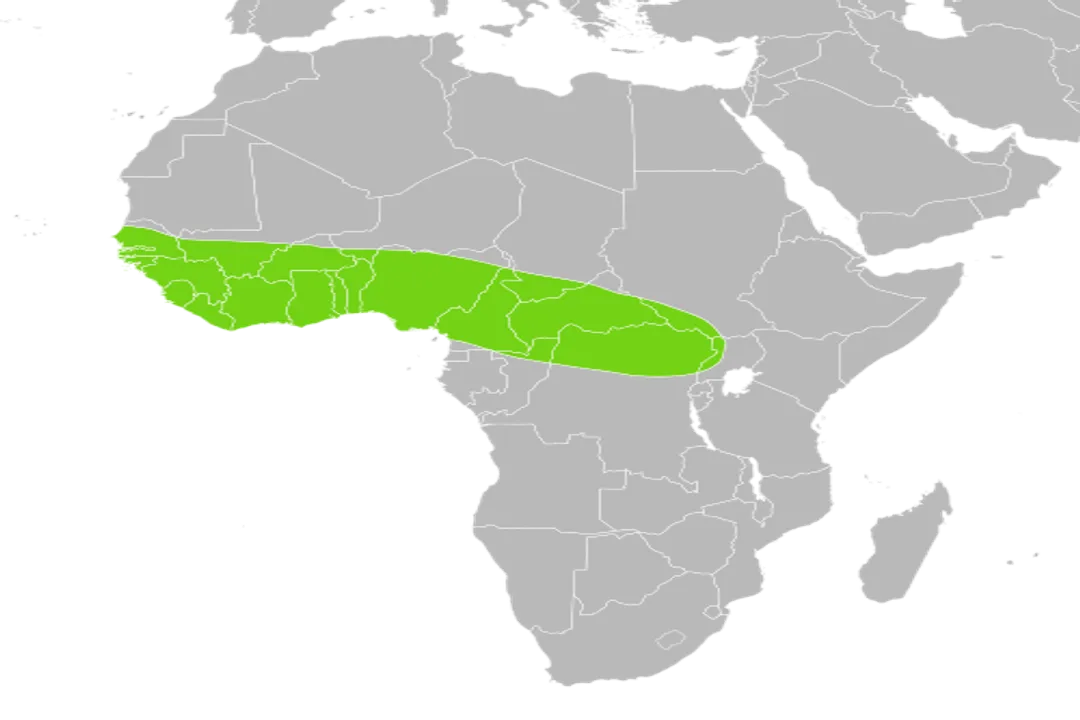
Python regius is native to West and Central Africa. Its natural habitat typically includes savannas, grasslands, and open forests, where it seeks shelter in burrows or under cover. The animal is generally terrestrial but capable of climbing. In terms of size, adults usually reach lengths between 3 and 5 feet. Their natural coloration, often referred to as "wild-type," typically involves dark brown or black markings interspersed with lighter brown or gold blotches.
The consistency in scientific naming across geographical boundaries is a significant advantage. Whether a keeper in Berlin calls it a Royal Python or one in Denver calls it a Ball Python, both are referring to the exact same biological entity, Python regius. This uniformity is critical when discussing conservation, legal trade, or scientific research, as opposed to the sometimes variable common names.
# The Yellow Belly Designation
The term "Yellow Belly" does not represent a higher taxonomic rank like a subspecies or a distinct species. It describes a specific morph—a variation in color or pattern that results from selective breeding in captivity. In the world of captive reptiles, especially pythons, the term "morph" refers to a genetic trait intentionally propagated by breeders.
The Yellow Belly trait is classified genetically as a co-dominant trait. Co-dominance means that an animal only needs to inherit the gene from one parent to display the visual trait, and if it inherits the gene from both parents, the visual expression of the trait is often more intense. Visually, this morph is characterized by an overall lightening of the dark pigment, leading to brighter yellows and oranges, particularly on the belly and sides, compared to the standard wild-type animal.
It is important to note that Yellow Belly is often not expressed in isolation in modern breeding projects. It frequently appears in combination with other genetic mutations, such as Piebald or Pastel, which further alters the snake's appearance. For example, a snake identified as a "Yellow Belly" is still fundamentally Python regius, but one that carries a specific, heritable mutation influencing its pigment expression.
A useful point of contrast arises when comparing this captive-bred designation to formally recognized subspecies. Taxonomy recognizes subspecies based on geographical variation within a species, often indicated by a trinomial name (e.g., Species subspecies), reflecting distinct, naturally occurring populations. The Yellow Belly, however, is an artificial selection within P. regius, created by human intervention in breeding, not by geographical isolation and subsequent natural divergence. This distinction is fundamental: one speaks to evolutionary history and geography; the other speaks to hobbyist selection and genetics.
The consistency of the Python regius species classification means that regardless of how vibrant a Yellow Belly is, its core biological needs—humidity, temperature gradients, and diet—remain tied to the requirements of its native West African habitat. A breeder focusing solely on the visual appeal of a high-yellow specimen must still ensure husbandry parameters mimic those suitable for a wild-caught animal to maintain the snake’s health.
# Genetic Variation Versus Systematics
When considering the vast array of Ball Pythons available today, one realizes the immense gap between the stable Linnaean system and the dynamic world of reptile genetics. The scientific classification system is relatively slow to change; a species is only reclassified after significant evidence suggests its evolutionary placement is incorrect. Conversely, new morphs like the Yellow Belly are identified, named, and circulated within the pet trade relatively quickly based on observed mutations.
This divergence creates a situation where, within the single species P. regius, there exists a virtually endless variety of visual presentations due to human selection. If one were to graph the rate of change, the species name Python regius would be a flat line over the last few decades, while the list of recognized morphs—including Yellow Belly—would show exponential growth.
For instance, a snake keeper might decide to focus their efforts on building a line where the Yellow Belly trait is maximized, perhaps aiming for a "Super Yellow Belly" (homozygous expression). This effort is purely within the realm of applied genetics and aesthetics. However, for any legal paperwork, international trade documentation, or academic study, the animal must always be recorded as Python regius. This suggests an interesting practical takeaway: for compliance and responsible record-keeping, the scientific classification acts as the immutable anchor, while the morph name serves as a specialized descriptor for trade and collection purposes. If a keeper were to cross a pure Yellow Belly line with a different genetic line, say, a Spider, the resulting snake is a complex hybrid of genes but remains fixed at the species level as P. regius.
# Practical Application of Classification Knowledge
Understanding the scientific classification of the Yellow Belly Ball Python offers more than just academic knowledge; it has tangible implications for keepers and breeders. Because the species is Python regius, its natural range dictates its core environmental needs. The fact that it originates from regions with distinct wet and dry seasons means experienced keepers often try to mimic these shifts subtly in captive care to encourage natural cycles, such as breeding readiness.
Furthermore, adherence to the species identification is crucial for legal and ethical trade. Because P. regius is listed on CITES Appendix II, international trade is regulated to ensure sustainability. All legally traded animals, regardless of their morph—be it a wild-type, a Yellow Belly, or a combination—must be identifiable by their species name and appropriate documentation. A keeper who mistakenly believes a morph represents a separate, localized population risks misunderstanding its true origin and conservation status.
For example, consider two Ball Pythons: a wild-type male caught in Ghana and a captive-bred Yellow Belly female hatched in the United States. Although their appearances are vastly different, their scientific classification is identical: Python regius. Any successful breeding project relies on the premise that they share fundamental requirements, but the genetic makeup of the Yellow Belly might provide advantages or challenges in terms of color stability or health compared to the wild-type line, which is an area where breeders share experiences informally, such as in hobbyist forums. The very name "Yellow Belly" implies a focus on the ventral pattern, but the species classification confirms that the animal's baseline physiology is dictated by its African ancestry. This dual understanding—the broad species requirements set by nature and the specific aesthetic refinements driven by human selection—is key to responsible long-term care.
Related Questions
#Citations
Ball python - Wikipedia
Yellow Belly Ball Pythons Living Art Reptiles
Python regius - Animal Diversity Web
Yellow Belly - Ball Python Traits - Morphpedia
Ball Python History, Care And Breeding - Reptiles Magazine
Ball Python - Lehigh Valley Zoo
Python regius (SHAW, 1802) - The Reptile Database
Identifying Ball Python Morphs - Facebook
Ball Python – Cub Creek Science and Animal Camp