Yellow Tang Scientific Classification
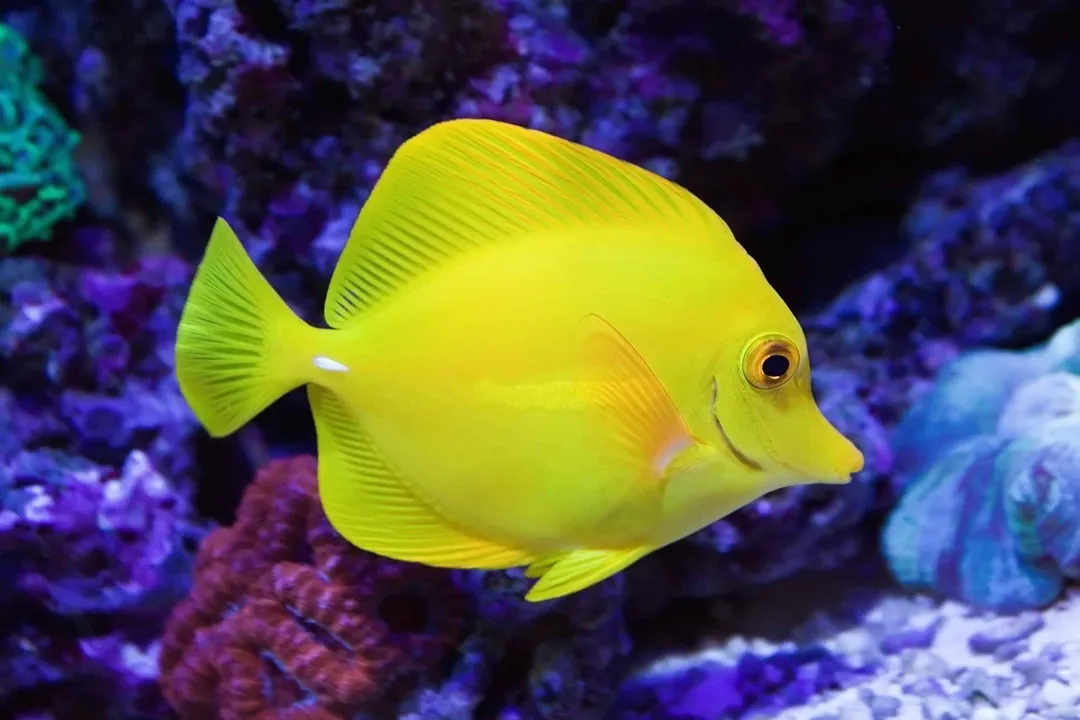
The bright, unmistakable yellow hue of the fish commonly known as the Yellow Tang makes it a signature resident of coral reefs across the Pacific, yet understanding this vibrant creature requires looking past its dazzling color and delving into its formal scientific placement. Taxonomy, the science of naming, describing, and classifying organisms, provides the essential map for understanding where Zebrasoma flavescens fits within the vast tree of life. Tracing its classification hierarchy reveals a story of evolutionary relationships, placing it firmly within the group defined by its distinctive dorsal fins and, most famously, its sharp caudal spines.
# Broad Groupings
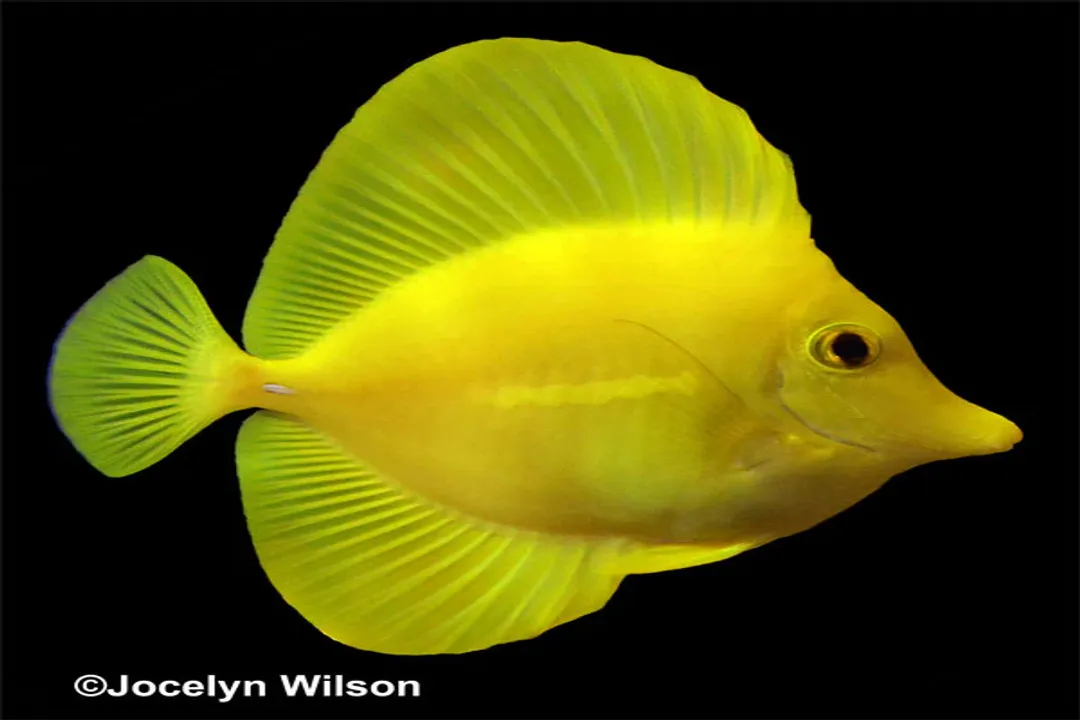
The scientific classification begins with the broadest possible grouping, establishing the fundamental characteristics that define the Yellow Tang as an animal. As a fish, its placement is quite high up the ladder, but the details are telling. It belongs to the Kingdom Animalia, meaning it is a multicellular, heterotrophic organism. Following this, it is placed within the Phylum Chordata, indicating it possesses, at some stage of development, a notochord—the hallmark of vertebrates.
The next step down places it into a specific class based on its skeletal structure and method of breathing. The Yellow Tang falls into the Class Actinopterygii, which translates to ray-finned fishes. This is a massive grouping, encompassing the majority of modern fish species, distinguished by the bony rays that support their fins. This placement immediately separates it from cartilaginous fishes like sharks and rays (Class Chondrichthyes).
# Order Placement
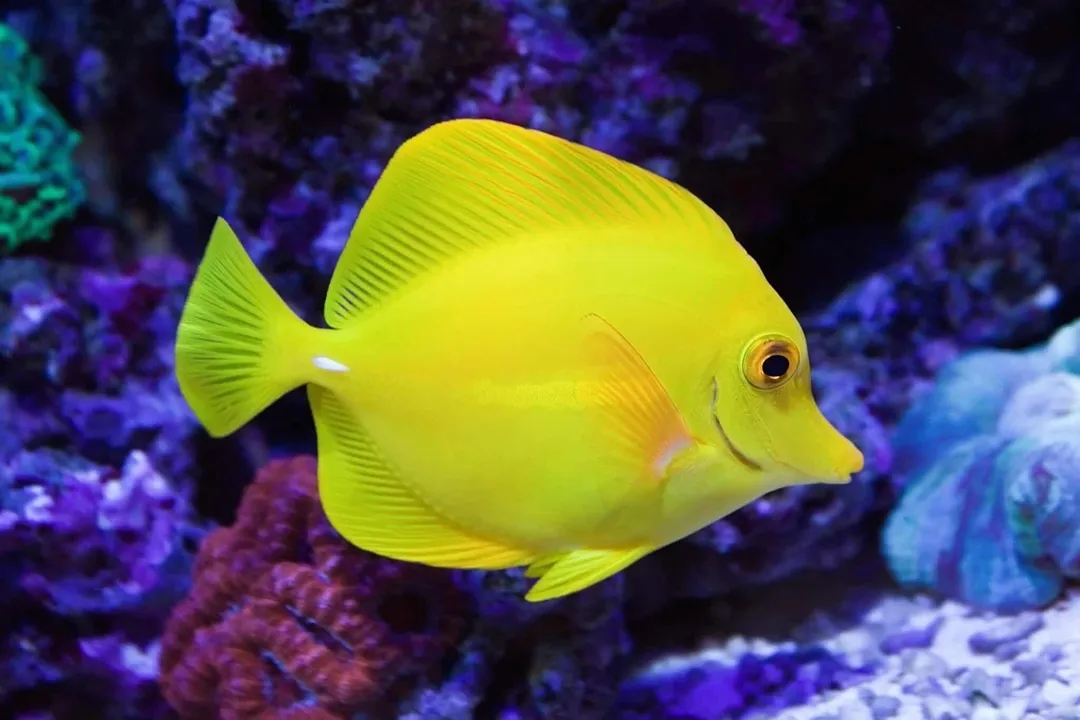
Moving deeper into the Linnaean system, the Yellow Tang is assigned to the Order Perciformes. This order is perhaps the largest order of vertebrates, often referred to as the perch-like fishes. Organisms within Perciformes share certain anatomical features, often relating to the structure of their fins and jaws. While the Order Perciformes is sometimes debated among taxonomists due to its sheer size and diversity, the Yellow Tang's placement here signifies its general body plan and evolutionary path relative to thousands of other bony fishes.

# Family Identity
The most defining characteristics for the Yellow Tang's classification emerge at the Family level. It belongs to Acanthuridae, a name that directly references one of the family's most recognized features: the sharp, scalpel-like spines located near the base of the tail fin. These spines are the origin of the common name "surgeonfish" shared by all members of this family. When keeping these fish, aquarists must be keenly aware of this feature, as improper handling or aggressive tank-mate interactions can lead to injury from these defensive or territorial structures.
It is interesting to note how the scientific literature sometimes varies or solidifies this placement. For instance, some older or alternative classifications might link it closely to different groups, but the modern consensus firmly anchors it in Acanthuridae. Understanding the family is crucial because it groups the Yellow Tang with its closest relatives, such as the Powder Blue Tang (Acanthurus leucosternon) and various triggerfish (though triggerfish are sometimes split into related families, the surgeonfishes are consistently Acanthuridae).
# Genus Specifics
Within the family Acanthuridae, the Yellow Tang is distinguished by its Genus, Zebrasoma. Fish in the Zebrasoma genus are characterized by their deep, laterally compressed, disc-shaped bodies and, notably, their elongated snouts. This snout structure is a key adaptation, allowing them to graze efficiently on filamentous algae growing over corals and rocks. If you observe a Yellow Tang feeding, you will see this specialized mouth part perfectly suited for picking algae off hard surfaces.
This genus designation also helps differentiate Z. flavescens from surgeonfishes in the Acanthurus genus, which typically possess a more oval or elongated body shape and a shorter snout. The consistency of the Zebrasoma form—deep body, short dorsal/anal fins that create a near-circular profile when flared—is a defining trait of this sub-group.
# The Species Name
The scientific designation culminates with the species name: Zebrasoma flavescens. The specific epithet flavescens is derived from Latin, meaning "turning yellow" or "becoming yellow," which is a highly descriptive nod to its brilliant coloration.
The full binomial nomenclature, Zebrasoma flavescens, serves as a universal identifier, preventing the confusion that common names often cause across different regions and languages. For example, FishBase notes that in some areas, it might be referred to as "Indangan". The formal scientific name ensures that a researcher in Okinawa, where they are found, is discussing the exact same organism as an aquarist in Hawaii.
Furthermore, the history of taxonomy shows that scientific names can change as new genetic information emerges or as organisms are re-evaluated. For Z. flavescens, a known synonym is Acanthurus flavescens. This historical name indicates that at one point, this species was classified under the Acanthurus genus before morphological and perhaps genetic analysis led to its reclassification into Zebrasoma based on shared features like body shape and snout length. Recognizing these synonyms is important when reviewing older scientific literature.
# Classification Snapshot Table
To summarize this hierarchy, here is a look at the major taxonomic ranks applied to the Yellow Tang:
| Rank | Classification | Citation Context |
|---|---|---|
| Kingdom | Animalia | Vertebrate, heterotroph |
| Phylum | Chordata | Possesses a notochord |
| Class | Actinopterygii | Ray-finned fish |
| Order | Perciformes | Perch-like fishes |
| Family | Acanthuridae | The surgeonfishes (possess caudal spines) |
| Genus | Zebrasoma | Deep-bodied, elongated snout |
| Species | Z. flavescens | Specific epithet means "turning yellow" |
This systematic arrangement means that the Yellow Tang is evolutionarily closer to other Zebrasoma species, like the Sailfin Tang, than it is to other surgeonfishes lacking the characteristic elongated snout, such as those in the Acanthurus genus. This subtle grouping based on genus, rather than just family, provides a finer understanding of its ecological niche and physical adaptations.
# Ecological Context of Classification
While the classification describes what the fish is, its placement also hints at where it lives and how it behaves. The placement in Acanthuridae, coupled with its known distribution across the Pacific, including areas like the Hawaiian Islands and the waters around Okinawa, speaks to its success in specific marine environments. The family's general dietary preference for algae is strongly reinforced by the Zebrasoma genus’s adaptation for grazing.
An interesting side note on distribution, which is tangential but informed by its identity, involves its status in different regions. While it is a native resident in parts of the Pacific, its popularity means it is often introduced elsewhere, sometimes leading to observations in non-native waters. Tracking these observations, often through platforms like EDDMapS, helps scientists monitor biodiversity against the backdrop of this established scientific classification.
Thinking about the structure of the organism based on its classification—specifically the Genus Zebrasoma—offers an insight into its hydrodynamic profile. The deep, disc-like body, supported by those ray fins defined in the Class Actinopterygii, provides excellent maneuverability in the tight confines of a coral reef, allowing the fish to navigate complex structures while using its specialized snout to access food unavailable to more streamlined swimmers. This body morphology is a direct, visible manifestation of the taxonomic decisions made centuries ago based on shared physical traits.
# Further Scientific Detail
Taxonomy is not static. Researchers continue to refine classifications using modern genetic analysis. While the sources confirm the current consensus, it is important to recognize that the historical movement from Acanthurus to Zebrasoma illustrates this refinement process in action. Such shifts are usually driven by discovering that morphological traits—like the shape of the mouth, the structure of the spine (the scalpel), or the arrangement of the fin rays—are better explained by grouping it with the Zebrasoma lineage than the Acanthurus lineage.
The Yellow Tang’s scientific record is a prime example of how descriptive Latin names combine with hierarchical organization to create a globally understood identity. Whether referred to by its Order, Perciformes, its Family, Acanthuridae, or its full scientific name, Zebrasoma flavescens, the classification system provides the consistent scaffolding necessary for marine biology research and conservation efforts worldwide.
Related Questions
#Citations
yellow tang (Zebrasoma flavescens) - Species Profile
yellow tang (Zebrasoma flavescens Bennett,1828) - EDDMapS
Zebrasoma flavescens (Lemon sailfin) - Animal Diversity Web
Hawaiian Yellow Tang - The Biota Group
Yellow Tang (Zebrasoma flavescens) - iNaturalist
Zebrasoma flavescens, Yellow tang : fisheries, aquarium - FishBase
Yellow Tang Fish Facts - Zebrasoma flavescens - A-Z Animals
Yellow tang | Churaumi Fish Encyclopedia
Yellow Tang Care Guide - Reef Chasers