Yellow Perch Scientific Classification
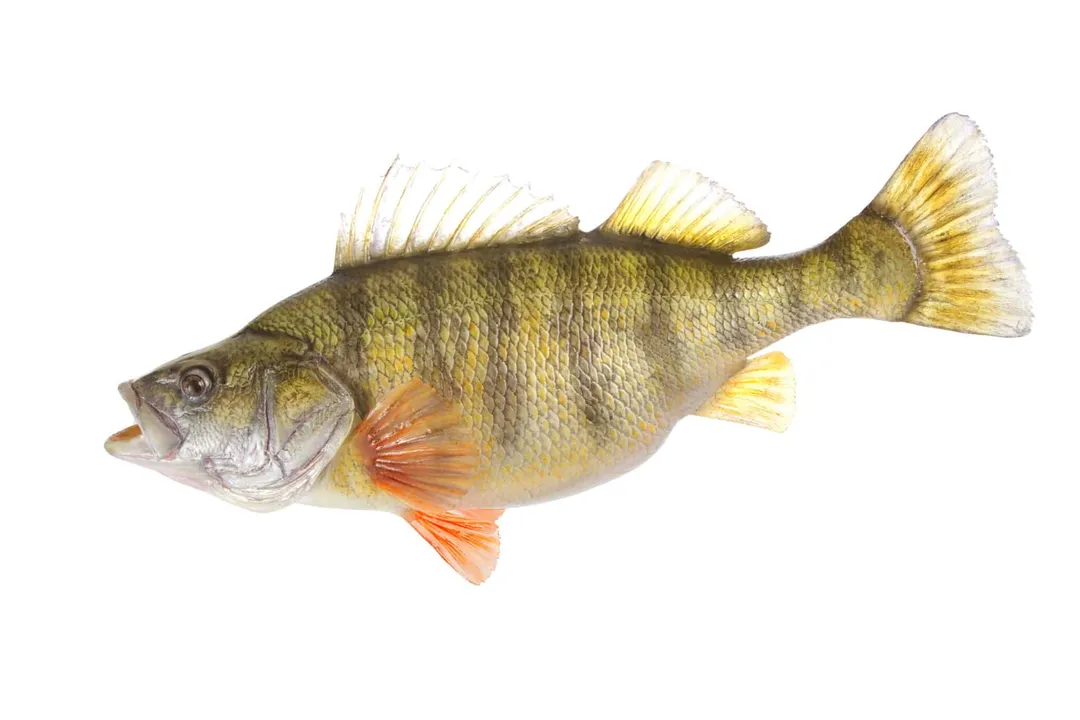
The formal naming and classification of the Yellow Perch, scientifically designated as Perca flavescens, provides a precise scientific anchor for a fish so widely distributed and popularly known across North America. Understanding this lineage helps distinguish it from its aquatic relatives, even as its common names can sometimes cause confusion in casual conversation or commerce. At its broadest level, the Yellow Perch belongs to the Kingdom Animalia, placing it firmly within the animal kingdom alongside everything from insects to whales.
# Hierarchical Ranks
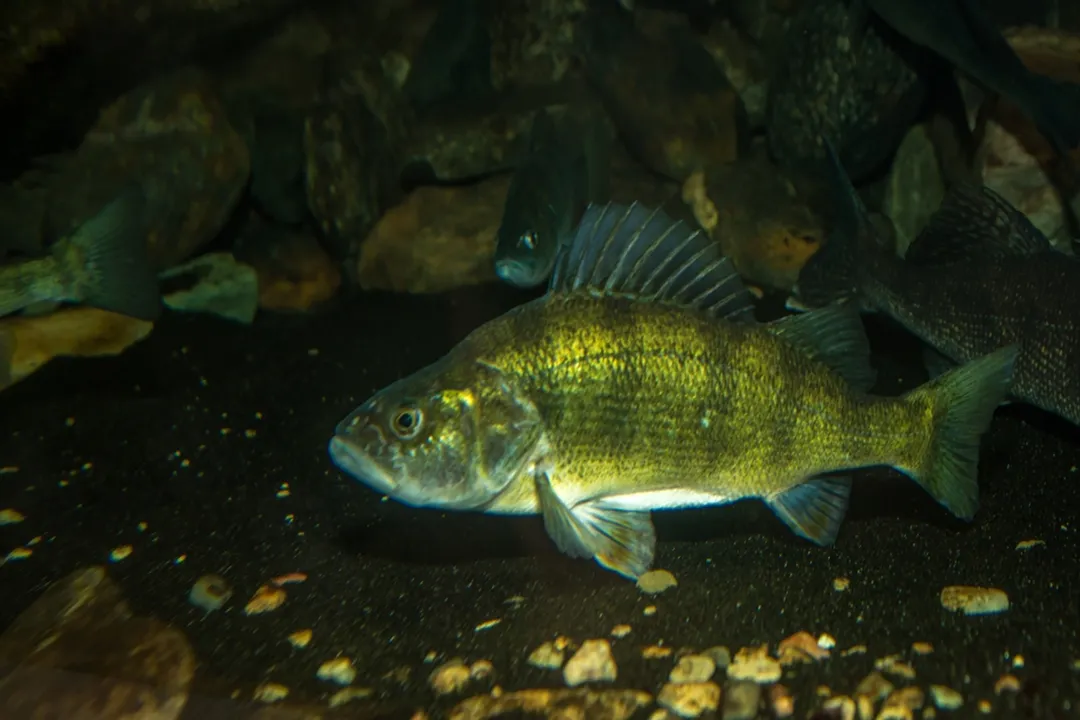
The journey down the Linnaean hierarchy reveals the fish’s specific evolutionary placement. Following Animalia, the Yellow Perch is classified under the Phylum Chordata, meaning it possesses a notochord at some stage of its development—a defining feature of all vertebrates.
Within the Phylum Chordata, the Yellow Perch falls into the Class Actinopterygii. This class encompasses the ray-finned fishes, the largest and most diverse group of vertebrates alive today. These fish are characterized by fins supported by bony spines or rays, which sets them apart from lobe-finned fishes.
The next step places P. flavescens into the Order Perciformes. This order is remarkably vast, often described as the most numerous order of vertebrates, containing roughly 41% of all bony fish species. This high number illustrates that the perch belongs to a massive, diverse group of evolutionarily related spiny-rayed fishes.
# Family and Genus
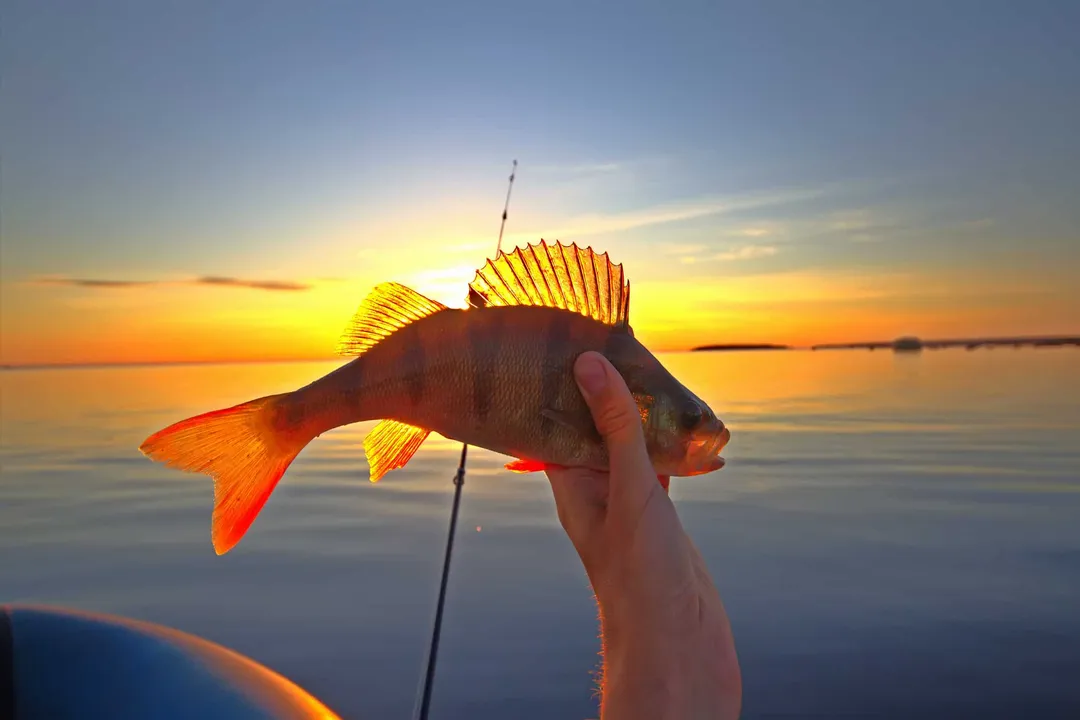
The critical delineation for the Yellow Perch occurs at the Family and Genus levels, which group it with its closest biological neighbors. It is a member of the Family Percidae. This family is often referred to as the Perch Family and includes well-known species like the walleye (Sander vitreus) and sauger, as well as the smaller darters. The presence of two separated dorsal fins is a common trait shared across many members of this family.
The genus assignment is Perca. This genus contains the true perches, a designation that immediately sets the Yellow Perch apart from its lookalikes, such as the White Perch or Rock Bass, which sometimes share the informal name "perch" on fishing menus. The specific epithet, flavescens, is derived from Latin, meaning "becoming gold-colored" or "yellow colored". The genus name, Perca, is linked to the ancient Greek word for perch, though it may also carry the meaning of "dusky".
Thus, the complete binomial scientific name, authored by Mitchill in 1814, is Perca flavescens. The U.S. Fish and Wildlife Service records this taxon under the Taxonomic Serial Number (TSN) 168469.
# The European Kinship
A key point in the classification of Perca flavescens is its relationship with the Eurasian counterpart, the European Perch, Perca fluviatilis. These two species are morphologically quite similar, leading historically to confusion where P. flavescens was sometimes treated merely as a subspecies of its European relative. However, modern analysis supports their separation. Allozyme data, which examines genetic variation at the enzyme level, indicates that P. flavescens and P. fluviatilis should be recognized as separate species. This scientific distinction confirms that despite sharing a genus and superficial resemblance, they have followed distinct evolutionary paths.
The existence of numerous historical synonyms further complicates the identification record for researchers and historians alike. These include names like Morone flavescens (Mitchill, 1814), Perca fluviatilis flavescens (Mitchill, 1814), Perca americana (Schrank, 1792), Perca notata (Rafinesque, 1818), and Perca acuta (Cuvier, 1828). While modern ichthyology relies on the current assignment, encountering these older names in historical literature is common when tracing the species' distribution and taxonomy.
# Classification in Practice and Conservation
The official classification is more than just an academic exercise; it has tangible implications for management and conservation. For instance, NatureServe assigns Perca flavescens a Global Conservation Status Rank of G5, meaning it is considered Secure across its entire range. This G5 status is based on the assessment that the species is widespread and abundant, supported by a large number of subpopulations. This stability contrasts somewhat with the nuanced biological reality observed across its vast territory. For example, research notes significant latitudinal variability in age, growth rates, and size among populations, likely driven by factors like day length and water temperature. A fish designated as a single species, Perca flavescens, exhibits different life history patterns from the Great Lakes up to the Mackenzie River basin and down to tributaries in South Carolina. Recognizing a single scientific classification across such varied environmental pressures offers a necessary baseline for broad assessments, even if local populations require tailored management based on specific environmental traits like pH tolerance or preferred spawning substrate.
This formal structure proves essential when contrasting P. flavescens with other inhabitants of its ecosystems. A practical example for anglers and fisheries managers is the physical differentiation from other Percidae members, such as walleye or sauger, whose body shapes are similar but whose dental structures immediately separate them from the Yellow Perch due to the absence of large canine teeth in P. flavescens. If one were to rely only on visual appearance or common naming conventions—where, for example, a fish on a menu is simply called "perch"—accurate ecological study or targeted sport management would suffer. The Linnaean system, by defining its placement in the Order Perciformes, solidifies its unique biological profile separate from other panfish genera like Lepomis.
The stability of the higher ranks (Kingdom through Genus) provides a foundation, yet the status of the species itself suggests a dynamic biological entity. While the formal classification remains Perca flavescens, knowing that different authors debated its relationship to P. fluviatilis serves as a reminder that taxonomy is a living science, frequently refined by new genetic evidence, even for fish we catch every day.
# Distribution Context of Classification
While not strictly taxonomy, the native range of Perca flavescens reinforces the breadth of its established identity. It is native to the tributaries of the Atlantic Oceans and Hudson Bay in North America, strongly represented in the Great Lakes–St. Lawrence River and Mississippi River basins. Wisconsin, for example, notes the perch is found across all three state drainage basins (Michigan, Mississippi, Superior), except in the unglaciated southwestern portion, classifying it as a "glacial lakes species". This geographical span, from Nova Scotia west to the Northwest Territories and south to rivers in South Carolina and Florida, confirms the species’ adaptability, yet its classification as a single species suggests these populations share a deep common ancestry over these widespread habitats. The fact that unauthorized introductions have successfully established populations in the Northwest and Southwest of the United States underscores its general hardiness, a trait that sometimes makes it a target for stocking programs aiming to provide forage for larger sport fish like bass and walleye.
Related Questions
#Citations
Yellow perch - Wikipedia
Yellow Perch (Perca flavescens) | U.S. Fish & Wildlife Service
Perca flavescens - Yellow Perch - NatureServe Explorer
Yellow Perch - WVDNR
Yellow perch - Fishing - Wisconsin DNR
Yellow Perch Fish Facts - Perca flavescens - A-Z Animals
Yellow Perch - NC Wildlife