What substrate depth is generally recommended in an A. seemanni enclosure to facilitate natural burrowing behavior?
Answer
About four to six inches.
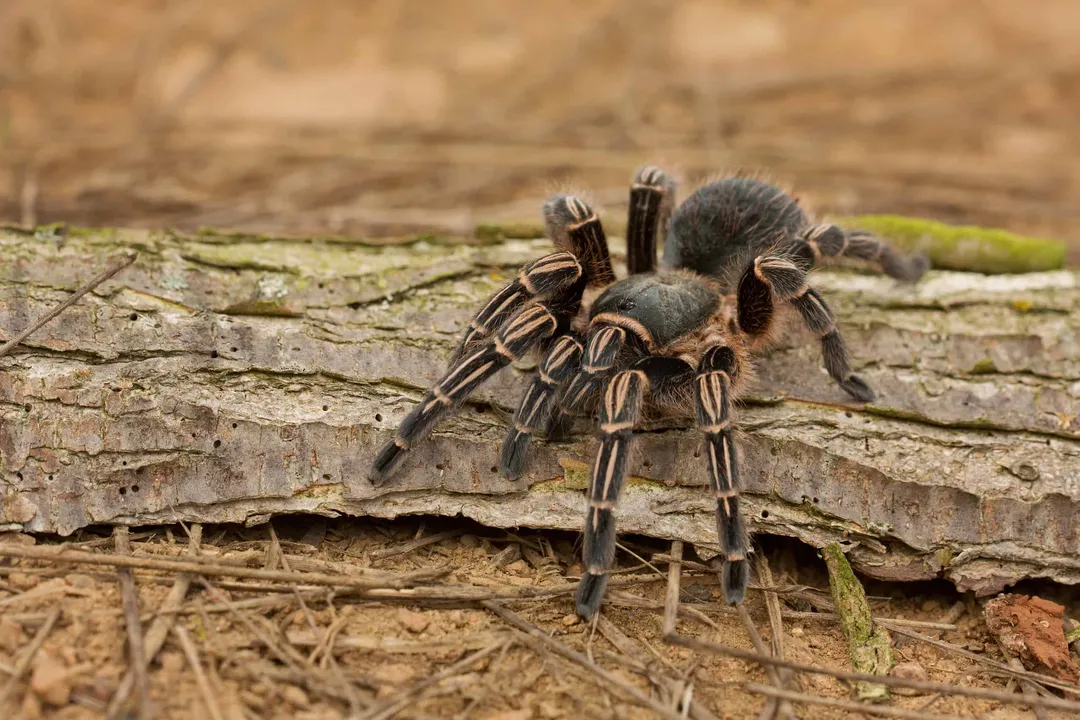
Because the *Aphonopelma seemanni* exhibits pronounced fossorial or burrowing behavior in the wild, providing adequate substrate depth is a critical husbandry requirement. Owners should aim to supply a substantial amount of deep substrate material, specifically suggesting a depth of approximately four to six inches. This depth allows the spider the necessary vertical space to dig and construct its own secure hideaway underground. Creating this self-made shelter mimics the stability and protection found in their native environment more effectively than simply providing a pre-made structure placed on top of minimal bedding.
Related Questions
What specific location on the legs features the prominent white or cream-colored banding of the Aphonopelma seemanni?What chemical defense mechanism does the A. seemanni utilize when feeling threatened or stressed?What is the typical lifespan disparity noted between mature female and male Aphonopelma seemanni?To what specific type of terrestrial environment is the native Aphonopelma seemanni adapted in Central America?What substrate depth is generally recommended in an A. seemanni enclosure to facilitate natural burrowing behavior?Which common name for the A. seemanni is deemed the most taxonomically descriptive regarding its visual markings?How does the A. seemanni physically eject its urticating hairs toward an actual or perceived threat?When setting up an enclosure for the terrestrial Aphonopelma seemanni, what spatial dimension should be prioritized over vertical height?What is the characteristic color contrast observed on the cephalothorax and abdomen versus the leg markings of the A. seemanni?Why is the Zebra Tarantula sometimes recommended as suitable for individuals new to keeping tarantulas?