Zebra Tarantula Diet
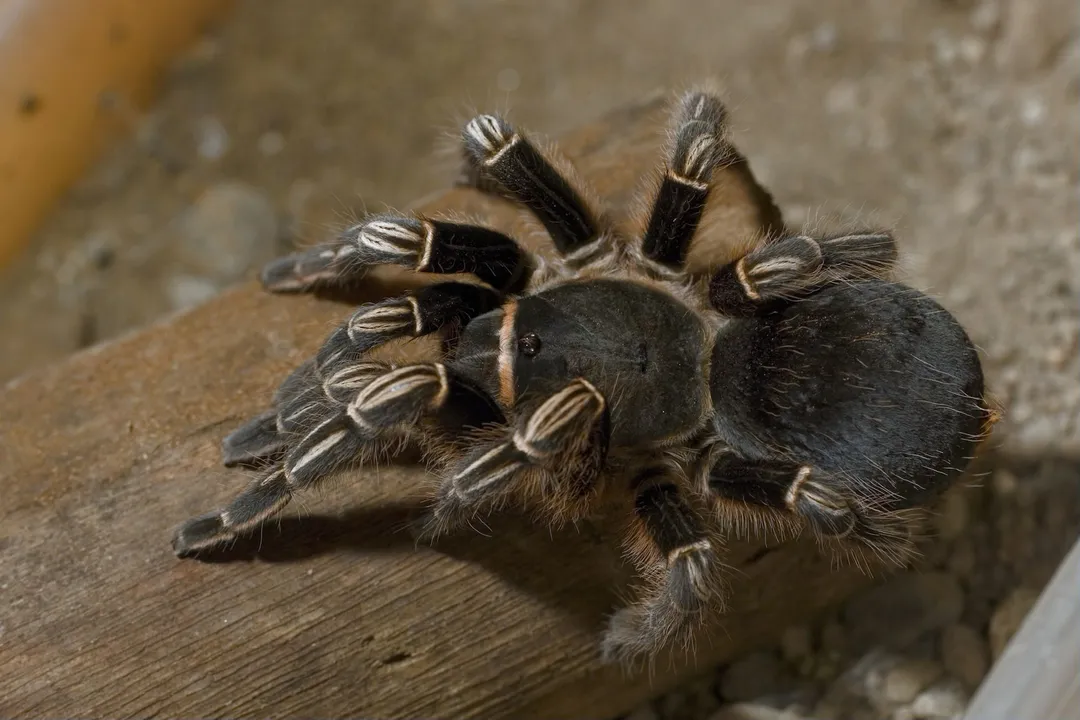
The feeding routine for the Costa Rican Zebra Tarantula, Aphonopelma seemanni, is generally straightforward, aligning with the husbandry needs of many common terrestrial species. As hardy pets, they do not require an overly complex menu, but consistency in prey type and management of feeding intervals are key to maintaining their health and observing their natural behaviors. [1][3]
# Staple Feeders

The foundation of a captive A. semanni's diet consists primarily of live insects. [4] Common and readily available options form the core of their meals. Crickets are frequently mentioned as a staple, often serving as the primary food source. [1][3] However, reliance solely on crickets can sometimes lead to issues, such as uneaten prey stressing the tarantula or the crickets carrying parasites if not sourced well. [4]
Many keepers advocate for introducing roaches, particularly Dubia roaches, into the rotation. [4][5] Roaches are often considered superior as they are less likely to stress the spider if left uneaten, tend to burrow rather than jump excessively, and often possess better nutritional profiles when properly reared. [4] Other acceptable prey items include mealworms and superworms, though these should be offered sparingly or considered supplemental. [1][3] While mealworms are soft-bodied, they have a harder chitin shell than crickets and should be offered infrequently. [3]
When selecting any feeder insect, the principle of gut-loading is paramount, even for a species as adaptable as the Zebra Tarantula. Gut-loading means feeding the prey insects a nutritious, high-quality diet for 24 to 48 hours before offering them to your spider. [4] Think of the feeder insect as a delivery vehicle; if the cricket is eating poor-quality vegetable scraps, it is delivering minimal nutritional value to your tarantula, regardless of how large the cricket is. [1] Ensuring the prey is well-fed on carrots, commercial insect diets, or leafy greens directly translates to better nutrient transfer to your pet.
# Prey Size Guidelines
Determining the correct size of the prey item is critical for safe and efficient feeding. An improperly sized feeder can potentially injure a smaller or vulnerable tarantula, particularly one that is preparing to molt. [3] The general rule of thumb suggests that the prey item should be no larger than the width of the tarantula’s carapace. [3][4]
For smaller specimens, often referred to as slings (spiderlings), even smaller prey, like flightless fruit flies or pinhead crickets, should be used initially. [4] As the A. semanni grows, the prey size scales up accordingly. If you have a fully grown adult, standard feeder crickets or medium-sized roaches typically fit this size criterion well. [1] Offering prey that is too large can lead to the tarantula being unable to subdue it, potentially resulting in the prey item harassing or injuring the spider while it waits to eat. [3]
# Feeding Frequency Adult Spiders
The frequency with which an adult Costa Rican Zebra Tarantula needs to eat varies significantly based on its age, size, metabolism, and recent activity. Generally, large, mature adults are known for their ability to fast for extended periods. [1][3]
For a mature adult, feeding once every one to three weeks is often sufficient. [3][4] Some keepers find that feeding a large adult only once every few weeks, or even once a month, is perfectly adequate, especially during cooler months when activity naturally decreases. [6] If you are consistently offering a suitably sized prey item and it is consumed within 24 hours, you can likely maintain this schedule. [4]
It is important to contrast this with the needs of juveniles and slings. Spiderlings require more frequent meals to fuel their rapid growth. [4] While an adult might thrive on a weekly meal, a spiderling might benefit from being fed twice a week, provided the prey is appropriately small. [4] Always remove any uneaten prey within 24 hours to prevent potential issues. [4]
A helpful check many experienced keepers employ, which moves beyond simply reading a schedule, involves observing the abdomen. If the abdomen appears plump and rounded, the tarantula has sufficient reserves and may not need to eat for some time. Conversely, if the abdomen appears somewhat deflated or wrinkled, it is likely time to offer food. [1][3] If a healthy adult suddenly stops accepting food entirely, the first assumption should usually be that a molt is approaching, which dictates a pause in feeding regardless of how long it has been since the last meal. [1]
# Addressing Refusal to Eat
Fasting, or the refusal to eat, is a common occurrence in tarantulas and is not inherently alarming, especially with terrestrial species like A. seemanni. [1][3] If an adult refuses food, the most probable cause is impending ecdysis (molting). [1] Tarantulas will often refuse food for several days or even weeks leading up to a molt because they need to conserve energy and avoid having a full stomach during the vulnerable process. [3]
If your tarantula has completely ignored a meal, wait a week before offering food again. [4] If they continue to refuse food for several weeks, it is wise to check the environmental parameters, particularly temperature and humidity, as extreme fluctuations can impact appetite. [1] If the spider shows no other signs of distress—like excessive walking or abnormal posture—and the enclosure conditions are stable, simply wait it out. [3] This is where the comparison between a hungry spider and a pre-molt spider becomes important: the pre-molter usually retreats to its burrow or web hide, while a hungry, healthy adult might still be observed patrolling its enclosure or sitting out in the open, just ignoring the cricket you dropped in. [2]

# Water Source Management
While food intake can be intermittent, access to clean water is non-negotiable. Fresh, clean water must be available at all times. [1][4] For terrestrial species like the Zebra Tarantula, this is usually provided via a shallow water dish. [4]
The dish should be shallow enough that the tarantula cannot drown in it, though A. semanni are relatively robust walkers. [3] For smaller specimens, a small plastic cap or bottle cap can suffice, but it must be topped up regularly. [4] The water should be changed frequently—every few days—to prevent stagnation, bacterial growth, or contamination from substrate or shed skin. [1][4] One practical tip is to place a small, clean pebble or piece of cork bark in the dish; this offers a safe ramp for the spider should it need to climb out, which some keepers feel adds an extra layer of safety, although this is less critical for a terrestrial species than for arboreal ones. [4] Always ensure the water source is clean, as dirty water can be a vector for illness.
# Dietary Variety and Supplements
While the staples are sufficient for maintenance, introducing variety can be beneficial, primarily to ensure a broad spectrum of nutrients derived from different prey bases. [4] Since many keepers rely heavily on crickets and Dubia roaches, alternating between these two main sources can provide a good balance of protein and moisture. [5]
When considering supplements, it is often advised against dusting the prey with calcium or vitamin powders for adult tarantulas, as they are not typically needed if the feeder insects are themselves well-gut-loaded. [4] Introducing new prey types, such as hornworms (offered rarely due to high water content) or different sizes of roaches, serves as a more natural way to introduce variety than artificial dusting, which can sometimes lead to dust accumulation on the spider's fangs or carapace if applied incorrectly. [3] The key is to keep the insects moving and alive when offered, as A. seemanni are ambush predators that respond best to live, struggling prey. [1][4]
Related Questions
#Citations
Aphonopelma seemanni Care
Fully grown zebra knee not eating, what to feed her?
How to Care for a Pet Costa Rican Zebra Tarantula
Aphonopelma Seemanni | Costa Rican Zebra
Zebra Knee Tarantula Care Guide: Easy Tips for Beginners
Is it okay to feed my Costa Rican Zebra Tarantula more than ...
Pink Zebra Beauty Tarantula Care Sheet