Zebra Spitting Cobra Facts
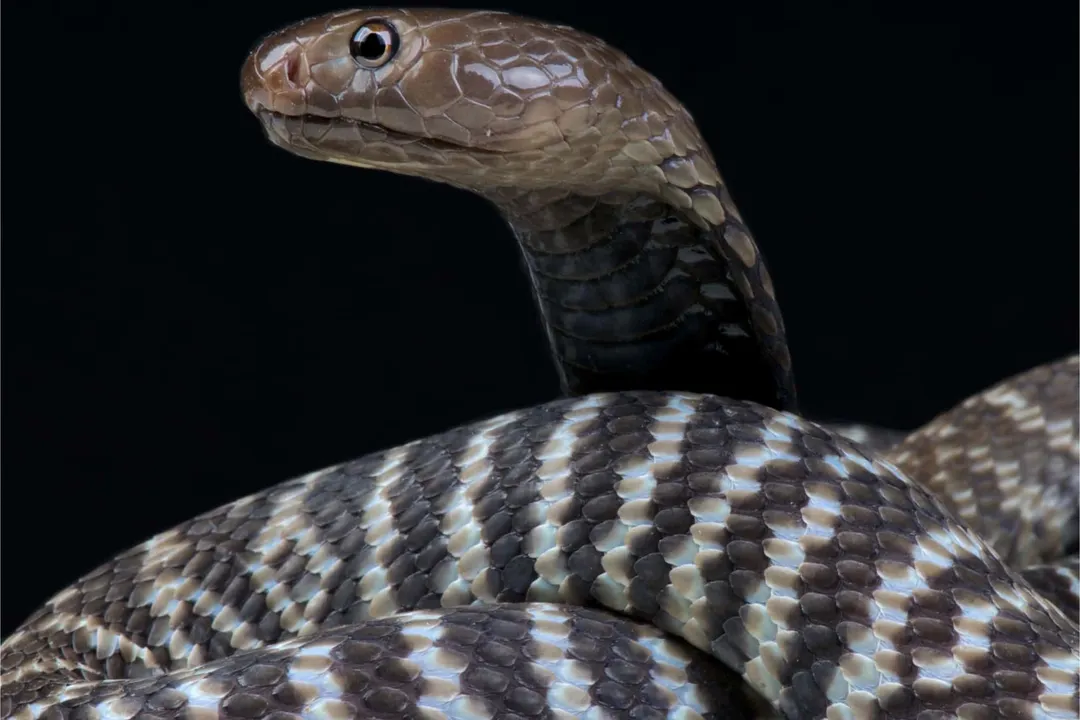
The Naja nigricincta, widely known as the Zebra Spitting Cobra, presents a striking appearance that often belies its potent defensive capabilities. [1][2] This species of cobra commands attention across its range due to its bold black and white or yellowish banding patterns, though these patterns can vary considerably depending on the region it inhabits. [3][5] It is important to recognize that this snake is not a single, monolithic entity in terms of appearance, which can sometimes lead to misidentification or underestimation in the field. [1]
# Appearance Distinctive
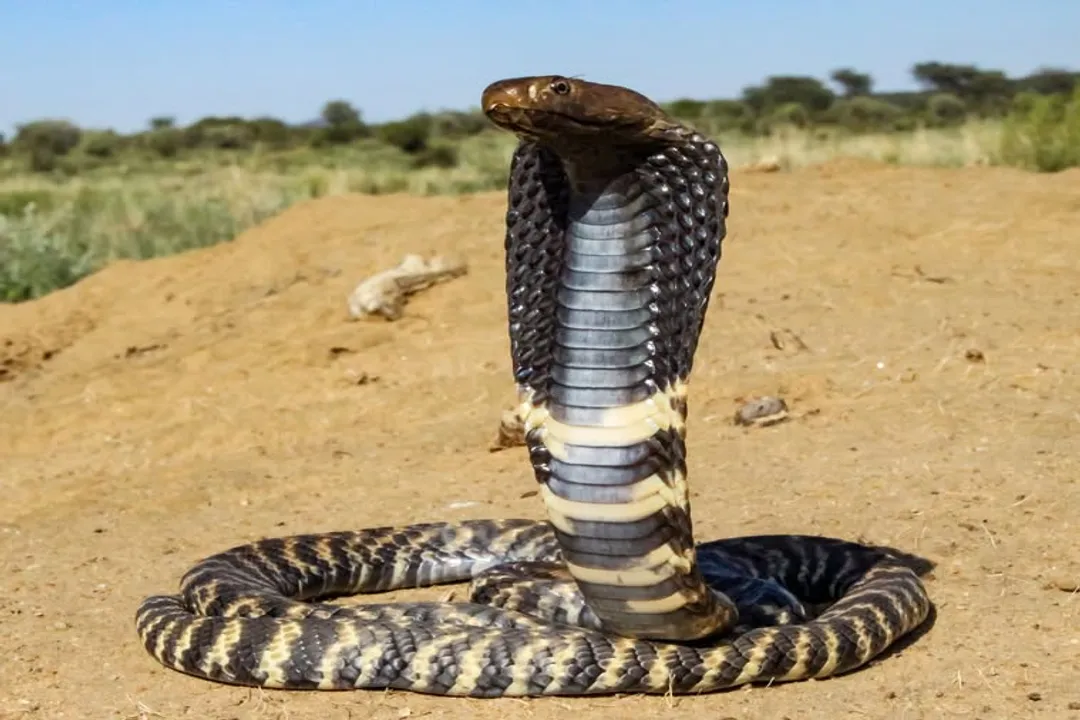
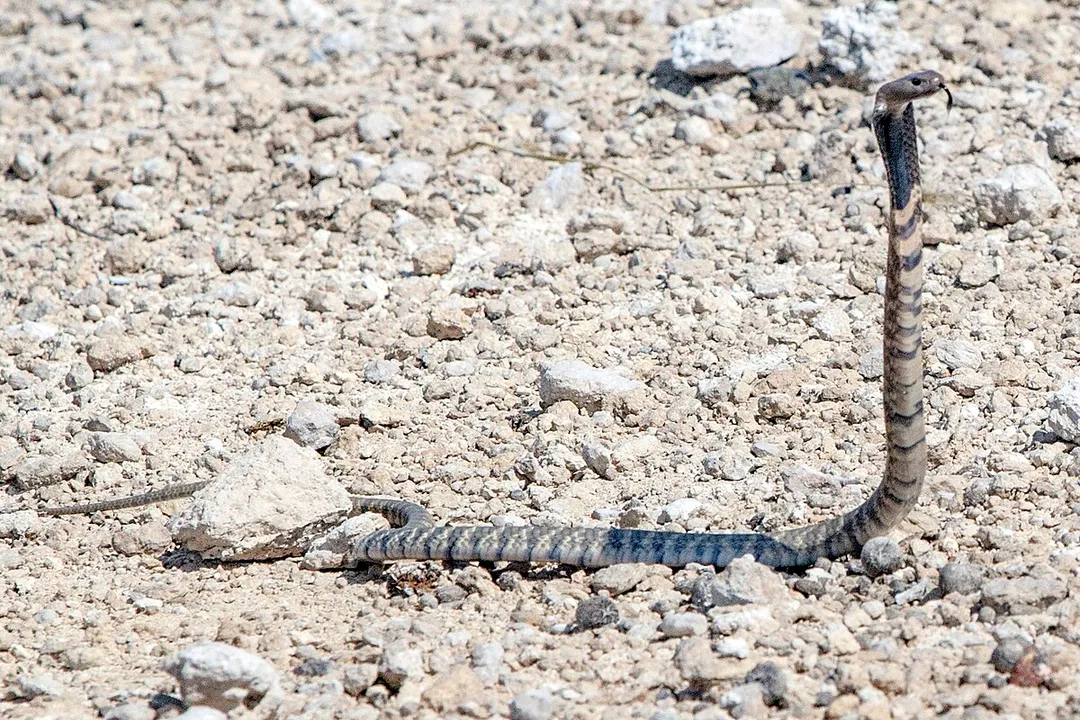
The common name stems directly from the prominent bands that encircle the body. [2] In some populations, particularly those found in dryer or desert-like regions, the snake may appear predominantly pale, sometimes nearly white or light yellowish, with dark bands that are less starkly contrasted. [3] Conversely, specimens from rainforest areas often exhibit deep, vivid black bands interspersed with equally bright white or pale yellow bands, creating a high-contrast effect reminiscent of its namesake mammal. [5][1] Adult snakes typically reach lengths between 1.2 to 1.8 meters (about 4 to 6 feet). [5] Like other cobras, when threatened, the Naja nigricincta can flatten its neck ribs to display its characteristic hood, a clear visual warning before resorting to other defensive actions. [1][3]
# Range Habitat
Geographically, the Zebra Spitting Cobra occupies a significant swath of West and Central Africa. [1][2] Its distribution spans countries like Cameroon, Gabon, Equatorial Guinea, Congo, and the Central African Republic. [1][5] This range places it within diverse ecological niches, contributing to the variations observed in its coloration and behavior. [3] They are adaptable creatures, inhabiting environments ranging from rainforests and savannas to scrubland and even cultivated areas near human settlements. [2][5] This adaptability means that encountering one is possible in a variety of settings, though they generally prefer areas with adequate cover. [3]
A point worth noting when considering the distribution is the overlap or proximity of this species' range with other dangerous African elapids. For instance, understanding the precise distribution boundaries is critical for local health authorities, as misidentification between the Naja nigricincta and a less geographically common but equally dangerous spitting cobra species could delay appropriate medical response in border regions. [1] The habitat diversity suggests that the snake has evolved behavioral flexibility to cope with different prey availability and climatic conditions across its extensive territory. [3]
# Night Habits
The Zebra Spitting Cobra is predominantly nocturnal. [2][5] This means that their most active period occurs after sunset and into the early morning hours, when they venture out to hunt and forage. [2][3] During the daylight hours, they typically seek refuge in secure locations, such as termite mounds, hollow logs, rock crevices, or under dense vegetation, staying hidden away from daytime predators and the heat of the sun. [2][5] This nocturnal tendency is a significant factor in determining when human encounters are most likely—often during early evening movements or when disturbances occur near their daytime retreats. [3]
# Diet Composition
As a carnivore, the Zebra Spitting Cobra’s diet primarily consists of small terrestrial animals. [5] Their menu typically includes rodents, such as mice and rats, small birds that venture near the ground, amphibians like frogs, and sometimes lizards. [2][3] They are opportunistic hunters, capitalizing on whatever small vertebrate prey is readily available within their nocturnal foraging range. [5] This reliance on small mammals suggests they play a role in controlling local rodent populations, which can be beneficial in agricultural settings, even as they pose a medical risk to people. [2]
# Defensive Behavior
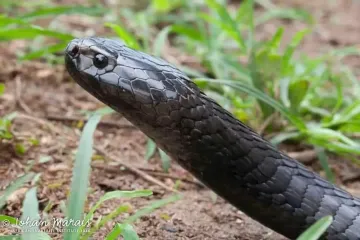
The Zebra Spitting Cobra possesses the classic defense arsenal associated with its genus: the ability to rear up, spread its hood, and, critically, spit venom. [2][5]
# Hood Display
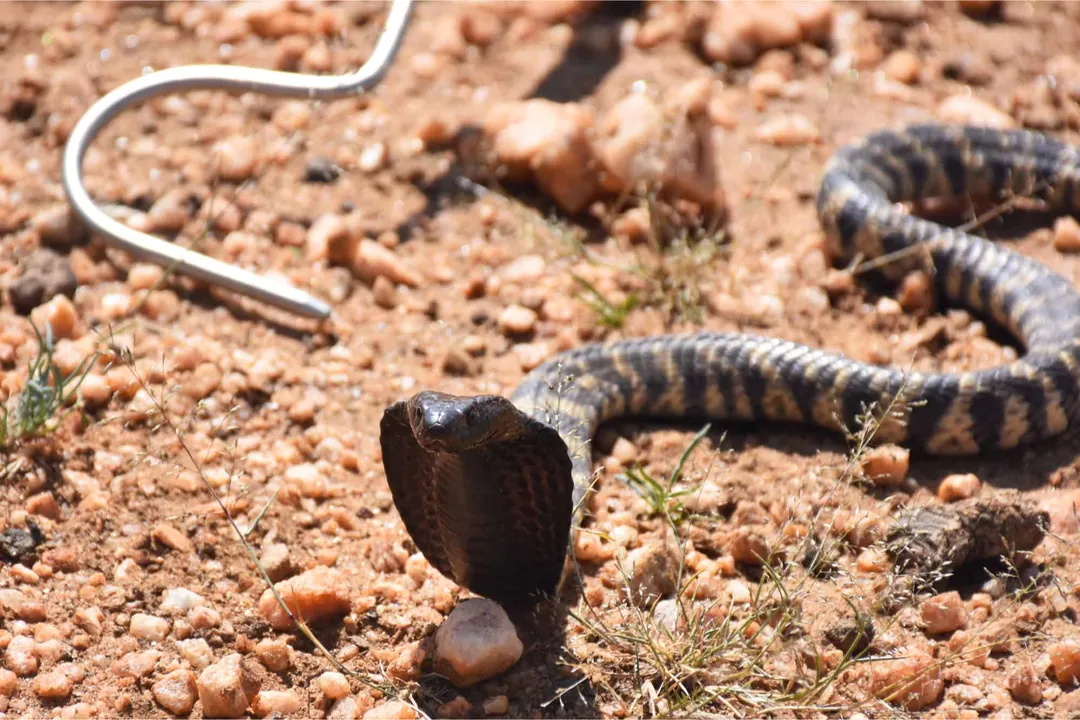
When feeling cornered or directly threatened, the first signal is usually the posture change. The snake will raise the front third of its body off the ground and spread its neck ribs wide to form the iconic flattened hood. [1][3] This display serves to make the snake appear much larger than it actually is, potentially intimidating a perceived threat into retreating. [1]
# Venom Projection
If the threat persists after the hood display, the cobra may resort to spitting venom. This action is not random; it is a precise, targeted defense mechanism aimed primarily at the eyes of the aggressor. [2] The snake contracts specialized muscles around its venom glands, forcibly ejecting a stream of venom through the ducts in its front fangs. [5] The effective range for this accurate spray is generally cited as being up to 3 meters (about 10 feet). [2][5] This remarkable ability means that threats do not need to be in direct physical contact to be endangered by the venom, providing a crucial buffer zone for the snake. [5]
It is fascinating to consider the biomechanics involved; unlike injecting venom through a bite, spitting requires the snake to rotate its fangs slightly forward and utilize significant muscular force to propel the liquid across a distance. [2][5] This adaptation suggests an evolutionary pressure favoring defense against visually oriented predators or large animals that approach cautiously, relying on sight rather than immediate physical contact.
# Toxicity Danger
The venom of the Zebra Spitting Cobra is highly potent, classifying it as medically significant to humans. [1][2] Like many elapids, its venom is primarily neurotoxic. [1][3] Neurotoxins attack the nervous system, leading to symptoms like blurred vision, difficulty breathing, paralysis, and potentially death if untreated. [1][3]
The danger is compounded by the dual threat of a bite and the effects of venom to the eyes. Eye contact with the sprayed venom causes immediate, intense pain, severe inflammation, and can lead to permanent blindness if not treated immediately and correctly. [2][5] This mandates that anyone working or living in their habitat should take precautions against eye exposure, as the effect of the spray is often cited as being more immediately disabling than a sub-lethal bite. [5]
When comparing the risk profile to some other cobras, the Naja nigricincta has a high degree of venom yield when it does bite, but the frequency of spitting as a first-line defense often dictates the nature of the immediate emergency. [3]
| Defensive Action | Target Area | Immediate Risk | Primary Composition |
|---|---|---|---|
| Hood Spreading | Visual | Intimidation | N/A |
| Venom Spitting | Eyes (up to 3m) | Temporary/Permanent Blindness | Neurotoxins/Cytotoxins |
| Biting | Any contact point | Systemic Neurotoxicity | Neurotoxins |
| [2][3][5] |
An important practical difference to appreciate is that while a bite delivers a concentrated dose systemically, a successful spit blinds the victim, rendering them helpless to manage the subsequent threat (whether it be the snake itself or other environmental dangers) while the neurotoxic effects of any venom absorbed from the bite begin to manifest. [1][5]
# Conservation Status
Information regarding the formal conservation status of Naja nigricincta often indicates that they are not currently listed as globally threatened, though precise data can be difficult to compile across their broad range. [5] Because they are adaptable and inhabit areas that are sometimes less intensely developed, their immediate population numbers are not generally considered to be in steep decline everywhere. [2] However, habitat loss due to deforestation and agricultural expansion, coupled with direct persecution by humans who fear the snake due to its venom, does pose localized threats. [3][5] Protecting their natural habitats, especially the transitional zones between forest and savanna, is key to ensuring their long-term survival within their native environments. [2]
# Encounter Safety
Given the natural proclivity of this snake to defend itself with venomous spray, understanding how to minimize conflict is paramount for residents or researchers in Central and West Africa. [5]
First, avoidance is the only certain prevention. [3] Since these snakes are most active at night, wearing high, sturdy boots and using a reliable light source when walking after dark in known habitats is a basic but highly effective measure. [2][5] Never walk barefoot or wear open sandals in these environments once the sun sets.
Second, if you do encounter one during its active hours and it raises its hood, do not approach it, and absolutely do not attempt to engage or provoke it. [3] The snake is communicating its alarm. Back away slowly and deliberately, giving it a clear line of retreat. Trying to scare it away with sudden movements might trigger the defensive spit, as this is often the snake’s immediate response to a perceived imminent attack. [2]
Finally, if working in an area heavily populated by these cobras, having immediate access to first aid protocols for venom exposure is essential. For eye contamination, the single most crucial immediate action is copious irrigation with clean water for at least 15 to 20 minutes, aiming to dilute and flush the irritants and toxins from the eye surface before medical help can be sought. [5] This immediate flushing response can dramatically reduce the severity of the resulting damage compared to waiting for specialized medical care to arrive. [5] This highlights a critical piece of local knowledge: accessibility to water can be as important as access to antivenom in the first moments of a spitting incident.
The Zebra Spitting Cobra remains a formidable and fascinating reptile, a master of camouflage and accurate defense in the African wild. [1][3] Understanding its habits and respecting its space is the best way to coexist with this powerful elapid. [2]
#Videos
How to identify the infamous Zebra snake! - YouTube
Related Questions
#Citations
Naja nigricincta - Wikipedia
Zebra Spitting Cobra Animal Facts - Naja nigricincta
Zebra Spitting Cobra | Made in the Wild
Zebra Spitting Cobra Characteristics and First Aid in Windhoek ...
Zebra Spitting Cobra Facts & Photos | Wowzerful
Naja nigricincta - Facts, Diet, Habitat & Pictures on Animalia.bio
Zebra Spitting Cobra Facts and Pictures - Reptile Fact
How to identify the infamous Zebra snake! - YouTube
Zebra Spitting Cobra | Animal Database - Fandom