Zebra Facts
The zebra, an iconic symbol of the African savanna, is instantly recognizable by its striking monochrome coat, yet it harbors a complexity far deeper than its bold visual appearance suggests. [8] As members of the Equidae family, zebras share ancestry with horses and donkeys. [3][10] However, unlike their more familiar relatives, zebras have resisted domestication efforts throughout history, maintaining a wild spirit and unique social dynamics that have intrigued observers for centuries. [9] They are native only to Africa, inhabiting a variety of landscapes from open grasslands to more arid, mountainous terrain. [3]
# Equine Kinship
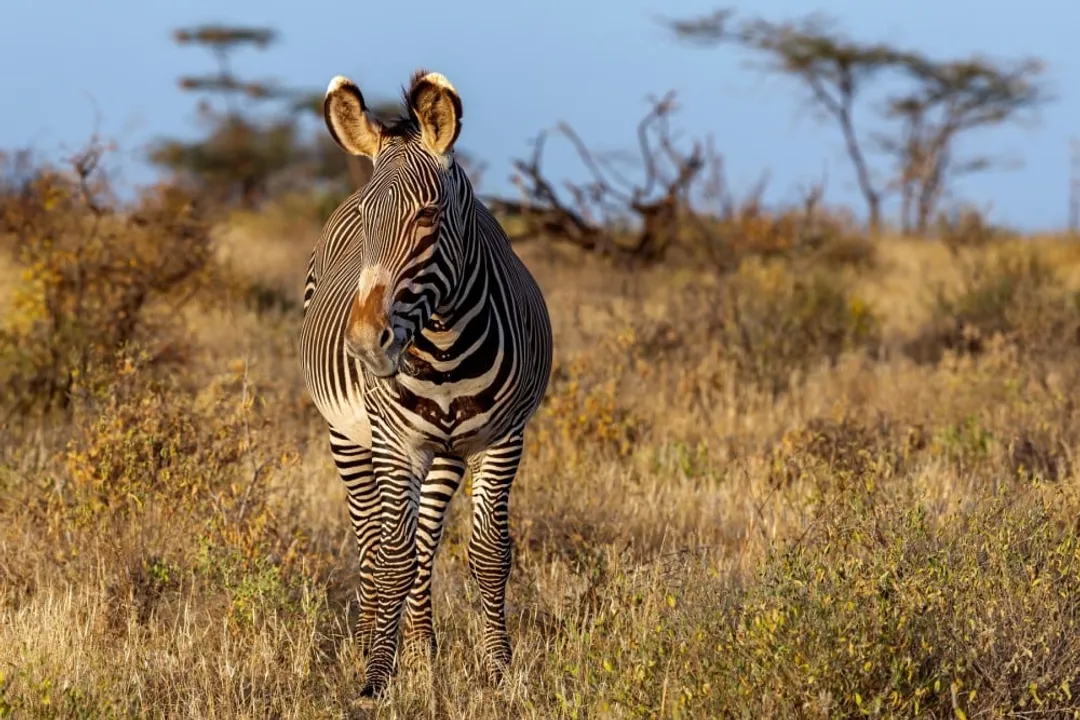
Zebras belong to the genus Equus, which groups them with horses and asses. [3] While visually distinct due to their stripes, they share the general body shape and herbivorous diet typical of equids. [4] It is a common misconception that zebras are simply wild horses with stripes; they are distinct species with their own evolutionary paths and behavioral patterns. [3] For instance, the internal differences, such as the number of chromosomes, separate them from horses and donkeys. [3] A historical relative, the Quagga, which was a subspecies of the Plains zebra, is now extinct. The Quagga was notable because its stripes were confined primarily to the front half of its body, fading into a plain brown toward the rear. [3] This variation within the Equus line highlights the spectrum of adaptation within this group of mammals. [3]
# Stripe Patterns
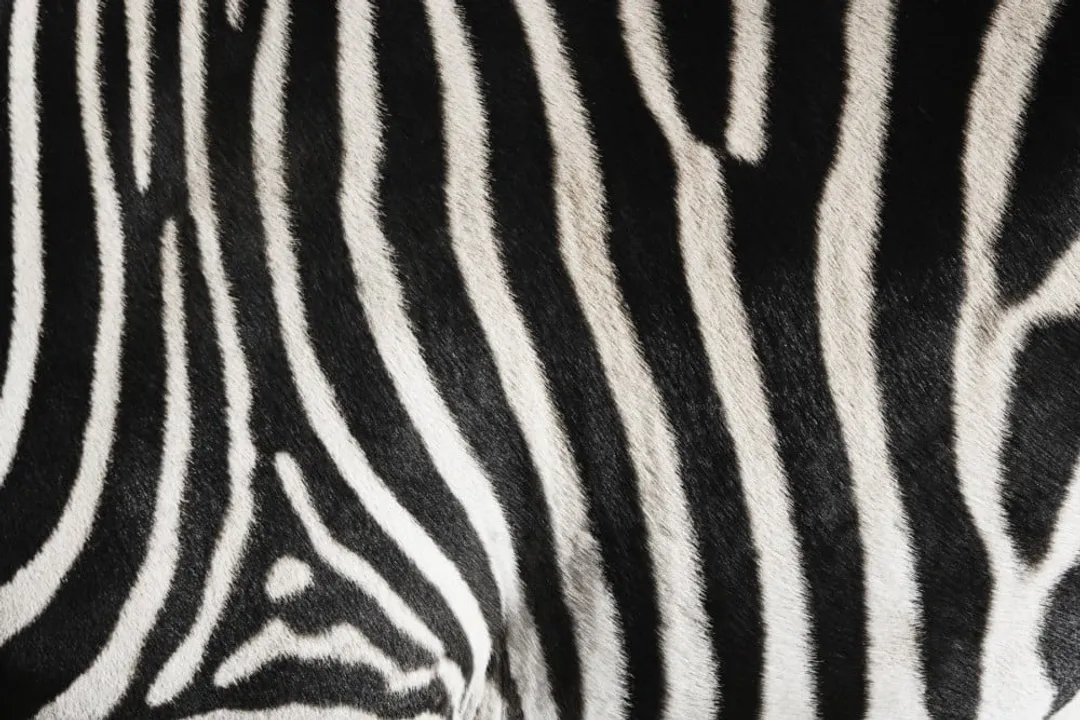
The most famous characteristic of the zebra is its pattern of black and white (or dark brown and white) stripes. [1][5] A fascinating point for enthusiasts is that these patterns are unique to every individual zebra, serving as a biological fingerprint that allows researchers and herd members to distinguish one from another. [1][5][9] Even identical twins, if they existed in zebras, would likely exhibit variations in their stripe arrangement. [5]
The debate over the primary function of these stripes has long occupied biologists. [3] Two major theories dominate: camouflage and insect deterrence. [1][5] From a distance, especially in the flickering light of the African sun or when zebras are moving in a large group, the stripes can create a dazzle camouflage effect, making it difficult for predators like lions to single out an individual target. [1][3] However, the stripes are just as pronounced when the zebra is standing still, which seems counterintuitive for standard camouflage. [3]
This leads to the compelling alternative theory regarding biting flies, such as horseflies and tsetse flies. [1][5] Research suggests that the narrow, high-contrast stripes disrupt the polarization of light reflecting off the animal's body. This visual disruption makes it harder for blood-seeking insects to execute a controlled landing. [5] Considering the role of these flies in transmitting diseases, an effective anti-fly mechanism offers a significant survival advantage. [1]
It is worth noting that while the stripes appear black and white, the underlying coloration is generally darker. The white stripes are believed to be areas where pigment production is suppressed, meaning the base coat color is closer to black or dark brown. [3]
# Species Differences
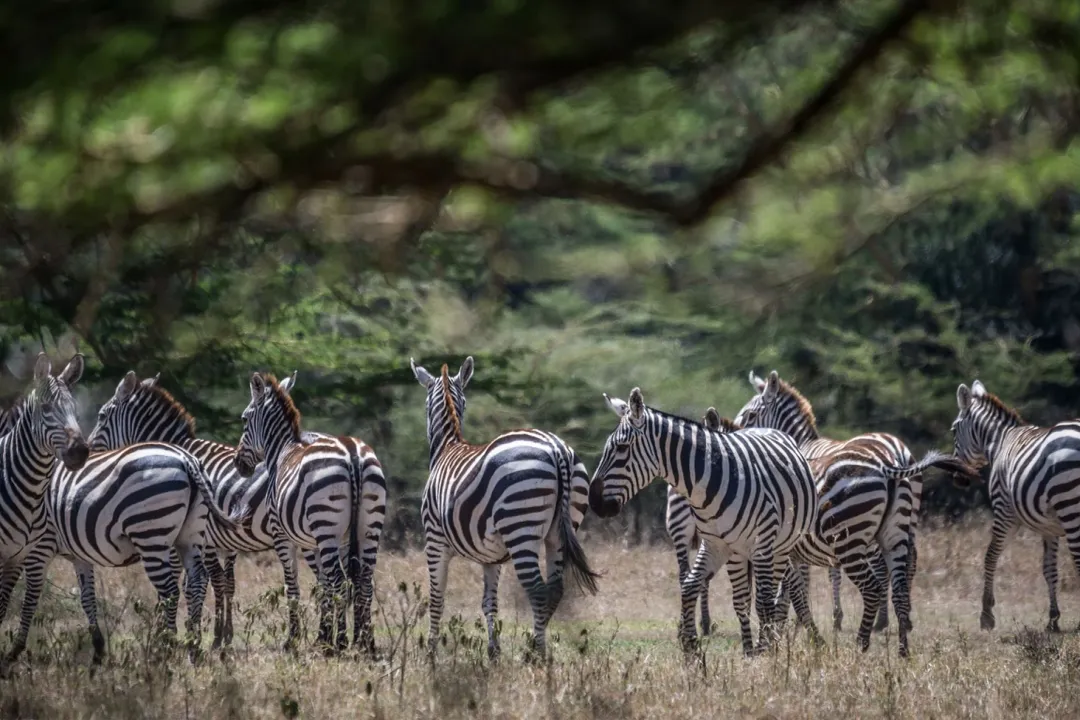
While the term "zebra" is often used generally, there are three distinct species, each adapted to different ecological niches across Africa. [3][6] Understanding these differences is key to appreciating the full scope of the genus Equus in Africa.
# Plains Grazers
The Plains zebra, Equus quagga, is the most common and widespread of the three species. [3][6] They are typically found across eastern and southern Africa in savannas and grasslands. [3] Their stripes are generally broad, and in some subspecies, they can extend down the legs, sometimes fading or exhibiting "shadow stripes" between the main dark bands. [3] Plains zebras are highly social, forming stable family units, making them the most structured in terms of harem life. [3] They are often referred to as pioneer grazers because they tend to consume the taller, coarser grasses that many other grazing species may avoid, thereby preparing the pasture for other herbivores. [10]
# Mountain Dweller
The Mountain zebra, Equus zebra, is distinctly different, adapted to the harsher, drier, and often elevated terrain of southwestern Africa, primarily in Namibia and South Africa. [3][6] These zebras are generally smaller than Plains zebras. [3] A key identifying feature is the presence of a prominent, dewlap-like fold of skin on their throat, which is absent in the other two species. [3] Their striping pattern is finer than the Plains zebra, and they possess a unique, continuous stripe running down the center of their rump into the tail. [3] Furthermore, Mountain zebras have a distinctive grid-like pattern on their hindquarters, setting their stripe configuration apart. [3]
# Grévy's Range
The Grévy's zebra, Equus grevyi, holds the title of the largest wild equid in Africa. [3] Found in the semi-arid grasslands of northern Kenya and a small pocket of Ethiopia, these zebras are masters of drier environments than the Plains zebra. [3][6] They are easily differentiated by their very narrow, closely spaced stripes that do not extend to the belly or the rump, which remains white. [3] Their ears are large and rounded, offering another visual cue to distinguish them from the Plains zebra. [3] Socially, the Grévy's zebra differs significantly; males are territorial, while females roam across these territories, resulting in a less fixed family structure compared to the Plains zebra harem. [3]
| Feature | Plains Zebra (E. quagga) | Mountain Zebra (E. zebra) | Grévy's Zebra (E. grevyi) |
|---|---|---|---|
| Habitat | Savannas, Grasslands | Arid, Mountainous Regions | Semi-arid Grasslands |
| Stripes | Broad, may have shadow stripes | Finer, grid pattern on rump, continuous tail stripe | Narrow, do not reach belly/rump, white belly |
| Distinguishing Mark | Variable stripe extension | Dewlap present | Large, rounded ears |
| Social Unit | Stable harems (stallion, mares, young) | Small harems/bachelor groups | Territorial males, nomadic females |
| Conservation Status | Near Threatened | Vulnerable | Endangered |
# Social Units
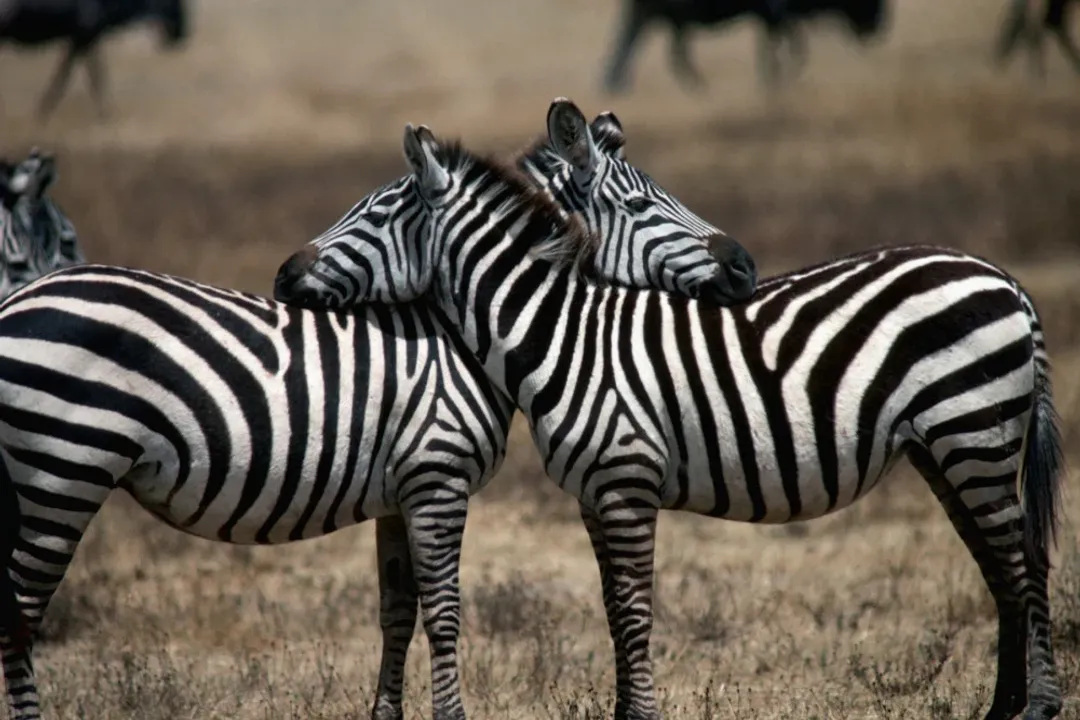
Zebra social life revolves around group living, a primary defense mechanism against predation. [3][10] The most complex and recognized structure belongs to the Plains zebra, where small family groups, or harems, are the foundation. [3] A typical harem consists of a single dominant stallion, several breeding mares, and their offspring. [3][10] These groups can occasionally join together to form massive aggregations, sometimes numbering in the thousands, especially when migrating to find better grazing or water resources. [3]
Contrast this stability with the Grévy's zebra, where social bonds are looser. Territory defense by the stallion dictates interaction, rather than a fixed family unit. [3] The females move freely between territories, ensuring a broader gene pool but less predictable daily grouping. [3] Mountain zebras maintain smaller harem sizes, often only a few mares and their young, alongside all-male bachelor herds that wait for opportunities to establish their own harems. [3]
This reliance on the group means that vigilance is shared. While some members graze, others typically keep watch. The ability to detect threats early is paramount to survival on the open plains. [3]
# Defenses Observed
When vigilance fails and a threat appears, zebras have several lines of defense. Their primary tool is speed; they are capable of running at speeds up to approximately 40 miles per hour (about 64 kilometers per hour). [5][9] This makes them faster than many of their land-based predators over short to moderate distances. [9]
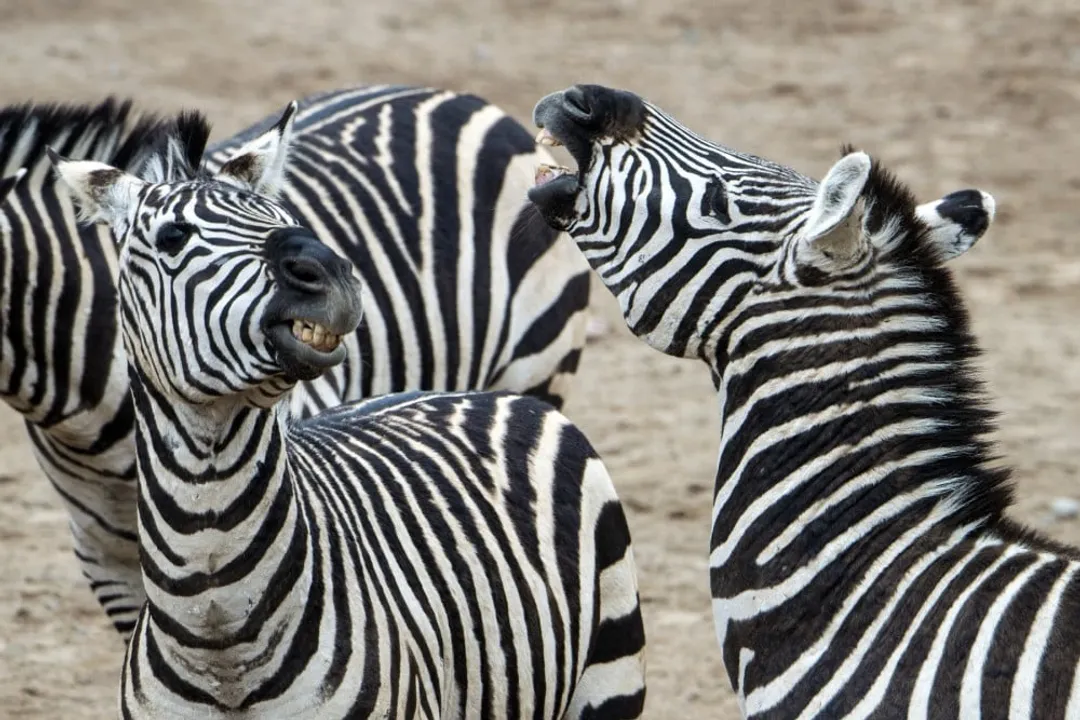
If cornered or forced into a confrontation, zebras are not defenseless. They can deliver powerful kicks with their hind legs that are strong enough to severely injure or even kill a predator such as a lion. [10] They will also bite aggressively when threatened. [10] When communicating alarm or distress, zebras let out a distinctive vocalization often described as a high-pitched bray or a horse-like whinny. [1][10]
Their sleeping habits are also adapted for defense. Zebras often sleep standing up, particularly when in a herd, which allows them to flee instantly should danger arise. [9] They usually only lie down to sleep for very short periods, often when they feel safe within the herd structure. [9]
# Stripe Evolution
The persistence of such a striking, metabolically expensive trait as high-contrast striping across differing environments suggests a powerful selective pressure. [3] When considering the ecological context, it is fascinating to analyze the trade-offs inherent in their coat design. If the camouflage effect were the sole driver, we might expect to see more subtle patterns in dense cover, or perhaps striping that becomes less defined as the animal ages or moves into shadowy environments. [1] The fact that the stripes remain bold, even on the endangered Grévy's zebra in its arid, open habitat, points strongly toward a defense against external biological irritants.
Imagine the cumulative effect of thousands of successful landing attempts by disease-carrying flies on an unstriped ungulate over a lifetime compared to a zebra. The energy saved from avoiding bites, coupled with the reduction in pathogen transmission—which can severely weaken an animal, making it an easier target for a lion—presents an enormous fitness advantage. [5] This ecological pressure, targeting tiny insects rather than large predators, is perhaps the most crucial factor in cementing the zebra's striped appearance into its genome. [5] It serves as a natural, built-in, high-efficiency insect repellent that requires no active behavior from the zebra to function.

# Reading Herd Behavior
For those who observe wildlife, understanding the subtle shifts in zebra herd dynamics can offer insights into the immediate environment. The shift from grazing to alert silence, or the sudden tightening of a harem group, is usually a direct response to perceived threat, often detected long before a human eye can spot the danger. [3]
A practical observation point centers on the leadership roles. In Plains zebra harems, the lead mare, often the oldest or most experienced female, dictates movement and where the group feeds or drinks. [3] If you watch a large aggregation and notice a consistent flow in one direction, look for the behavior of a few core mares initiating the movement; the rest of the herd follows this established, time-tested hierarchy. [3] This structured, non-verbal communication is highly efficient for large groups moving across vast, featureless terrain where a moment's hesitation can mean the difference between life and death. Paying attention to the direction of alert ears and the pause in chewing is often the best way to anticipate a herd's next action. [3][10]
# Conservation Status
Despite their familiarity, the long-term outlook for zebras is mixed, requiring active conservation measures, especially for two of the three species. [6] The Plains zebra is currently classified as Near Threatened, primarily due to ongoing habitat loss and degradation as human settlements and agriculture expand across their range. [6]
The situation is more urgent for the other two species. The Mountain zebra is listed as Vulnerable, facing pressures from habitat fragmentation and competition with livestock in their specialized, limited ranges. [6] Most concerning is the Grévy's zebra, which is classified as Endangered. [3][6] This species has suffered significant population declines, and its restrictive habitat, coupled with reliance on scarce water sources, makes it particularly susceptible to drought and human encroachment. [6] Poaching for skins and meat, though perhaps less emphasized than habitat loss, remains a threat across various populations. [6] Protecting these magnificent equids requires safeguarding the large tracts of African land they need to roam and maintaining the integrity of their unique social and ecological niches. [6]
#Videos
Zebra Facts - YouTube
Related Questions
#Citations
Zebra facts for kids | National Geographic Kids
Uncover 8 Surprising Facts About Zebras - World Animal Protection
Zebra - Wikipedia
Zebra | San Diego Zoo Animals & Plants
Zebra Facts: Habitat, Diet, & Conservation - IFAW
5 Fascinating Facts About Zebras - World Animal Protection US
Zebra Facts - YouTube
Our Top Ten Interesting Zebra Facts by Sophie Allport
12 Fun Facts About Zebras | Ultimate Kilimanjaro
Zebra | National Geographic Kids