Zebra Tarantula Evolution
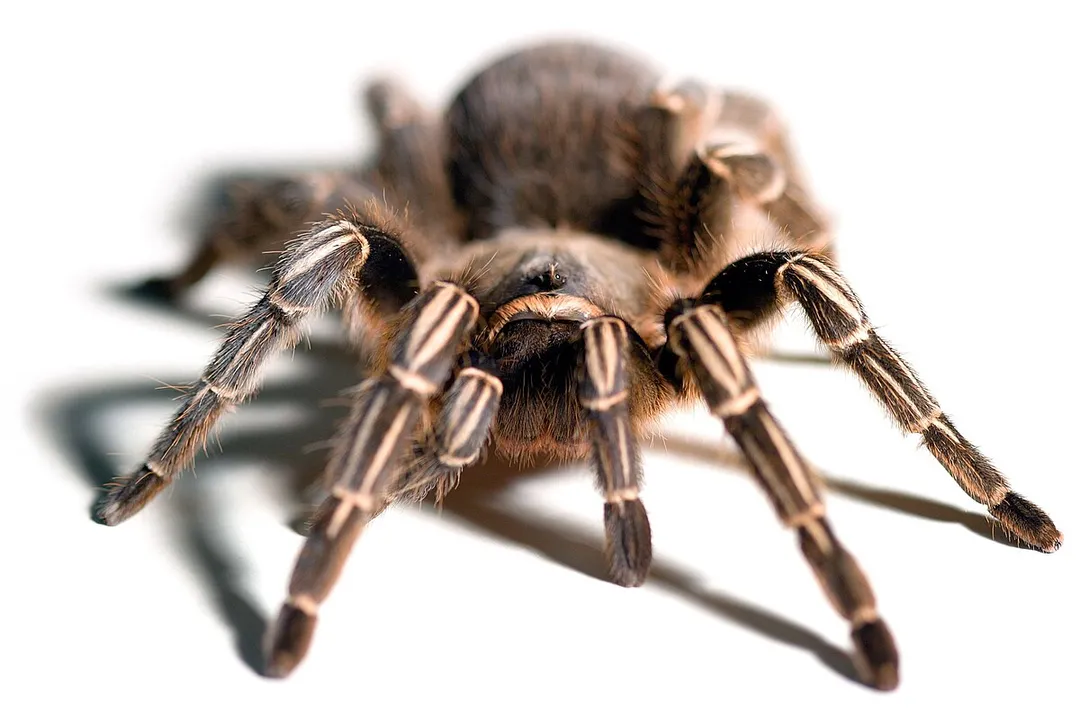
The distinctive black and white striping found on the legs and carapace of Aphonopelma seemanni gives this arachnid its memorable common name: the Zebra Tarantula. [1][4] While this patterning immediately sets it apart, tracing the evolutionary path of this particular New World tarantula involves looking closely at its taxonomy, its specific Central American homeland, and the specialized behaviors that define its existence on the forest floor. [1][2] Belonging to the genus Aphonopelma, which comprises many species often found in arid or semi-arid regions of the Americas, A. seemanni finds itself situated in an environment that differs somewhat from its relatives, influencing its adaptations. [1]
# Taxonomy Context
The formal classification of the Zebra Tarantula places it squarely within the family Theraphosidae. [1] The genus Aphonopelma is significant, representing a major radiation of tarantulas in North and Central America. [1] This genus often contains species that are relatively long-lived and terrestrial. [2] When considering the evolution of A. seemanni, it is helpful to briefly contrast it with other striped arboreal species, such as Cyriopagopus albostriatus, the Cobalt Blue Tarantula, which is Old World. [9] Though both share striking linear markings, their evolutionary divergence is vast, with A. seemanni evolving defensive strategies suited for a ground-dwelling existence reliant on terrestrial camouflage and urticating hairs, rather than the climbing agility common in some Asian arboreal genera. [1][9]
The identification of A. seemanni is sometimes complicated by variation within the species itself, particularly concerning the visibility and prominence of the stripes, which can differ based on geographical origin. [1][5] This intraspecific variation is a classic signal of evolutionary pressures acting differently across fragmented populations, even within a relatively confined geographic range. [1]
# Geographic Origin
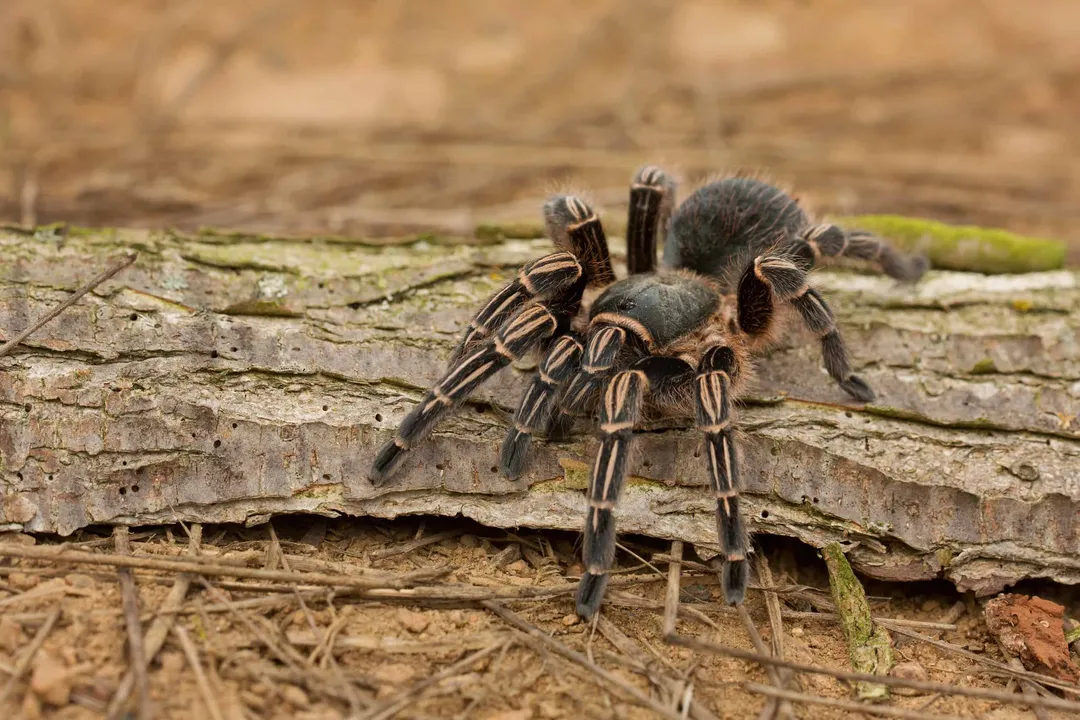
The historical range of the Zebra Tarantula is primarily Central America, with established populations noted in countries such as Guatemala, Nicaragua, Costa Rica, and Panama. [1][5] This region presents a varied set of environmental challenges, typically characterized by a tropical or subtropical climate with distinct wet and dry seasons. [5]
The fact that A. seemanni is endemic to these specific geographic locales is crucial to understanding its evolutionary trajectory. Life in the understory—the area beneath the main forest canopy—means the tarantula is constantly interacting with leaf litter, soil substrates, and the predator/prey dynamics present at ground level. [2] This necessitated an evolutionary emphasis on ground-based survival mechanisms over aerial or arboreal ones. [2] For instance, their common preference for creating silken-lined burrows, or being fossorial, is a direct response to the need for stable temperature and humidity regulation, as well as protection from terrestrial predators that roam the jungle floor. [2][5]
One might consider the selective pressure this environment places on visual signaling. The black and white leg banding is often hypothesized to function as disruptive camouflage in the dappled sunlight filtering through the canopy onto the forest floor. [4] However, another interpretation suggests that these stark, high-contrast markings could function as a mild aposematic signal, warning potential ground predators of the species' primary chemical defense—the urticating hairs—even before direct confrontation occurs. [1][4] Unlike bright reds or yellows, which are universally recognized warning colors, the Zebra Tarantula's pattern may evolve to mimic local, non-toxic, but similarly patterned ground invertebrates, or perhaps serve as a simple, memorable pattern for local predators to associate with an unpleasant experience (the hairs). [7] This dual potential—both concealment and warning—is a fascinating outcome of their evolutionary niche.
# Defensive Evolution
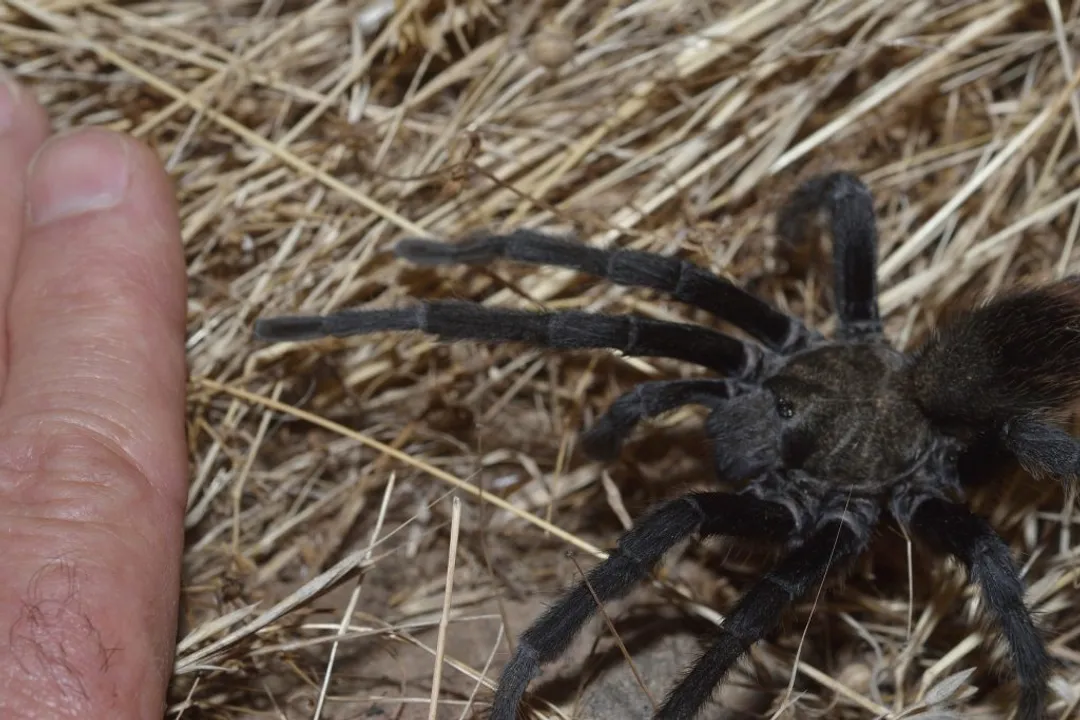
Like many New World tarantulas, A. seemanni is equipped with specialized defensive structures. [1] The most notable are the urticating hairs located on the abdomen. [1][4] When threatened, the tarantula can rapidly rub its hind legs against its abdomen, kicking these barbed hairs toward the aggressor. [1][4] This defense mechanism represents a successful evolutionary path away from the reliance on potent venom for defense against all threats, which is more common in Old World species. [7]
While the venom of A. seemanni is medically insignificant to humans, its evolutionary purpose is to quickly subdue prey, which consists primarily of insects and small vertebrates encountered on the ground. [1][7] Research into tarantula venom has shown that the specific cocktail of toxins present often reflects the phylogenetic history of the spider and the type of prey it specializes in capturing. [7] For a ground-dwelling generalist like the Zebra Tarantula, the venom composition is likely optimized for rapid immobilization of invertebrates that share its habitat, rather than the complex defense mechanisms needed against large mammals. [7] The evolution here shows a trade-off: investing heavily in a physical, irritant defense (hairs) allows the venom system to remain primarily focused on predatory efficacy. [1]
# Specialized Silk Use
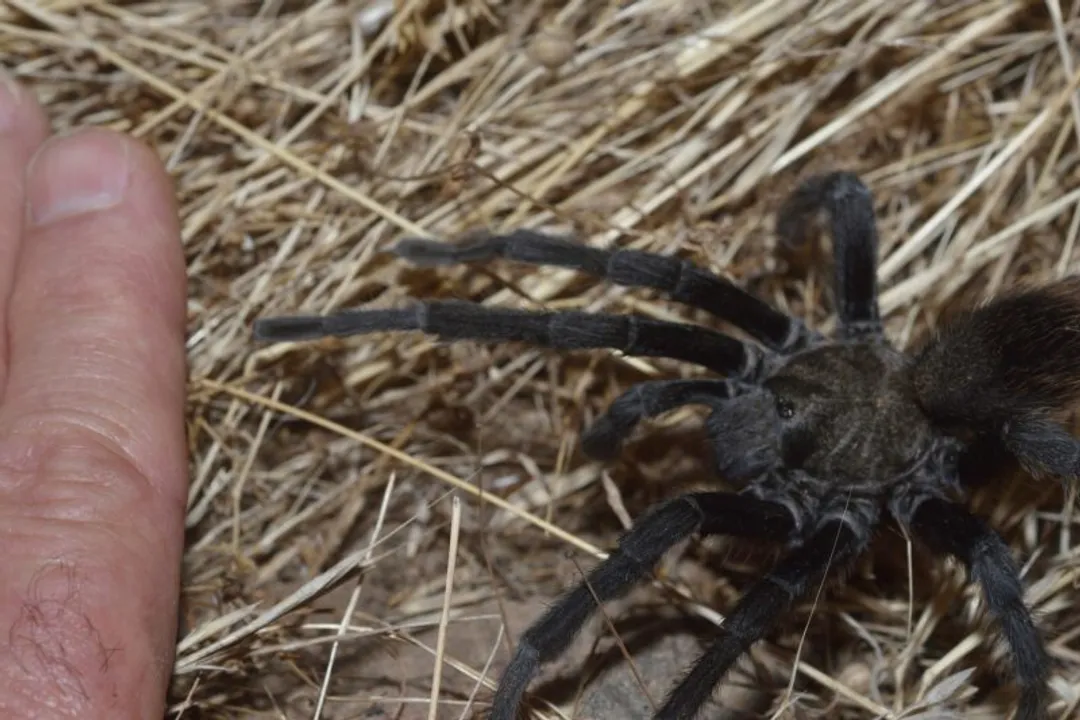
The creation and application of silk is another area where the evolution of A. seemanni offers specific insights. While the silk is used conventionally to line their burrows and create a protective mat upon which they will eventually molt, there is a specialized behavior observed in some tarantulas, including those in this lineage, that highlights how silk production is integrated with their terrestrial lifestyle. [6][2]
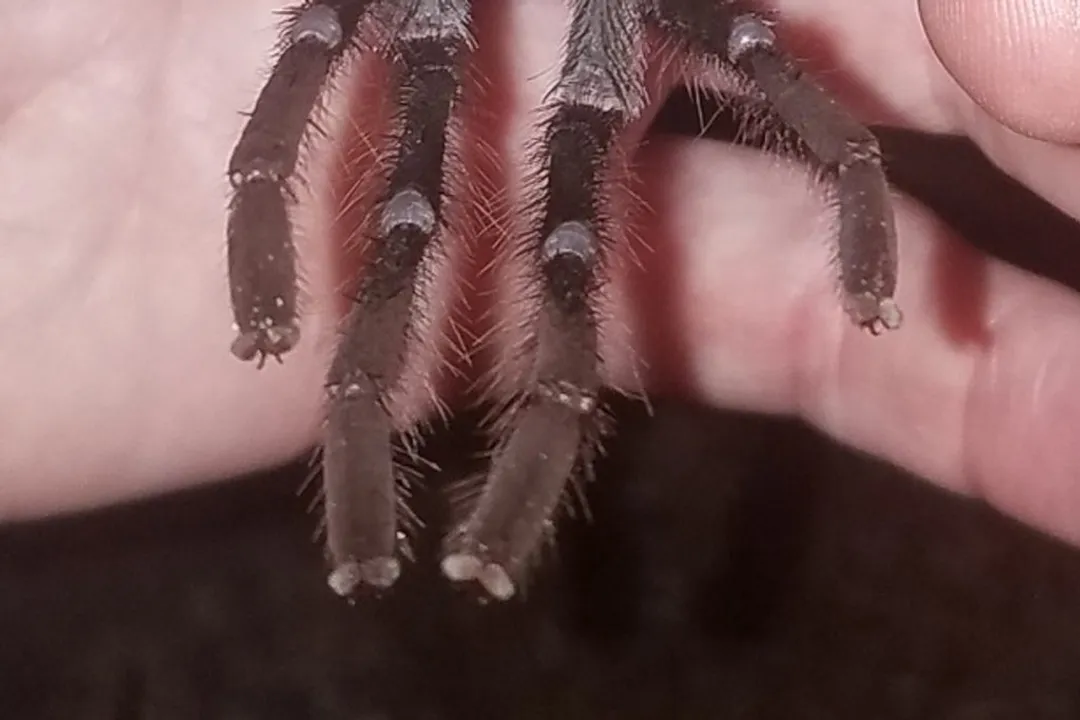
Some tarantulas have been observed using their tarsi, or feet, to spin silk, often seemingly drumming or tapping the substrate. [6] This is an uncommon adaptation compared to the silk extrusion primarily from the spinnerets at the abdomen's rear. [6] In the context of a fossorial animal like A. seemanni, this specialized foot-spinning could be an evolved trait for several environmental reasons. First, it allows for the rapid, localized repair of trip lines or the reinforcement of burrow entrances without needing to shift the entire body. [6] Second, in the confined, dark space of a burrow, using the feet for sensory input via taut silk strands, combined with reinforcing the structure, provides an advantage over relying solely on substrate vibration detection through the legs alone. [6]
If we analyze this trait, it suggests that the selective advantage was not gained by improving speed or web-building complexity (like orb-weavers), but by enhancing the structural integrity and sensory network within a fixed, subterranean home range. [6] This reinforces the evolutionary commitment of A. seemanni to a largely sedentary, burrow-based existence, where the silk structure is the interface with the outside world. [2]
# Life History and Pace
Evolutionary success isn't always about speed; sometimes it is about longevity and efficiency in resource use. A. seemanni exhibits a characteristic slow growth rate common to many large, terrestrial tarantulas. [2][5] Females, in particular, can live for many years, sometimes over two decades in captivity, though wild lifespans are harder to ascertain. [2][5] This extended lifespan is an evolutionary strategy that allows them to survive unpredictable periods of low prey availability, a common issue in seasonal tropical environments. [5]
The maturation time is also extended; females may take several years to reach sexual maturity, sometimes four to eight years. [2] In contrast, males mature much faster, often within one to two years, which drives a clear sexual dimorphism in life strategy: males prioritize rapid maturation to find a mate before they succumb to predation or environmental stress, while females prioritize slow, sturdy growth to maximize reproductive output over many seasons. [2] This difference in timing reflects distinct selective pressures acting upon the sexes throughout their respective life cycles. [2] It is a subtle but powerful demonstration of sexual selection shaping the developmental timeline of the species.
# Preserving the Pattern
The care requirements for A. seemanni indirectly reflect the environmental conditions that shaped its evolution. Maintaining high humidity during its active periods, coupled with the necessity for a deep substrate for burrowing, directly mirrors the needs of a creature adapted to the tropical leaf litter and soil layer of its native Central American range. [2][5] The pattern that defines them is inherently linked to the habitat that selected for it. While human intervention provides stability, the underlying evolutionary blueprint still calls for the dark, humid confines of a terrestrial retreat, decorated with high-contrast stripes that perhaps offer just enough visual ambiguity to deter an approaching shadow. [4] Understanding this link between geography, behavior, and morphology provides a clearer picture of the Zebra Tarantula not as a static object, but as a successful outcome of millions of years of environmental negotiation. [1]
#Videos
Costa Rican Zebra Stripe Knee Tarantula How To CARE for ...
Related Questions
#Citations
Aphonopelma seemanni
Aphonopelma seemanni Care
Big, Hairy Tarantulas | The Evolving Naturalist
Zebra Tarantula Animal Facts - Aphonopelma seemanni
Aphonopelma Seemanni | Costa Rican Zebra
Tarantulas spin silk from their feet
Tarantulas Produce Silk From Their Feet
Costa Rican Zebra Stripe Knee Tarantula How To CARE for ...