Zebra Snake Facts
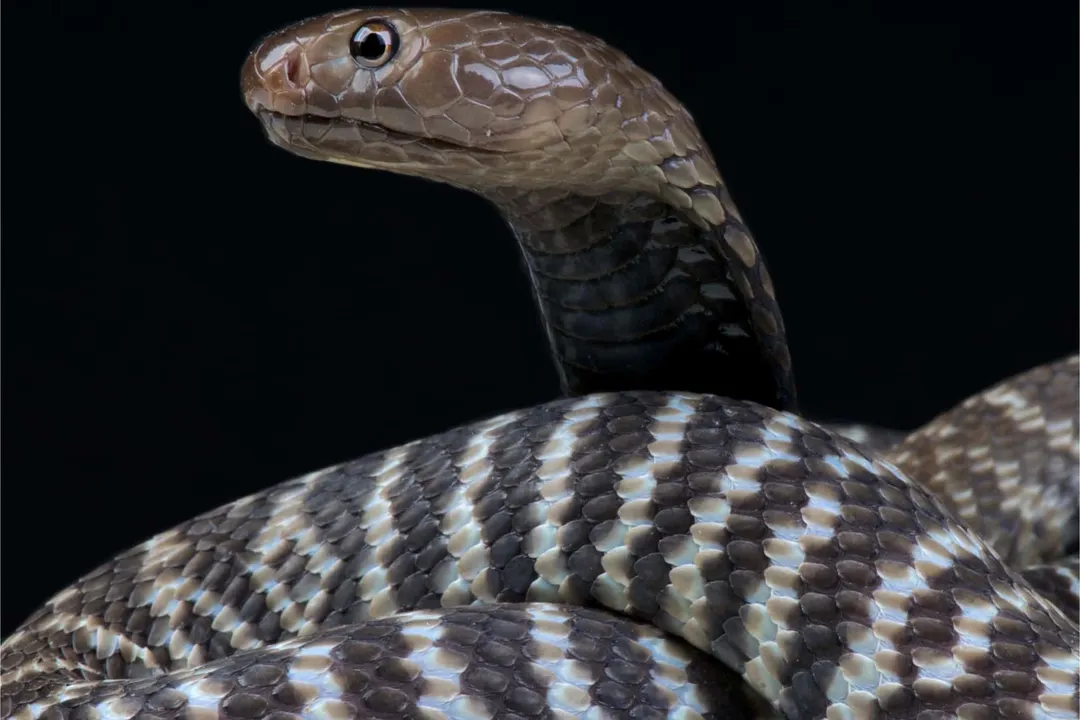
The creature commonly known across parts of Africa as the Zebra Snake often refers to Naja nigricincta, a species of spitting cobra known for its striking, often high-contrast, coloration. [3][2] While the common name suggests a uniform pattern, the reality of this snake’s appearance is much more varied, making identification in the field a genuine challenge even for experienced herpetologists. [3] This species belongs to the Elapidae family, which also houses many of the world's most medically significant snakes, placing the Zebra Cobra firmly in the category of reptiles demanding respect and distance. [8]
# Appearance Varied
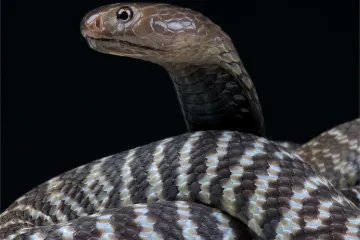
The most immediate feature that draws attention to this snake is the patterning that gives it its common moniker. In its classic form, the Zebra Snake displays dark crossbands alternating with lighter bands across its body. [2] These bands can range in color; for instance, the light bands might be whitish, yellowish, or even pale brown, contrasting sharply with the darker bands, which can be black or dark brown. [5][3] The width of these bands is highly variable, leading to significant differences in appearance across its geographic range. [2]
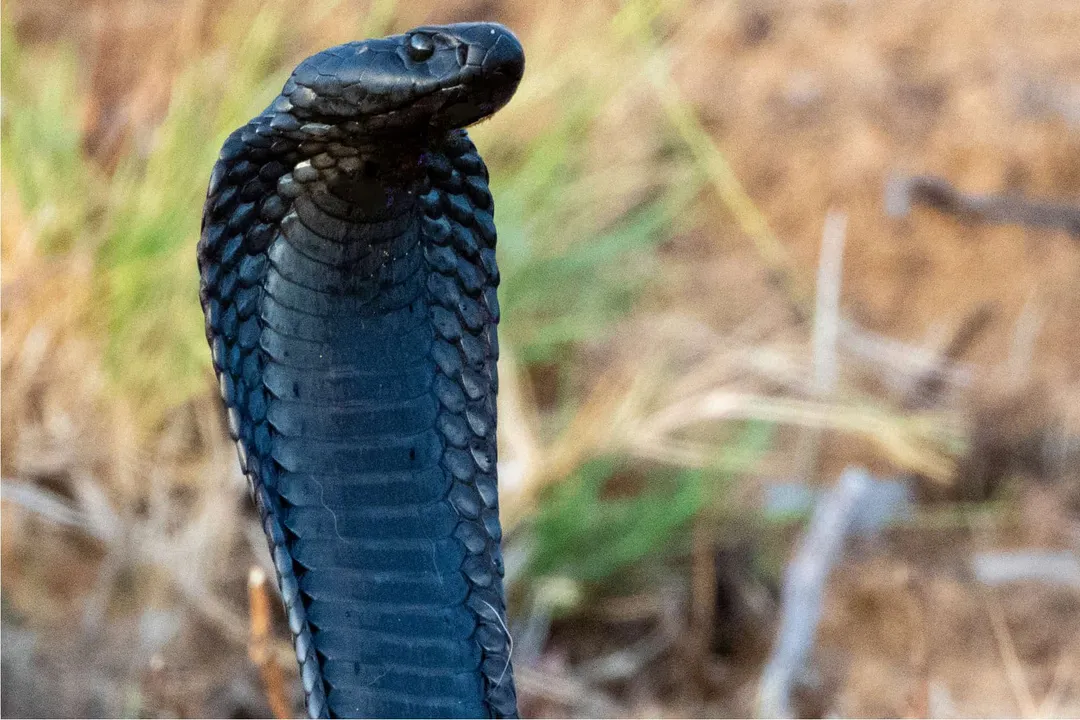
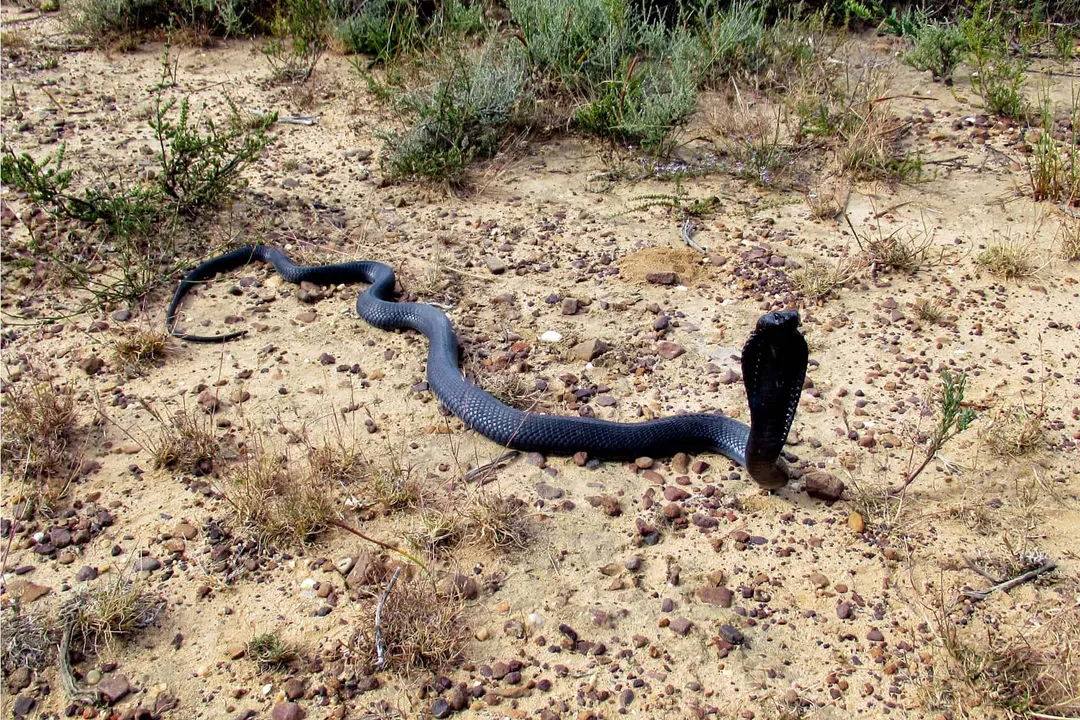
However, the visual presentation is further complicated by regional melanism, resulting in what is often referred to as the "Black Zebra Cobra". [3][5] In certain areas, individuals are almost entirely jet black, lacking the distinct banding seen elsewhere. [3] It is crucial for observers to understand that this uniform black coloration does not mean they have encountered a different species entirely; it is simply one extreme of the Naja nigricincta spectrum. [2] Sometimes, even these entirely black specimens might show faint remnants of the lighter bands, perhaps visible only in good light or as the snake stretches. [5]
Regarding size, the Zebra Snake is a moderately large cobra, frequently reaching lengths between 1.2 to 1.5 meters (about 4 to 5 feet). [1][4] Larger specimens have been reported, sometimes approaching two meters in length, though these impressive sizes are less common. [1] Females generally tend to be slightly larger than males. [4] Like many cobras, when threatened, they possess the ability to flatten their necks into the characteristic hood, a defensive posture that makes them appear much broader and more intimidating than their actual body diameter. [2]
# Distribution Range
Naja nigricincta is native to western and central Africa, occupying a substantial area across the continent. [3][7] Its range stretches from West Africa eastward into Central Africa. [1] Specifically, its distribution encompasses countries such as Nigeria, Cameroon, Gabon, the Republic of the Congo, and the Democratic Republic of the Congo. [3][7] The precise boundaries of its distribution are continually being refined as taxonomic studies progress, particularly in distinguishing it from closely related species. [3]
The preferred environments for the Zebra Spitting Cobra are quite adaptable, reflecting its wide distribution. [5] They are commonly found in moist forests, rainforests, and woodland areas. [2] They also inhabit secondary growth forests, clearings, and even areas near human habitation, such as agricultural lands or plantations, provided there is adequate cover and prey availability. [5][1] This willingness to inhabit areas bordering human activity is a key factor contributing to potential human-snake interactions. [5] If you were observing this snake in, say, a lightly disturbed patch of savanna woodland bordering a dense gallery forest in Gabon, you would be right in the middle of its expected territory. [3]
# Defensive Tactics
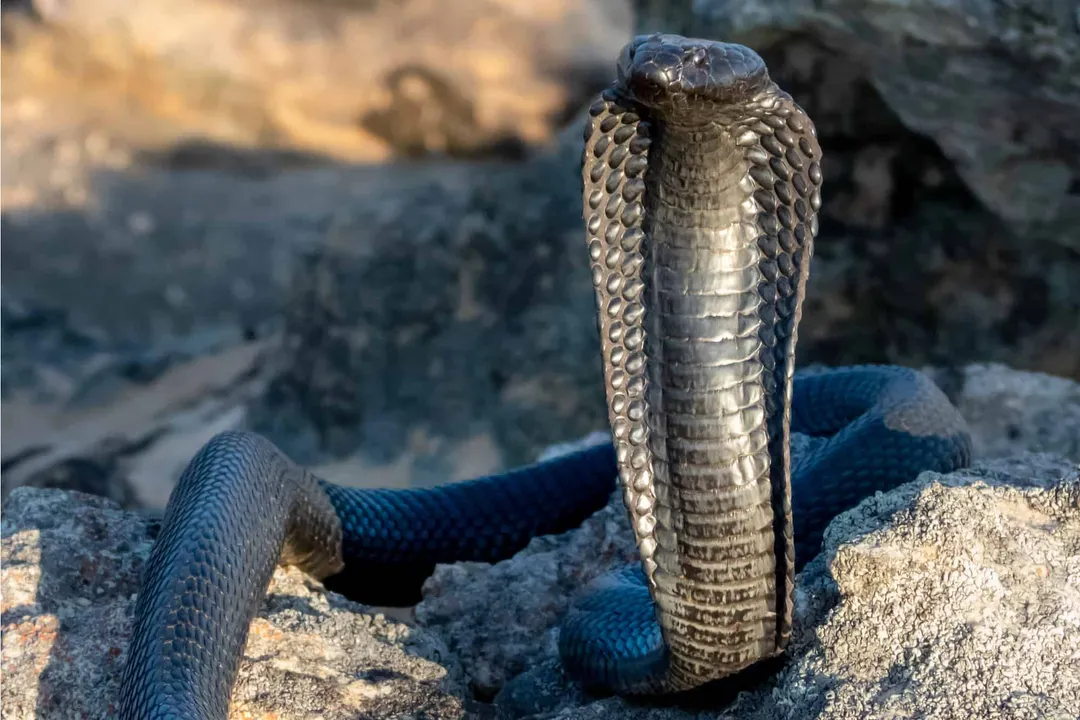
The most feared and famous defense mechanism employed by this species is its ability to spit venom. [2][8] This behavior is a specialized action that distinguishes it from many other African cobras that might only bite defensively. [2] The snake achieves this by contracting muscles around its venom glands with such force that the potent fluid is expelled through openings, or ducts, located near the tip of its fangs. [5]
The primary target for this venom spray is the eyes of a potential threat. [2] When spitting, the snake typically raises its head high, spreads its hood, and then forcefully contracts its venom glands, often directing the spray with surprising accuracy. [5] A direct hit to the eye can cause immediate, intense pain, severe inflammation, and potentially permanent blindness if not treated immediately. [2] This defense mechanism is energy-intensive and is usually reserved for when the snake feels cornered or when its initial threats (like hooding) have failed to deter the perceived danger. [5]
Should spitting fail, or if the snake is physically grabbed or steps on, it will readily bite. [2] The venom delivered via a bite is a powerful neurotoxin complex that attacks the nervous system, potentially leading to paralysis and respiratory failure if sufficient venom is injected. [2][1] While its spitting venom is primarily cytotoxic and damages the eyes, the venom delivered systemically through a bite has significant neurotoxic effects, similar to other cobras. [1]
It is interesting to note how the effectiveness of spitting relates to the situation. While a snake spitting at a large mammal like a human is usually aiming for the eyes as a distraction, a snake cornered and biting is maximizing venom delivery to neutralize an immediate physical threat. A non-venomous snake might rely on purely visual displays or fleeing; the Naja nigricincta has evolved a highly effective, non-lethal (to the attacker) deterrent (spitting) alongside its lethal backup (biting). [5]
# Feeding Habits
The diet of the Zebra Snake is varied, consisting primarily of small mammals, frogs, and sometimes lizards or smaller snakes. [1][4] Being an active predator, it hunts primarily on the ground, using its sense of smell and ground vibrations to locate prey. [4] Their hunting strategy is generally opportunistic, taking whatever appropriately sized meal they can subdue. [1]
Because they are often found near human settlements or agricultural areas, they may occasionally prey on rodents that are attracted to stored grains or refuse, which can sometimes lead to a beneficial, albeit dangerous, coexistence for farmers controlling pests. [5] After subduing prey, which is typically done with a quick bite followed by venom injection, the snake will then swallow the meal whole. [4]
# Reproduction Cycle
Information regarding the full reproductive cycle of Naja nigricincta in the wild can be harder to document than physical descriptions, but some general aspects are known. [3] Like many oviparous (egg-laying) snakes, the female will deposit a clutch of eggs following a successful mating season. [3]
A typical clutch size ranges between 10 to 15 eggs, though this can vary based on the size and health of the female. [1] After laying the eggs, the female usually abandons them, as maternal incubation is not characteristic of this species. [1] The young snakes emerge from the eggs as miniature versions of the adults, already equipped with the potential to spit venom, although their aim and venom yield are likely inferior to those of mature adults. [4]
# Taxonomy and Nomenclature
The scientific classification places the Zebra Snake within the genus Naja, the true cobras. [7] For some time, there was considerable debate and reclassification surrounding this species, particularly concerning its relationship with the Forest Cobra (Naja melanoleuca). [3] The current accepted scientific name, Naja nigricincta, solidifies its status as a distinct species. [3][7] It is important to recognize that nomenclature can shift; what was once called a subspecies or variant might now be recognized as a full species, or vice versa, based on genetic analysis. [3]
A key point of comparison, especially for those in regions where distribution overlaps, is differentiating the Zebra Spitting Cobra from the Black Forest Cobra (Naja melanoleuca). While both can appear black, the N. nigricincta generally retains some banding characteristic, even faintly, and the two species occupy slightly different ecological niches or ranges, though overlap exists. [3] Comparing the head shape or the arrangement of scales, while not practical for the average person encountering one, is how experts confirm the identity. [3]
When looking at data across multiple species, a pattern emerges: the more widespread and visually variable a snake species is across different habitats, the more likely it is that older classifications grouped several distinct populations under one umbrella name. [3] The variations seen in N. nigricincta—from heavily banded to pure black—might suggest that while it is one species now, it has significant localized adaptations occurring across its vast African territory. [2][5]
# Conservation Status and Human Interaction
As of current assessments, Naja nigricincta is generally not listed as a species of high conservation concern globally, though localized threats remain significant. [7] The primary threat comes not from habitat loss across its entire range, but from direct human conflict. [5] Because they are potent venomous snakes found in areas where human populations are expanding, encounters are inevitable. [2]
Understanding the snake's behavior is the best preventative measure. If you encounter a Zebra Snake, the first sign of distress will likely be the flaring of the hood, potentially accompanied by hissing. [2] If this warning is ignored, the spitting behavior follows. [5] The best advice, which holds true for any cobra, is to maintain distance, never provoke it, and allow it an unimpeded path to retreat. [2] If the snake is inside a dwelling, professional removal is always the safest course of action rather than attempting capture or relocation yourself. [5]
For field workers or researchers in areas endemic to this snake, one practical consideration for minimizing risk when observing is to always wear sturdy, high-top boots and long, thick trousers, as most defensive bites occur below the knee when the snake is accidentally stepped on or trod near. [1] While this offers little protection against a direct eye-spit, it mitigates the most common injury mechanism encountered during accidental terrestrial disturbance.
When considering the vastness of their range, it is worth noting that accurate population estimates are difficult to ascertain. The snake's secretive nature and preference for dense cover mean that many individuals likely go uncounted in standard surveys, meaning its conservation status might be artificially secure on paper due to a lack of comprehensive negative data. [7]
# Venom Profile Summary
To provide a clearer picture of the danger, it's useful to compare the results of the two primary defense methods. [2]
| Defense Method | Primary Effect | Target Tissue | Medical Urgency |
|---|---|---|---|
| Spitting | Cytotoxic/Necrotic | Eyes/Cornea | Immediate first aid needed to prevent vision loss [2] |
| Biting | Neurotoxic | Nervous System | High, requires antivenom to prevent systemic failure [1][2] |
The venom composition, like that of many cobras, is complex, containing pre-synaptic and post-synaptic neurotoxins. [1] These agents interfere with nerve signaling, which stops muscles from receiving the signals necessary to function, leading to paralysis. [1] While immediate systemic effects might not be as rapid as some of the most potent neurotoxic snakes, without treatment, paralysis of the breathing muscles will lead to death. [1]
For anyone living or working in their territory, awareness translates directly into safety. Recognizing the distinct hooding posture is the critical first step in avoiding the more severe outcomes associated with this remarkably patterned African serpent. [5]
Related Questions
#Citations
Zebra Snake Animal Facts - Naja nigricincta
Zebra Cobra
Naja nigricincta
Zebra Snake Facts & Photos
Zebra Spitting Cobra
Zebra Spitting Cobra from Windhoek. ...
Naja nigricincta - Facts, Diet, Habitat & Pictures ... - Animalia
Spitting cobra | Types, Species, Range, Venom, & Facts