To what specific type of terrestrial environment is the native Aphonopelma seemanni adapted in Central America?
Answer
Dry forests.
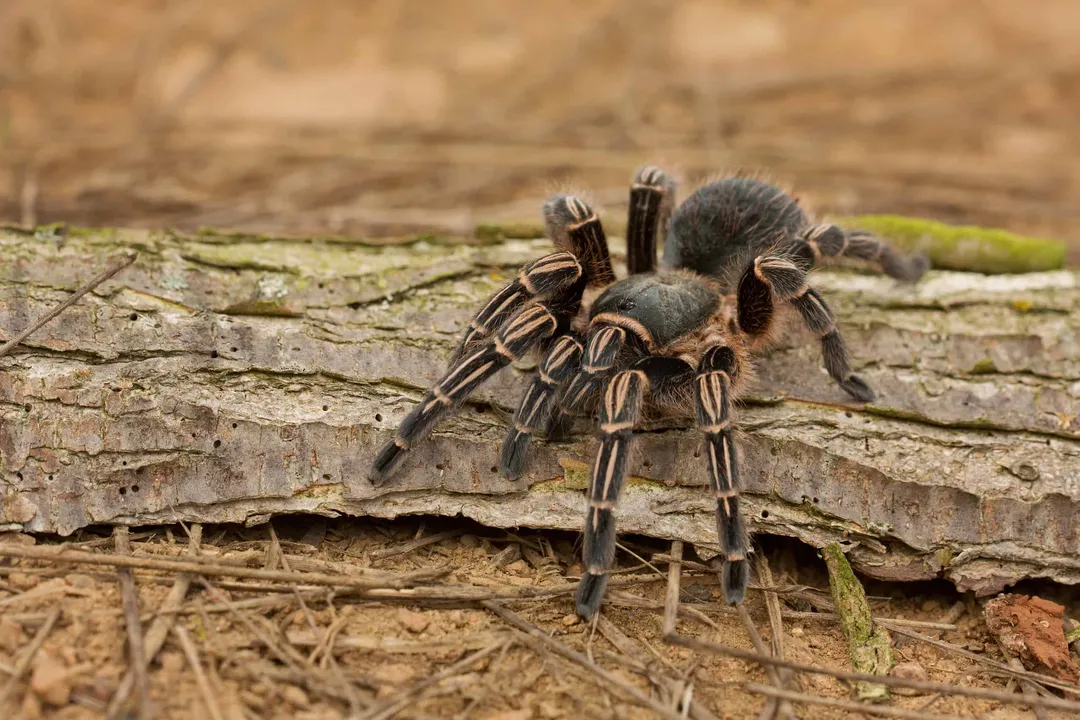
The natural habitat of the *Aphonopelma seemanni* is located in Central America, with Costa Rica being its primary distribution area. Within this geography, the species has evolved to thrive in environments specifically characterized as dry forests. This adaptation influences its husbandry requirements, particularly concerning moisture levels. Their preference for drier conditions contrasts with the needs of many other tropical tarantula species, reinforcing the importance of managing humidity levels in captivity to mimic their native dry forest microclimate.
Related Questions
What specific location on the legs features the prominent white or cream-colored banding of the Aphonopelma seemanni?What chemical defense mechanism does the A. seemanni utilize when feeling threatened or stressed?What is the typical lifespan disparity noted between mature female and male Aphonopelma seemanni?To what specific type of terrestrial environment is the native Aphonopelma seemanni adapted in Central America?What substrate depth is generally recommended in an A. seemanni enclosure to facilitate natural burrowing behavior?Which common name for the A. seemanni is deemed the most taxonomically descriptive regarding its visual markings?How does the A. seemanni physically eject its urticating hairs toward an actual or perceived threat?When setting up an enclosure for the terrestrial Aphonopelma seemanni, what spatial dimension should be prioritized over vertical height?What is the characteristic color contrast observed on the cephalothorax and abdomen versus the leg markings of the A. seemanni?Why is the Zebra Tarantula sometimes recommended as suitable for individuals new to keeping tarantulas?