Zebra Shark Facts
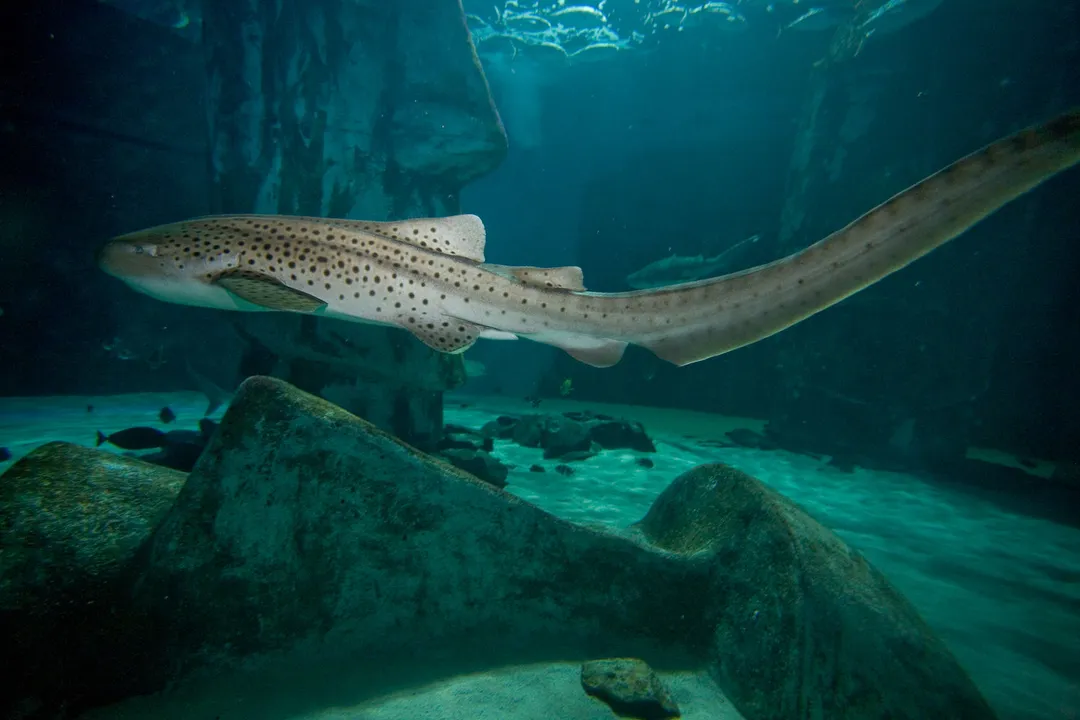
The zebra shark is one of the ocean's most visually deceptive residents, earning its name not from the mature animal, but from its striking juvenile phase. While many people picture fearsome predators when they hear the word "shark," the Stegostoma tigrinum presents a much gentler profile, being slow-moving and generally harmless to humans. [1][3] These fascinating carpet sharks inhabit the tropical reefs across the vast Indo-Pacific region, demonstrating a remarkable pattern transformation throughout their lives. [5][7]
# Appearance Change
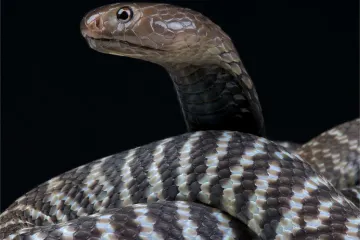
The visual journey of the zebra shark is perhaps its most defining characteristic. Newborn pups are adorned with a coat that perfectly justifies their common name: dark brown or black bodies overlaid with bright, light-colored, vertical stripes. [2][6][7] This dramatic striping is vital for early survival. In the ocean's complex environment, this juvenile pattern serves as an important defense mechanism because it closely mimics the markings of a venomous sea snake, warning potential predators to keep their distance from the vulnerable young. [1][2]
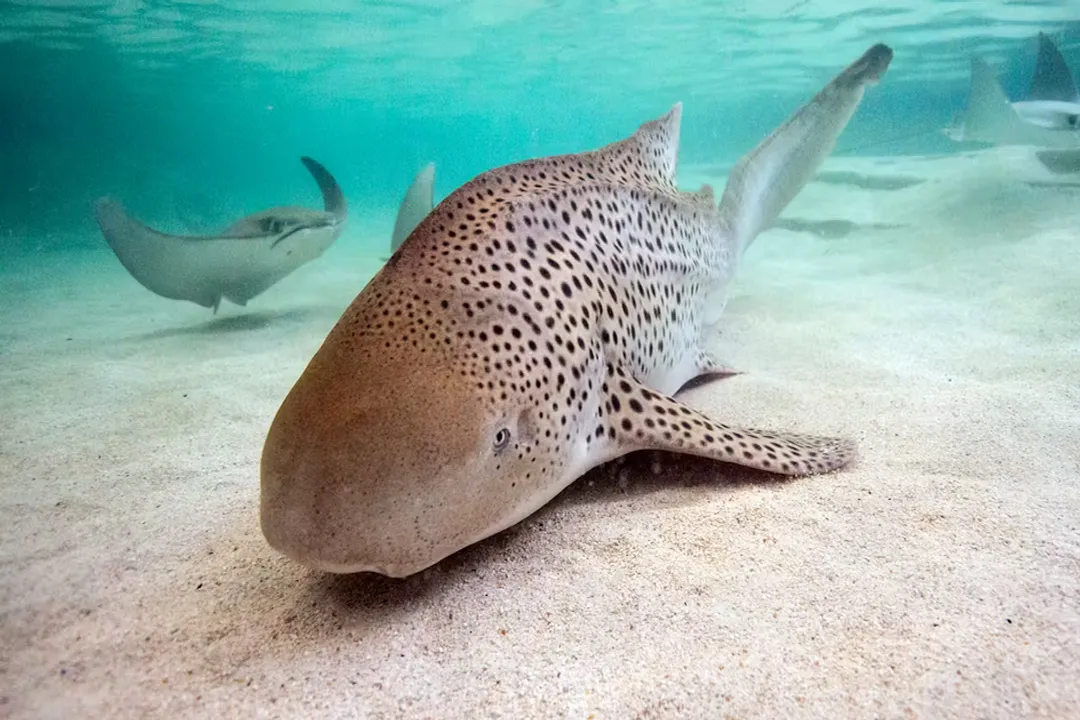
As the shark grows, this juvenile camouflage is shed entirely. Once they reach a length of roughly 50 to 90 cm (20 to 35 inches), the pattern begins to transition. [5][7] The distinct dark stripes break apart, morphing into hundreds of small, dark spots scattered across a paler, often sandy or yellow-brown background. [1][4][6] This adult pattern has led to the shark being commonly referred to as a leopard shark in places like Australia and the United Kingdom. [1][4] This contrast in appearance was so pronounced that early scientists, unaware of the developmental shift, mistakenly classified the juvenile and adult forms as two entirely separate species. [1][5][7] The current valid scientific name, Stegostoma tigrinum, reflects this striped juvenile phase. [5]
It is worth noting that pattern variation among adults is significant; these unique spots can actually be used by researchers to identify specific individuals. [5] Even more unusual is the rare "sandy zebra shark" morph, documented near Kenya, which lacks the distinct spots, displaying instead sandy-brown coloring with faint dark freckles. [5]
# Body Structure
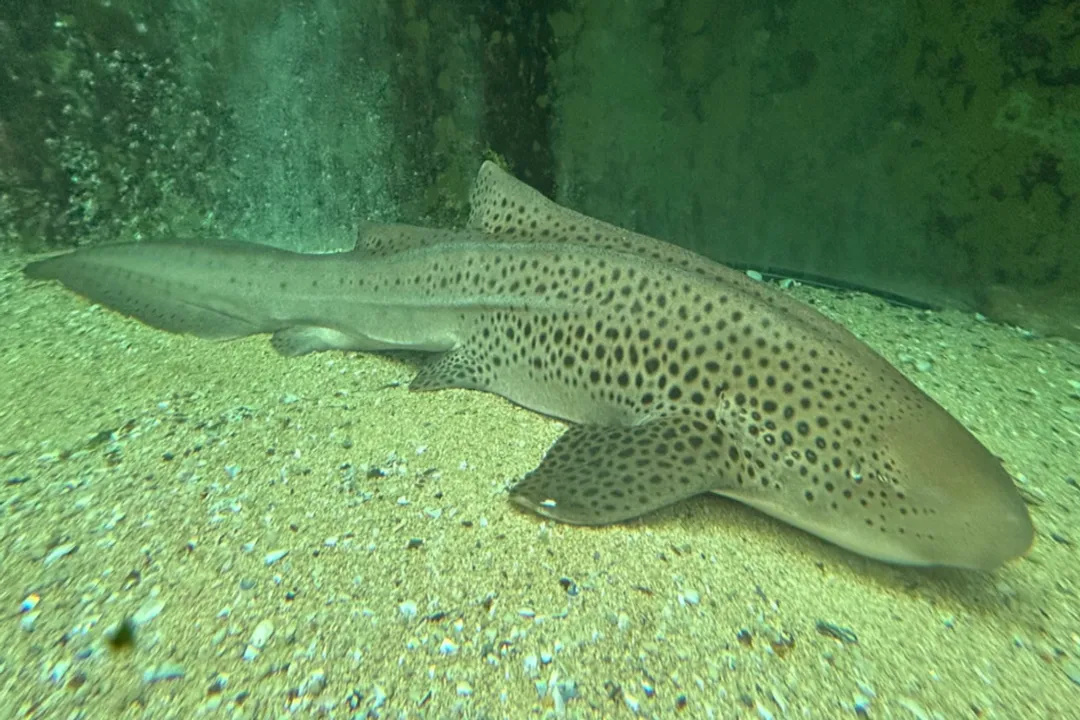
Beyond the coat, the zebra shark possesses several distinctive physical traits that set it apart from other shark species. Adults typically reach between 7 and 9 feet in length, though there are historical reports of individuals reaching 12 feet. [1][2][6] The body structure is generally cylindrical, supported by five prominent longitudinal ridges running along its back and flanks—a feature absent in juveniles. [5]
The tail is another standout feature: the caudal fin is elongated and powerful, often making up nearly half the shark's total body length. [1][2][5][9] This long tail is crucial for their propulsion style. [5] They possess a relatively small, blunt snout, and located just in front of it are whisker-like sensory organs known as barbels. [1][2] These barbels aid in locating food in dark or murky conditions. [1] Furthermore, unlike many other shark species, the zebra shark does not need to swim constantly to breathe; they have the capacity to actively pump water over their gills using their mouth and throat muscles. [2][6][9]
# Indo Pacific
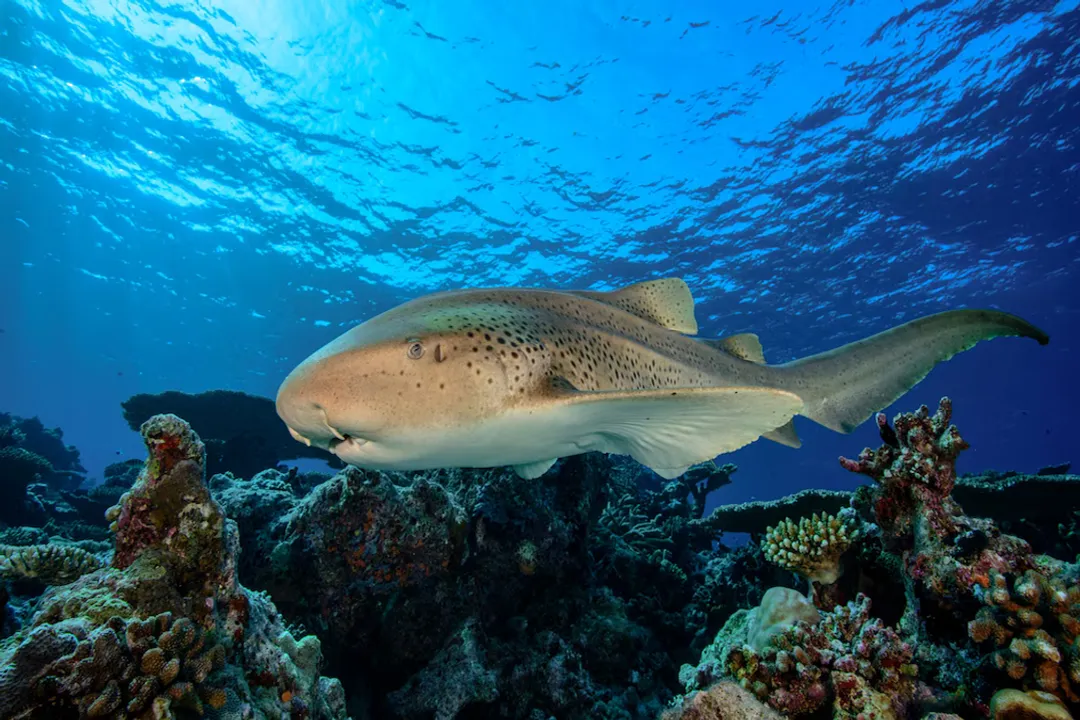
The distribution of the zebra shark is restricted to the warm, tropical waters of the Indo-Pacific region. [4][5] This range is extensive, stretching from the waters off South Africa, through the Red Sea and the Persian Gulf, across to India, Southeast Asia (including Indonesia and the Philippines), north to Taiwan and Japan, and south to northern Australia. [5][7]
Zebra sharks prefer life on the bottom of the ocean, frequenting coral reefs, sandy flats, and rubble areas. [2][4][7] They can be found from the shallow intertidal zone down to depths of about 62 meters (200 feet). [5][7] While they are capable of swimming across open oceanic waters to reach isolated seamounts, and individuals have been tracked moving up to 87 miles, genetic evidence suggests that populations remain somewhat isolated, indicating a strong site fidelity to their local reef systems. [5] This tendency to stick to specific areas makes them particularly susceptible to localized threats. [5]
# Nocturnal Foraging
As a dedicated nocturnal species, zebra sharks spend the daylight hours resting motionless on the sea floor, often propping up their front halves with their pectoral fins and facing into the current to maximize the flow of oxygenated water over their gills. [1][5][6] When food becomes available after sundown, they become active swimmers, propelling themselves with distinctive, sinuous, eel-like movements of their body and tail. [5][7]
Their diet is specialized for bottom-dwelling, revolving around mollusks and crustaceans, though small fish are also consumed, and they may occasionally prey on sea snakes. [1][4][6][9] The combination of their sensory barbels to detect hidden prey, their slender and flexible bodies that allow them to wriggle deep into tight crevices, and their small mouths paired with powerful buccal muscles forms a highly efficient suction system for extracting shelled invertebrates from their hiding spots. [1][5] It’s fascinating to observe how their physical adaptations—the barbels and the flexible body—are perfectly tuned to a nocturnal foraging strategy within the structured reef environment, contrasting sharply with the pursuit predators that rely on speed in open water. [1][5] They use strong, flat teeth to crush the shells once the prey is secured. [1]
# Egg Laying
Zebra sharks reproduce by laying eggs, classifying them as oviparous. [2][5] The female produces large, tough egg casings, which are typically dark brown or purplish-black in color. [5] These casings are secured to underwater structures, such as reef outcroppings, using specialized, hair-like adhesive fibers that emerge from the female’s vent as she circles vertical objects. [5][9]
Females can lay multiple eggs over an extended period; while figures vary slightly, documented cases show females laying up to 46 eggs over 112 days, usually in batches of around four casings. [5] The gestation period is lengthy, generally lasting about six and a half months. [1][2] When the pups emerge, they are already about 8 to 14 inches long and are fully independent, ready to swim and hunt on their own immediately. [2][6]
# Virgin Births
Adding another layer of biological complexity, the zebra shark is one of a small number of vertebrate species known to exhibit parthenogenesis, or the ability to reproduce asexually, sometimes called a "virgin birth". [1][2] In these instances, the female produces viable embryos from unfertilized eggs. [5] This asexual reproduction results in offspring that are essentially clones of the mother. Scientists have documented this phenomenon occurring in females whether or not they have previously mated with a male, suggesting this unusual reproductive pathway is an available option regardless of sexual history. [1][5]

# Human Impact
Globally, the zebra shark faces severe pressure, leading the International Union for Conservation of Nature (IUCN) to list the species as Endangered. [1][2][4][6] The primary threats stem directly from human activity, particularly across their shallow-water range. [1][4]
Zebra sharks are caught in targeted commercial fisheries for their meat, which is sold fresh or salted and dried. [4][6] Additionally, their fins are highly sought after for the shark fin trade, and their liver oil is utilized for vitamin production. [1][4][6] Even when not directly targeted, they are frequently taken as bycatch in destructive fishing methods like bottom trawls and gillnets. [1][4]
Habitat degradation compounds these issues. Coastal development and practices like bottom trawling destroy the coral reefs and sandy areas these sharks rely on for feeding and resting. [1][4] Because their reproductive rate is slow, recovering from these population declines takes a significant amount of time. [1]
This grim global assessment contrasts sharply with the situation in Australian waters. Off the coast of Australia, the zebra shark population is assessed as Least Concern. [4] This positive status is attributed to robust, protected reef systems and a much lower level of incidental capture in prawn trawls compared to other parts of their range. [4] The sheer difference between the "Endangered" status in much of the Indo-Pacific and the "Least Concern" status in Australia serves as a real-world case study on the success of localized, effective fisheries management versus the widespread failure to control generalized fishing pressure across international boundaries. [4]
# Aquarium Care
Due to their generally docile nature and their appealing appearance, especially as juveniles, zebra sharks adapt well to captivity and are common residents in public aquariums worldwide. [5][9] While they do well in these controlled settings, providing complete nutrition remains a focus for caretakers. [1] For instance, staff at some facilities ensure the sharks receive necessary micronutrients by creating a "fish burrito"—a fish stuffed inside a squid and sometimes containing a hidden multivitamin—to encourage consumption. [1][8] This level of dedicated husbandry ensures the health of these slow-reproducing animals, often as part of international Species Survival Plans aimed at maintaining genetic diversity. [2]
For researchers working with these sharks, a unique physiological response can be helpful. Tonic immobility, a temporary, paralysis-like state, can be induced simply by gripping the shark's tail fins. This technique allows researchers to safely collect samples from wild individuals without causing them harm. [1] While adult zebra sharks grow too large for typical home aquariums, their popularity as exhibits highlights the importance of public engagement in protecting their wild counterparts. [5] Divers and snorkelers often encounter them, and while generally placid, they may bite if provoked by being touched or having their tails pulled. [3][9]
Related Questions
#Citations
Zebra Shark - Oceana
Facts About Zebra Sharks | SEA LIFE Orlando Aquarium
Zebra shark - Wikipedia
Zebra Shark - National Aquarium
Zebra shark Facts for Kids
Zebra Shark | Shedd Aquarium
Zebra shark | National Geographic
Zebra shark | Animals - Monterey Bay Aquarium
Zebra Shark – Discover Fishes - Florida Museum of Natural History