What primary component of the steppe environment did the rhino heavily rely on?
Answer
Tough, siliceous material close to the ground
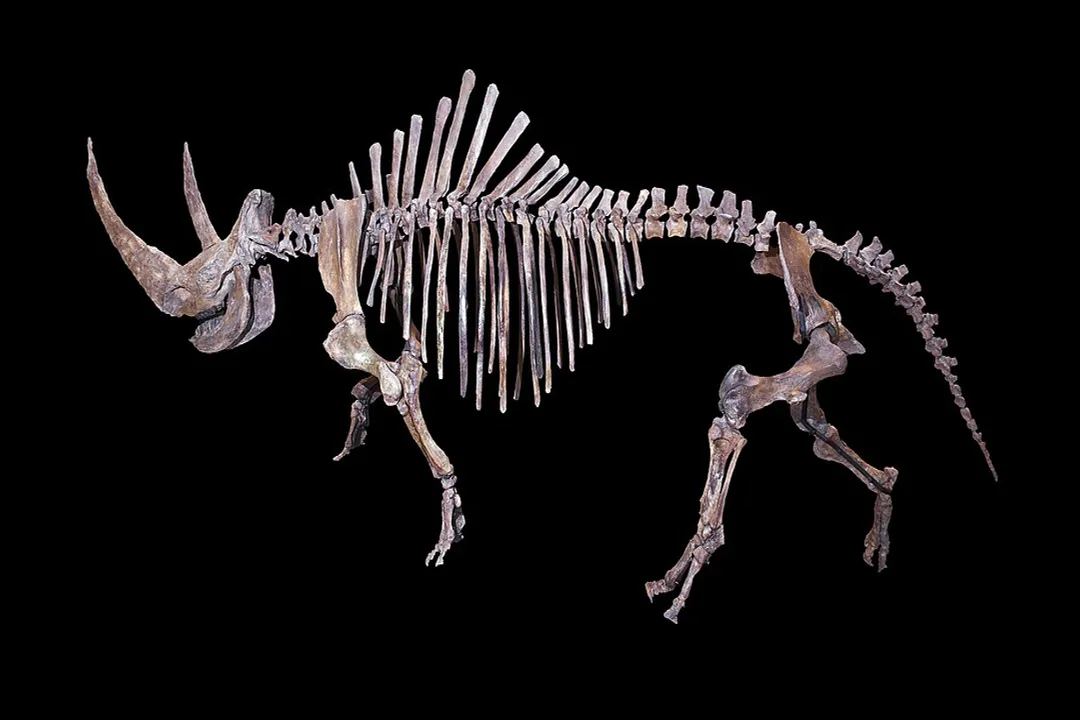
The survival of the woolly rhino was intrinsically linked to the productivity of the mammoth steppe, an ecosystem characterized by vast, open, grass-dominated tundra-steppe. The fundamental food base required to support an animal weighing nearly two tons was the material available near the surface of this environment. This material consisted of tough, siliceous matter, derived primarily from grasses. The animal's feeding strategy centered on maximizing output from this low-lying resource, which often necessitated continuous grazing throughout daylight hours due to the low digestibility and nutritional content of the forage.
Related Questions
What feeding classification characterized Coelodonta antiquitatis?What two specific types of flora dominated the Coelodonta antiquitatis diet?What elements are analyzed via stable isotope analysis for rhino diet?What specific dental structure allowed the woolly rhino to grind tough material?Which non-woody perennial was regularly included in the rhino's intake?What was the typical body mass range for the massive woolly rhino?How did the woolly mammoth's diet plasticity compare to the woolly rhino?What did microscopic enamel microwear reveal about masticated food texture?What primary component of the steppe environment did the rhino heavily rely on?Which extant rhinoceros species is considered a strong behavioural analogue for the woolly rhino?