White Rhinoceros Diet
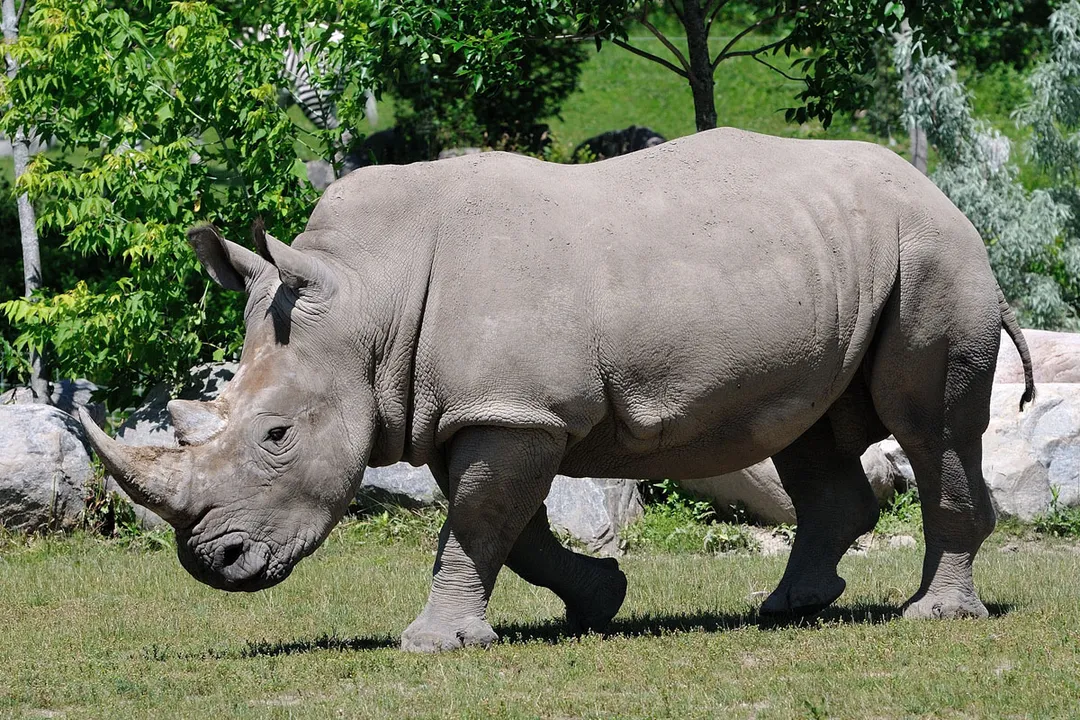
The White Rhinoceros, a magnificent megaherbivore of the African plains, has a feeding strategy remarkably specialized for its environment. Unlike its smaller, more notoriously temperamental cousin, the Black Rhino, the White Rhino is almost exclusively a grazer. [1][7][4] This single fact dictates almost every aspect of its daily existence, from where it moves to how much time it spends feeding. An adult white rhino, often weighing between 1,800 and 2,500 kilograms, requires a substantial daily intake to maintain its massive bulk and energy levels. [6][5] In the wild, their diet is overwhelmingly composed of grasses. [1][7]
# Grazing Adaptation
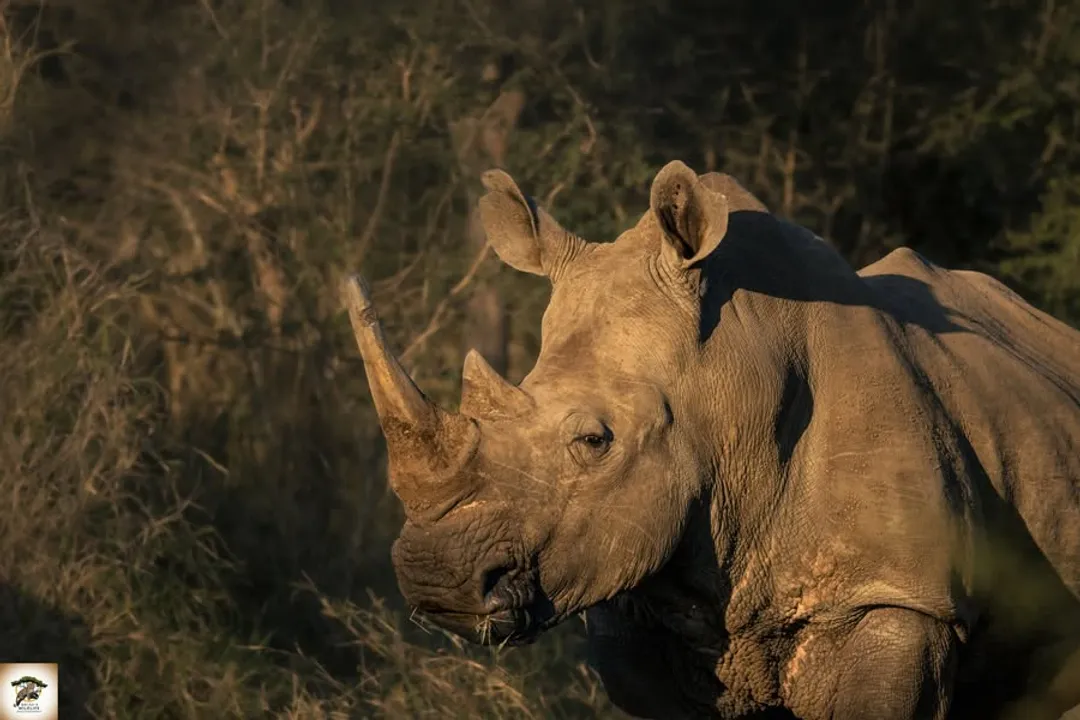
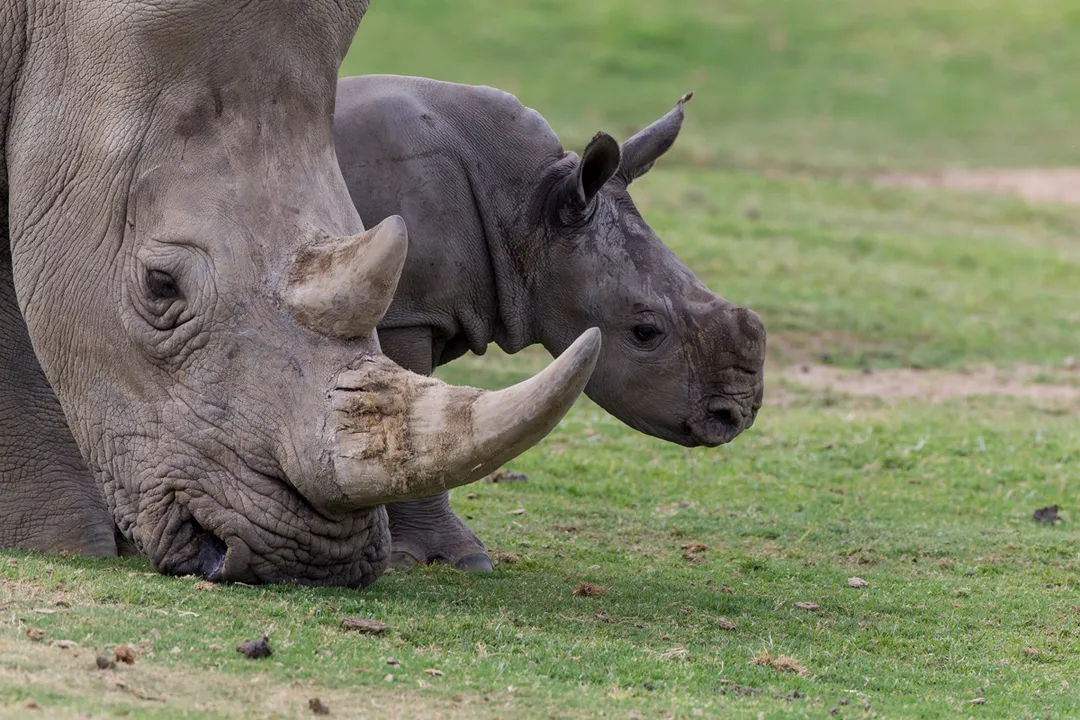
The defining feature separating the White Rhino from other rhino species is its mouth structure, which is perfectly engineered for mowing down vast quantities of low-lying vegetation. [1][2] They possess a notably broad, square lip, a feature that likely gave rise to the common name, possibly derived from the Afrikaans word wyd meaning "wide". [1][4] This wide muzzle allows the rhino to crop grass very efficiently, essentially acting like a biological lawnmower. [1]
In sharp contrast, the Black Rhino has a pointed, prehensile upper lip designed for grasping and pulling leaves, twigs, and branches from bushes and trees—making it a classic browser. [1][2] This anatomical difference is so profound that it creates a niche separation, allowing both species to successfully occupy the same habitats, such as Kruger National Park, without engaging in direct, year-round competition for their primary food source. [1] While the White Rhino focuses its foraging efforts low to the ground, the Black Rhino targets higher vegetation. [1][2]
When considering the sheer physical demands of maintaining a two-ton body, the volume of food required is staggering. Studies of grazing herbivores suggest that the intake typically falls between 1.5% and 2.5% of their total body weight daily. [1] For a rhino tipping the scales near 2,300 kg, this translates to consuming well over 30 kilograms of grass every single day to meet its maintenance requirements. This constant need to process significant quantities of relatively low-nutrient forage means that grazing activity occupies a significant portion of their waking hours. [1]
# Water Needs
While grass forms the bulk of their diet, hydration is equally non-negotiable for the White Rhino. [5] These large animals require regular access to water, often needing to drink daily, especially in hot, dry periods. [1] Their habitat selection is heavily influenced by the availability of dependable water sources, as dehydration quickly incapacitates such a large mammal. [5] Unlike some desert-adapted ungulates, the White Rhino cannot sustain itself on moisture derived solely from its food; regular surface water intake is essential for survival and bodily functions. [1]
# Dietary Variations
While the general rule is grazing, the reality in the wild is more complex than simply eating one type of grass. The specific species of grass consumed will vary depending on the season, local rainfall, and the specific habitat structure of the area they occupy. [1] For instance, in drier savanna environments, they must be adept at consuming coarser, less palatable grasses when the fresh, nutritious shoots are scarce. [1]
In managed care environments, like accredited zoos, the diet is carefully controlled to replicate the high-fiber, low-protein characteristics of their natural forage, while ensuring all necessary vitamins and minerals are present. [3][10] Captive animals are primarily fed high-quality grass hay, such as timothy or orchard grass, often provided ad libitum (as much as they want) to support their natural grazing behavior. [10][4] To supplement this, nutritionists often add specialized herbivore chow or biscuits that are formulated for rhinos to ensure nutrient density, sometimes adding vegetables or browse material when available to provide dietary enrichment and variety. [3][4] Although the formulated pellets are designed to be complete, observing how much of the supplemental browse material a rhino selects over its standard hay can offer subtle clues about instinctive dietary preferences that remain even when food security is absolute. [9]
# Digestive Processes
The White Rhino is a non-ruminant hindgut fermenter. [7] This means that like horses, they digest their bulky, fibrous diet using microbial fermentation occurring in their enlarged cecum and colon, located toward the rear of their digestive tract. [7] This fermentation process is vital for breaking down the tough cellulose in grasses, releasing the energy the rhino needs to survive. [7] Because this fermentation takes time, the passage rate of food through their system is relatively slow, which necessitates the continuous consumption of large quantities of forage throughout the day. [7]
Understanding this process helps explain why dietary consistency is so important, especially in conservation settings. [9] Sudden, drastic changes to the fiber content or type of hay provided can disrupt the delicate balance of gut flora, leading to digestive upset or long-term health issues. [9]

# Conservation Implications
The specialized diet of the White Rhino has direct implications for conservation management, particularly regarding habitat preservation. [5] Areas managed for these rhinos must maintain extensive tracts of suitable grassland. [1] If grassland gives way to dense bush encroachment—essentially turning a savanna into a thicket—the primary food source for the White Rhino diminishes, potentially forcing them to compete with browsers or leading to undernourishment. [1] Effective land management in parks like those in South Africa, therefore, often involves controlled burning or mechanical clearing to maintain the open grassland structure upon which the grazer relies for its survival. [5] The success of conservation programs is intrinsically linked to maintaining the correct vegetation composition to support a high density of these grazers. [1]
Related Questions
#Citations
White Rhinoceros (Ceratotherium simum) Fact Sheet: Diet & Feeding
What Do Rhinos Eat?
White rhinoceros - Animals - Toronto Zoo
White rhinoceros - Kiezebrink Focus on Food
White rhinos: facts, threats, and conservation - IFAW
White Rhinoceros - Our Animals - Henry Vilas Zoo
White Rhinoceros - Facts, Diet, Habitat & Pictures on Animalia.bio
White rhino diet and behavior observed - Facebook
[PDF] Rhino SSP Husbandry Manual - Nutrition
The 5 Rhino Species & Their Diets - Rockwood Conservation