Western Kingbird Scientific Classification
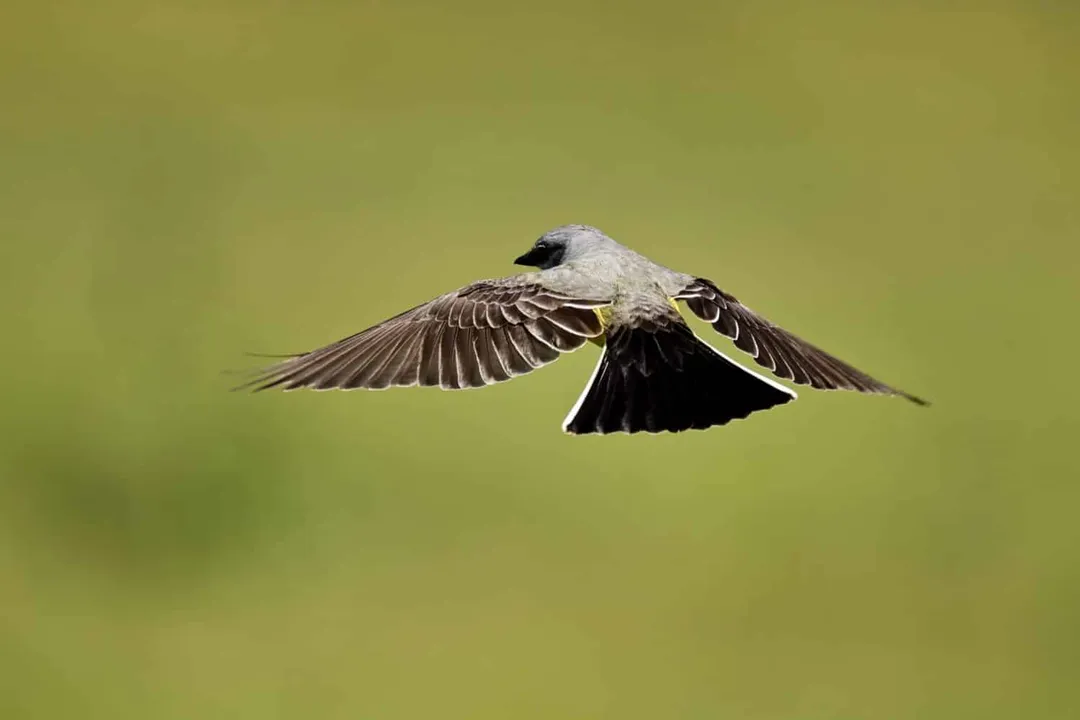
The placement of any organism within the Linnaean system reveals its fundamental relationships to all other life, and the Western Kingbird, Tyrannus verticalis, is no exception to this structured biological organization. [6] Tracing its lineage provides a clear map of its evolutionary history, starting from the broadest categories and narrowing down to its specific identity. [2] The scientific classification begins at the highest level: it belongs to the Kingdom Animalia, signifying that it is a multicellular, eukaryotic organism that ingests food. [6] Moving down, it fits within the Phylum Chordata, characterized by having a notochord at some stage of its development, which eventually evolves into the backbone of vertebrates. [6]
# Class Rank
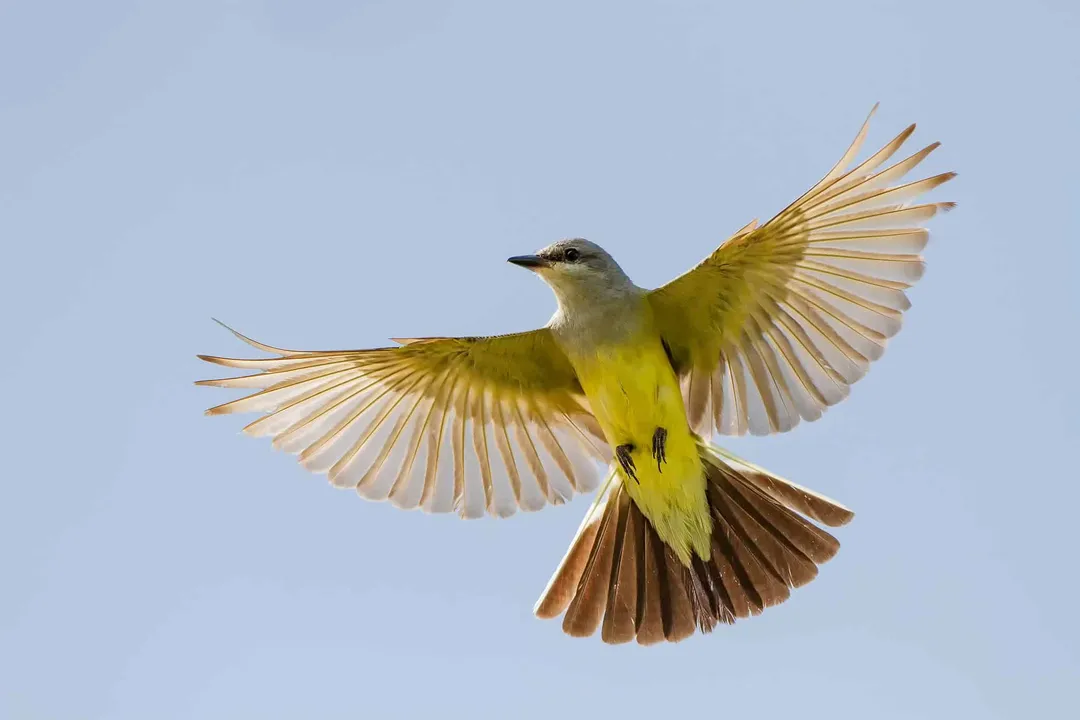
Within the Chordates, the Western Kingbird is assigned to the Class Aves, the category for birds, defined by feathers, beaks without teeth, the laying of hard-shelled eggs, a high metabolic rate, a four-chambered heart, and a lightweight but strong skeleton. [6][4] This class is vast, encompassing the incredible diversity of birds seen across the globe, from hummingbirds to ostriches. [2] The characteristics inherent to Aves dictate much of the bird's physiology, including its need for aerial mobility and specific nesting behaviors. [4]
# Order Position
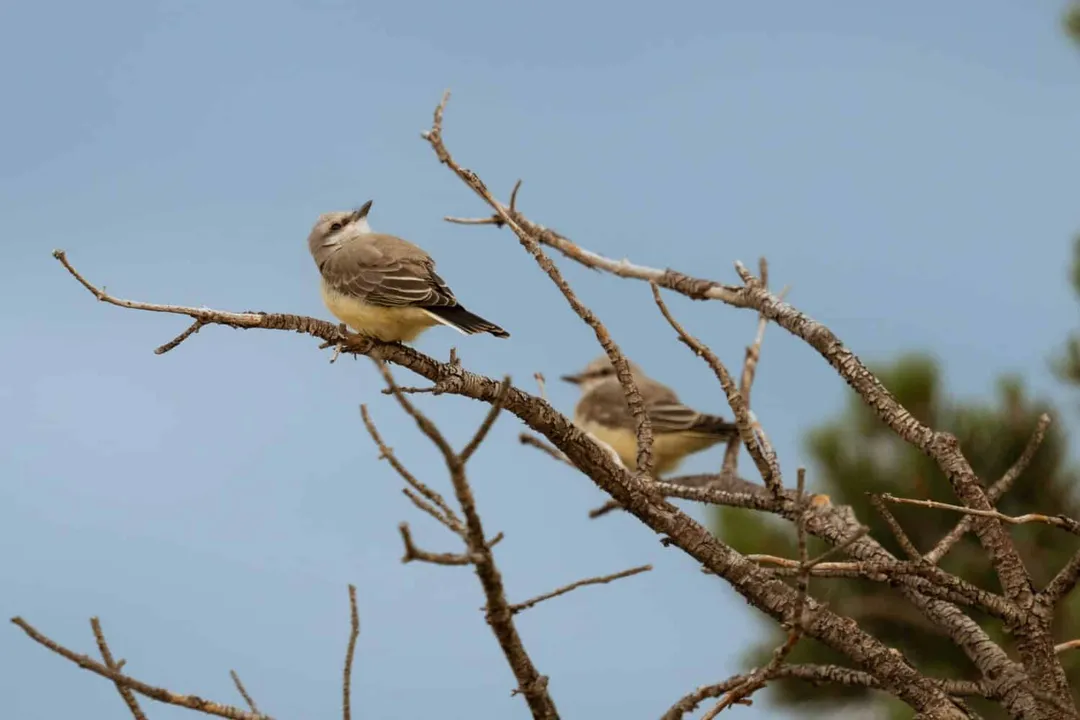
The next step in classification places the bird into the Order Passeriformes. [6][2] This is the largest order of birds, often referred to as the perching birds or songbirds, though not all members are known for complex songs. [2] Passerines generally possess specialized feet adapted for perching, with three toes pointing forward and one toe pointing backward, allowing them to grasp branches securely, a trait shared by the Kingbird. [5] Understanding its placement in Passeriformes immediately sets expectations regarding its general structure and behavior compared to, say, a raptor or a waterfowl. [4]
# Family Link
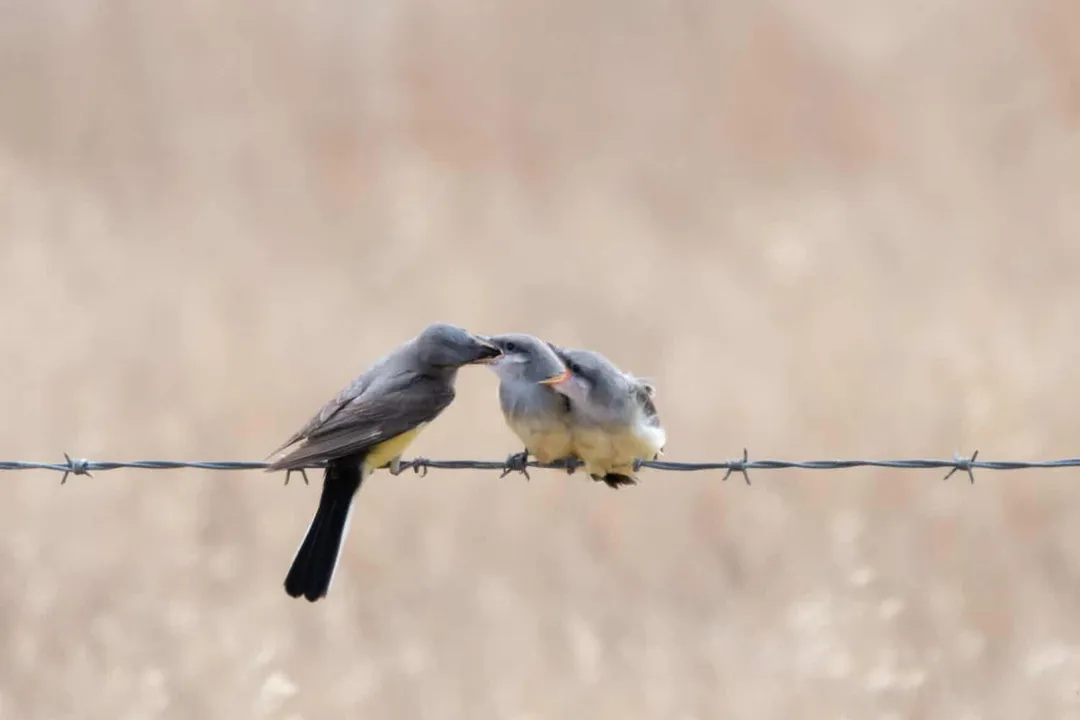
The Western Kingbird belongs to the Family Tyrannidae, commonly known as the Tyrant Flycatchers. [3][2] This family is geographically restricted, being found almost exclusively in the Americas, which is a key point distinguishing it from many other bird orders. [2] The defining feature of the Tyrannidae family is its feeding strategy: these birds are primarily insectivores that engage in aerial hawking, sallying out from a perch to catch flying insects mid-air before returning to the same or a nearby spot. [4][5] This behavior is central to the Kingbird's life history. [1] Furthermore, members of this family often display strong territoriality, which is certainly true for the Western Kingbird, known for aggressively defending its nesting areas. [4] A useful way to quickly categorize an unfamiliar bird found in the Americas is to look for this flycatching behavior; if it exhibits strong sallying and a somewhat upright posture on an exposed perch, it is very likely within the Tyrannidae family. [5]
# Genus Grouping
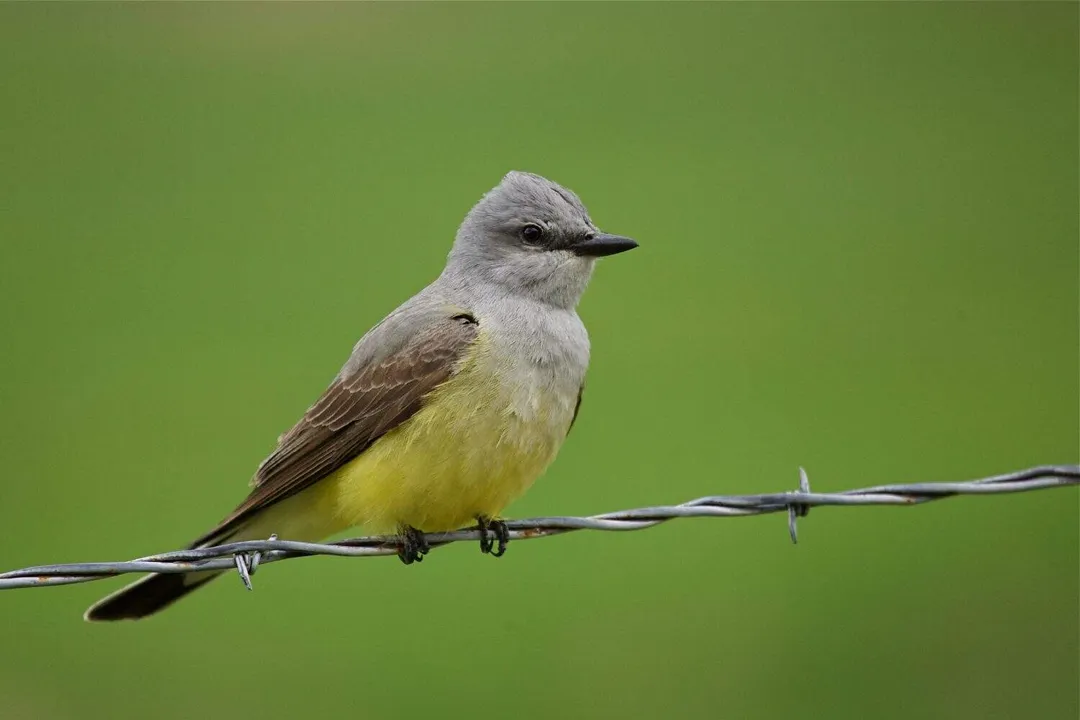
The genus for this species is Tyrannus. [6][3] The name Tyrannus itself is telling, derived from the Latin word for "tyrant," which directly references the bold, often aggressive, and dominant nature of birds within this group, particularly when confronting larger birds or potential nest predators. [4][1] Birds in the Tyrannus genus are known for their conspicuous behavior, often perching conspicuously on isolated, prominent objects like wires or the tops of small trees, making them easier to spot than many other flycatchers. [1] While all tyrant flycatchers hawk insects, the Tyrannus group often has a more robust build and displays more dramatic aerial chases and vocalizations compared to some other flycatcher genera. [2] Considering the classification structure, one might observe that while the Western Kingbird shares the Tyrannidae family with species like the Eastern Phoebe, its membership in Tyrannus points toward its more conspicuous habits and pronounced territorial defense, characteristics that help distinguish it in the field. [2]
# Species Name
Finally, the full scientific name is Tyrannus verticalis. [3][6] The species epithet, verticalis, is derived from the Latin word for "vertical," and this name is particularly apt because it refers to the prominent pale or whitish edges on the inner webs of the tail feathers, which create a striking, pale, or nearly white vertical appearance in flight when the bird fans its tail. [1] This tail feature, combined with the bird's gray head, pale breast, and bright yellow belly, are the primary visual identifiers that separate T. verticalis from its close relatives. [1][5]
# Classification Summary Table
To clearly summarize this structural placement, here is a breakdown of the recognized hierarchy for the Western Kingbird:
| Taxonomic Rank | Classification | Basis for Inclusion |
|---|---|---|
| Kingdom | Animalia | Multicellular, ingestive feeding [6] |
| Phylum | Chordata | Possesses a notochord/spinal column [6] |
| Class | Aves | Feathers, beaks, egg-laying [6][4] |
| Order | Passeriformes | Perching birds, specialized foot structure [6][2] |
| Family | Tyrannidae | Tyrant Flycatchers, specialized aerial insectivores [2][5] |
| Genus | Tyrannus | Conspicuous, aggressive flycatchers [4][1] |
| Species | T. verticalis | Distinctive yellow belly and pale tail edging [1][5] |
This classification confirms that the Western Kingbird is a very specific type of flycatcher, tied to the Americas, and further refined by its distinct physical markers that give it its specific epithet. [3]
# Systemic Variations and Context
While the classification remains largely stable across major authorities, subtle differences in taxonomic interpretation can sometimes exist, particularly at the species or subspecies level, though for T. verticalis, the current consensus is quite firm. [3] For example, some historical or regional checklists might list slightly different common names or even minor subspecies designations based on localized genetic studies. [7] However, the core Tyrannus verticalis designation, resting within the established family and genus, is widely accepted from the Idaho Department of Fish and Game to the Illinois DNR. [1][4] When reviewing literature from different regions, such as the Texas Breeding Bird Atlas studies versus British Columbia summaries, the consistency in the binomial nomenclature underscores the authority of the established classification. [7][8]
One area where understanding the scientific context aids the observer is in distinguishing it from the closely related Cassin's Kingbird (Tyrannus vociferans). Both species are Tyrannus, meaning both are aggressive flycatchers, but the Western Kingbird’s scientific name verticalis points to its pale tail edging, whereas the Cassin's Kingbird often exhibits a darker, more uniformly dark tail. [1] If you are observing a kingbird in a transitional zone, recognizing that the scientific designation verticalis is keyed to that specific tail color—a feature that manifests most clearly when the bird displays or lands—is a crucial field distinction that flows directly from the Linnaean naming process. [5]
Another subtle consideration, emerging from the definition of the Tyrannidae family, relates to molt and appearance. Since the classification relies heavily on consistent structural and behavioral traits, it is important to remember that juvenile birds or those in fresh fall plumage may look slightly different from the bright breeding adults described in field guides. [4] However, the underlying skeletal structure, the shape of the bill for insect capture, and the inherited behavioral tendency to perch conspicuously—all traits dictated by their high-level classification—remain constant, providing reliable identification anchors even when the colors are muted. [2][5] This consistency across life stages, rooted in evolutionary placement, is a testament to the utility of scientific classification in providing predictable identification guides for naturalists. [6]
Related Questions
#Citations
Tyrannus verticalis (Western Kingbird) - Idaho Fish and Game
Western Kingbird Overview, All About Birds, Cornell Lab of Ornithology
Systematics - Western Kingbird - Tyrannus verticalis
western kingbird - Illinois Department of Natural Resources
Western Kingbird - Montana Field Guide
Tyrannus verticalis (western kingbird) - Animal Diversity Web
Tyrannus verticalis Western Kingbird - Species Summary
WESTERN KINGBIRD | The Texas Breeding Bird Atlas
Western Kingbird Bird Facts - Tyrannus verticalis - A-Z Animals