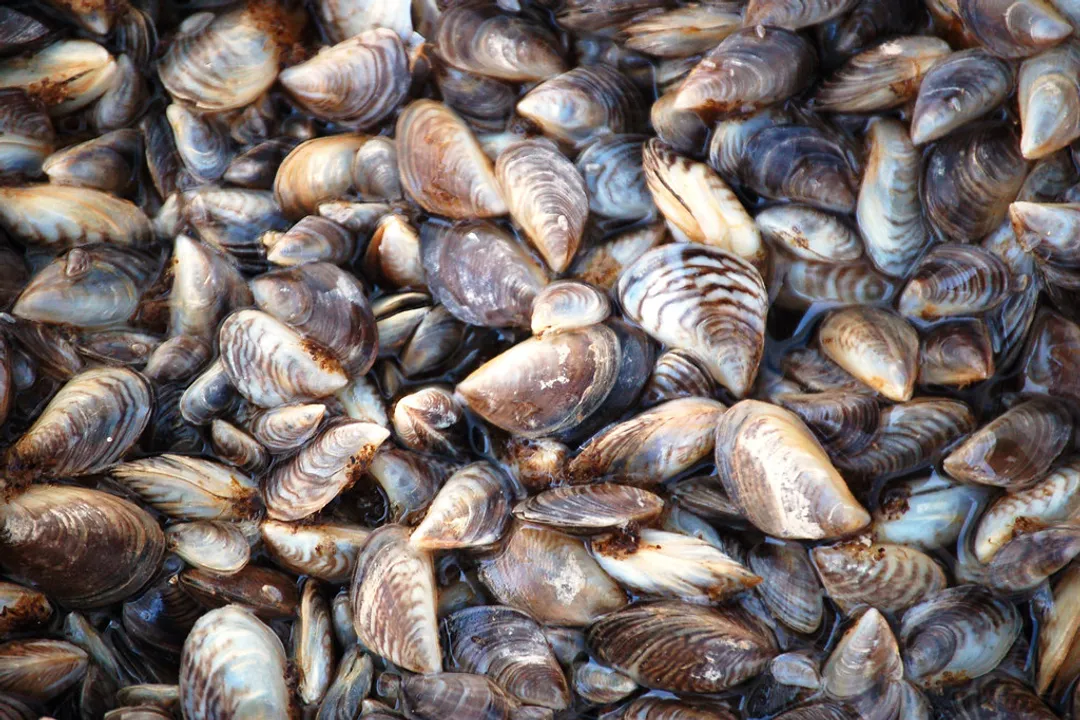
What is a key implication when zebra mussels preferentially consume particles exclusively in the 2 to 40 micrometer range?
They selectively remove the most valuable, easily digestible energy packets available to the ecosystem
The highly specific nature of the zebra mussel's dietary preference, focusing on particles between 2 and 40 micrometers, has significant ecological ramifications beyond just reducing total particles. This size range frequently includes the most desirable phytoplankton species, which represent the highest quality, most readily digestible energy sources available for the aquatic community's base level. By selectively extracting these prime energy packets, the mussels are creating a caloric deficit for native grazers. What remains in the water column is often a higher proportion of less nutritious, larger algae or suspended detritus that the mussels reject, leaving native species to subsist on an energy-poor soup.