What mechanical process do zebra sharks use, in conjunction with their small mouth, to capture prey?
Answer
Creating negative pressure to suck the prey item into their mouths.
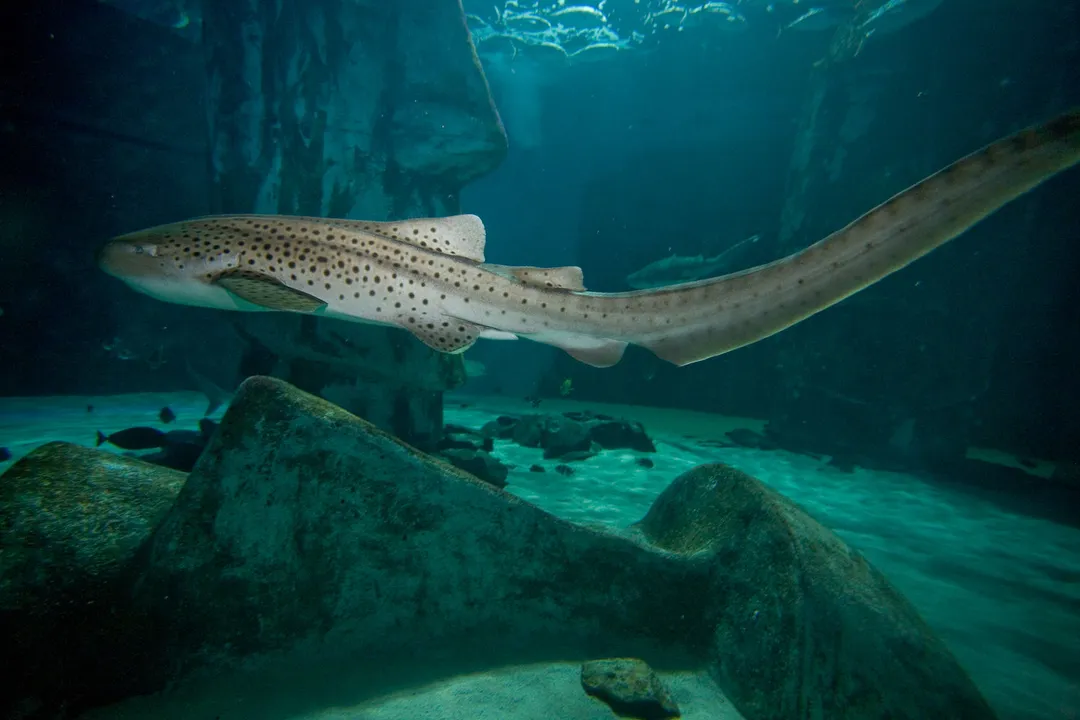
The feeding strategy of the zebra shark relies not on biting and tearing large meals but on mechanical suction. They possess a relatively small mouth opening coupled with powerful muscles associated with the gills. By rapidly expanding the buccal cavity, they generate negative pressure, essentially creating a vacuum that pulls the prey item—often straight out of its hiding spot or shell—into the mouth. This suction feeding technique is highly effective for securing small, hard-to-reach benthic organisms like snails and shrimp, showcasing an adaptation prioritizing precision and efficient ingestion over brute force tearing.
Related Questions
How do zebra sharks breathe while resting motionless on the sandy bottom during the day?What physical tool allows the zebra shark to detect prey hidden within the dark, sandy substrate?What mechanical process do zebra sharks use, in conjunction with their small mouth, to capture prey?What distinctive visual pattern characterizes adult *Stegostoma tigrinum* cruising shallow Indo-Pacific reefs?Which category of organisms forms the bulk of the zebra shark’s caloric intake in its natural habitat?What specific hard-shelled prey, aside from snails and clams, is highlighted as part of the zebra shark's varied diet?What term describes the technique used by aquarium staff at the Shedd Aquarium to ensure multivitamin intake in a single meal?How do the zebra shark's feeding physics contrast with the energy demands of large, pelagic sharks?What human activity poses a significant threat to zebra sharks by scraping the seafloor and destroying their habitat?What specific adaptation do zebra sharks possess to process hard-shelled prey like snails and clams?