Zebra Mussels Physical Characteristics
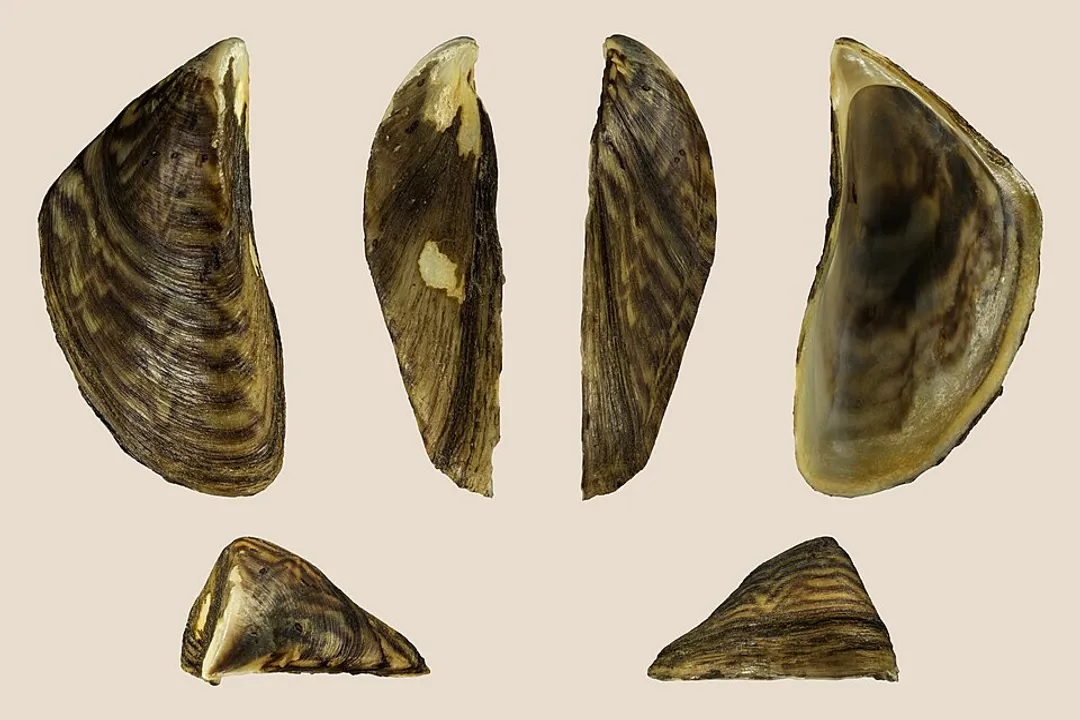
The initial encounter with a zebra mussel often leaves people surprised by its small stature, yet this tiny bivalve carries a massive ecological footprint. These aquatic organisms, scientifically classified as Dreissena polymorpha, possess a suite of physical characteristics that define their success as one of the world’s most notorious invasive species. [1][3] Understanding these features—from the patterns on their shells to the fibers they secrete—is the first step in recognizing and mitigating their pervasive spread. [4][10]
# Shell Structure
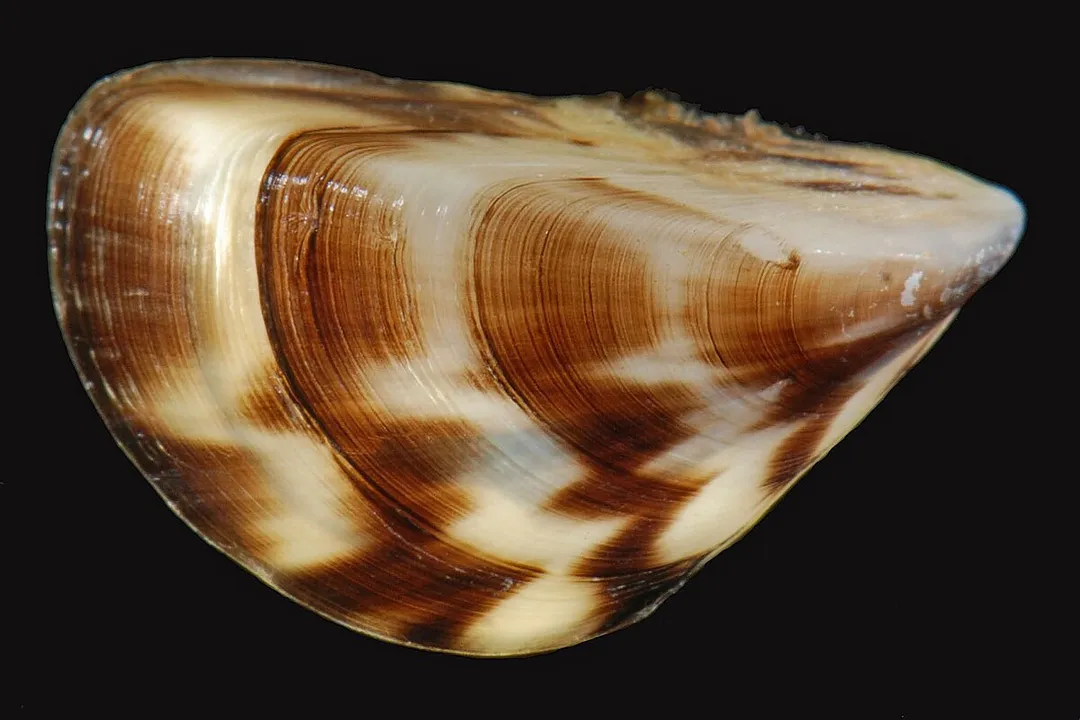
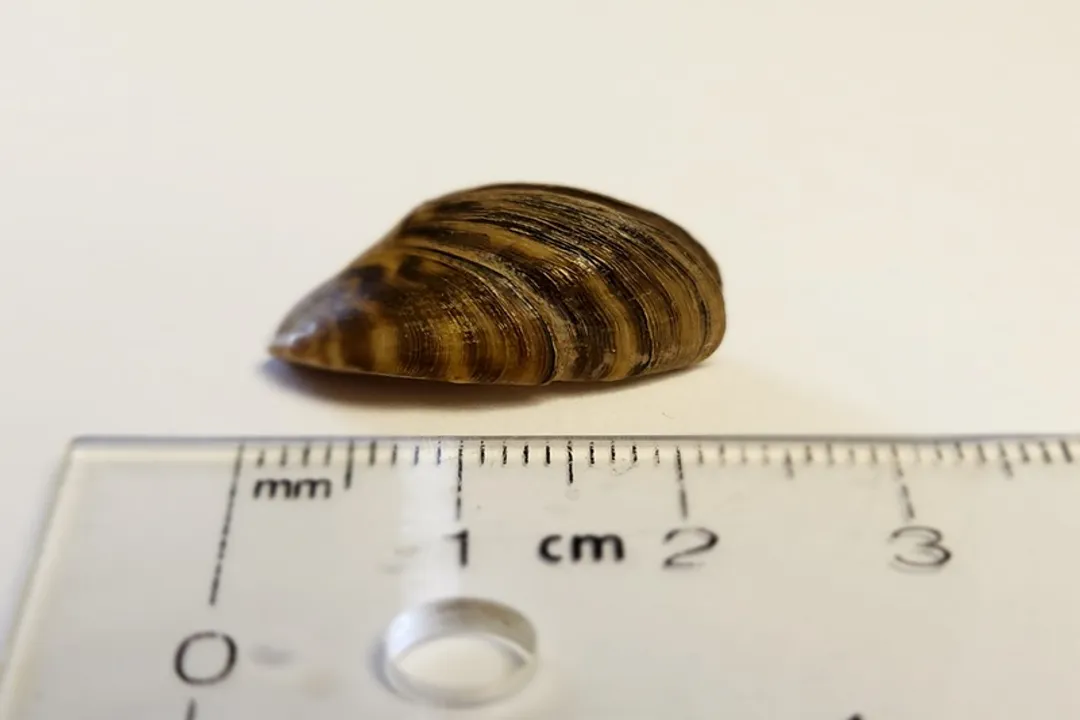
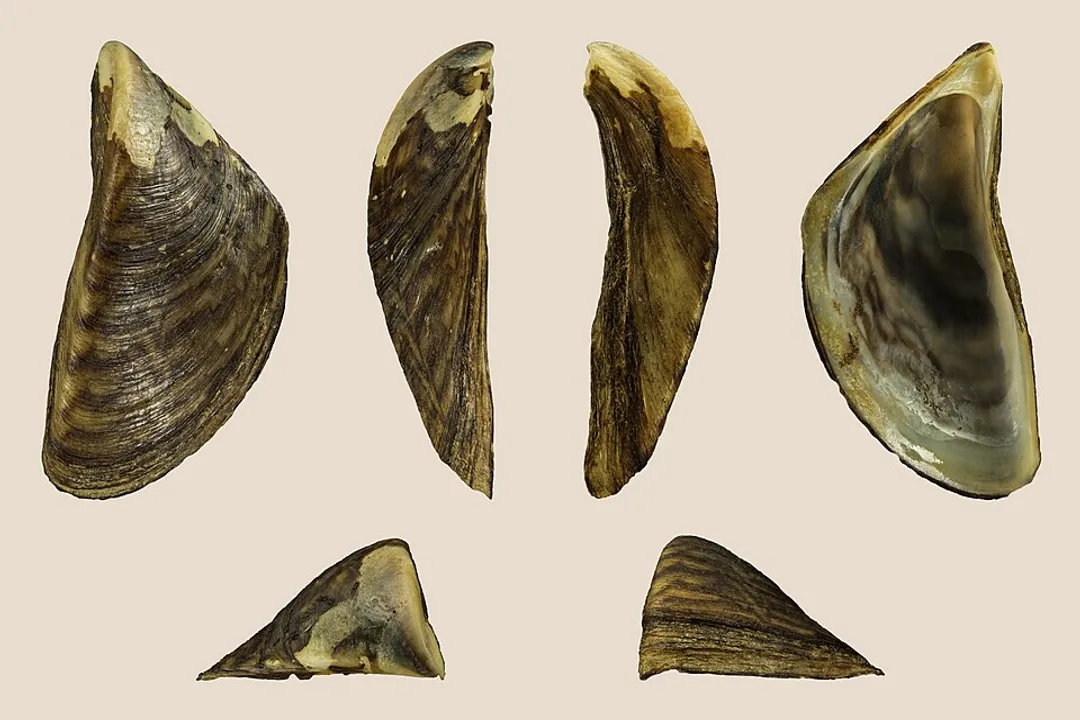
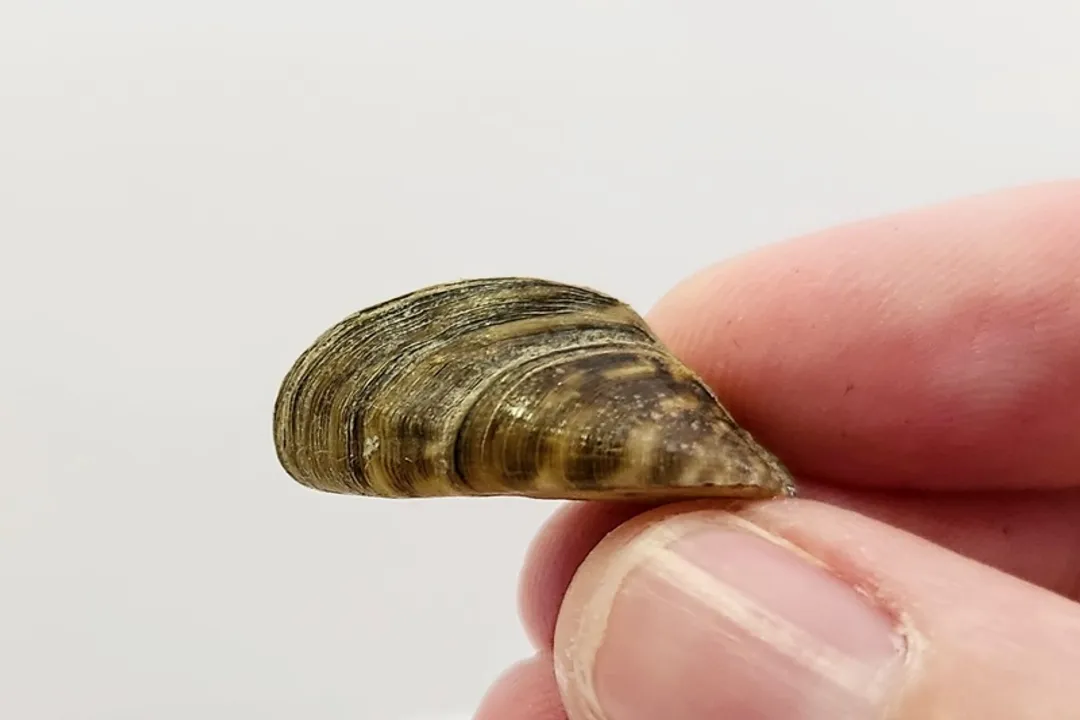
Zebra mussels are instantly recognizable by their hard, calcified shell, which is composed of two hinged valves. [1][4] The overall shape is often described as D-shaped, [1][4] though some sources also categorize it as triangular. [1] The shell itself is generally considered thick and strong. [3]
Adult size is one of the most common points of inquiry for field identification. Most mature zebra mussels measure relatively small, often cited as being about the size of a human fingernail. [1][3] Quantitatively, most adults range between 0.5 to 1.5 inches (1.3 to 3.8 cm) in length, [3] with a reported maximum length topping out around 50 mm (2 inches). [1][3] This size constraint does not stop them from causing problems; even the smallest juveniles can attach and begin colonization. [4][10]
When examining the shell surface, one finds a degree of variation. The surface is often described as smooth or shallowly ridged. [1] More detailed microscopic examination reveals that the surface is generally smooth, except where interrupted by concentric wrinkles and distinct growth rings. [3] These growth features track the organism's development over its relatively short lifespan, which typically ranges from four to eight years. [10][1]
# Coloration Patterns
The species earns its name from its distinctive coloring. The common name, zebra mussel, stems from a characteristic striped pattern seen on many of their shells. [1][2] This pattern usually involves alternating dark and light bands. [4] The darker bands may be black, brown, or dark green, while the lighter bands can be yellow, cream, or white. [2][3][10]
However, reliance on stripes alone for identification can be misleading. The patterns are not universally present. [1] Descriptions confirm that coloration can vary significantly, leading to specimens that possess only dark or only light colored shells with no stripes whatsoever. [1][2][4] The outer layer of the shell, the periostracum, is typically described as dark green, dark brown, or nearly black, often displaying darker rays that can become obscure as the mussel ages. [3]
A fascinating internal detail is the color of the nacre, the mother-of-pearl layer on the interior of the shell. In zebra mussels, this is reported as silvery white throughout, or potentially partially or wholly purple or pink. [3] This variation in internal shell hue adds another layer of physical diversity within the species.
# Structural Features
The ability of the zebra mussel to adhere so effectively is due to a specialized physical adaptation: the byssal threads (or fibers). [10] These durable, elastic strands are secreted from the byssal gland near the foot, emerging from the umbo (the hinge area) on the dorsal side of the shell. [1][3] Unlike some native bivalves, the adult zebra mussel secretes these threads to anchor itself securely to virtually any firm substrate underwater, including rock, wood, concrete, metal, and even other mussels. [10][3]
This attachment mechanism is responsible for their tendency to aggregate into dense clusters, known as druses. [2][3] These colonies can achieve astounding densities, sometimes exceeding tens of thousands per square yard, [4] with some reports noting densities reaching up to 1 million individuals per square meter in ideal conditions. [2] When settling, juveniles often prefer dark, rough substrates that are situated above the lake bottom, though they will cluster on any available hard surface if sediment or sand is the dominant bottom type. [3]
It is worth noting how physical structure translates to threat. Because the shells of attached adults are sharp, masses of them washing up on beaches create a hazard where they can cut the feet of bathers and pets. [3][4] Furthermore, the sheer mass of these aggregations can cause structural failure, leading to the sinking of navigational buoys or the destabilization of docks. [10]
# Differentiation Critical Look
In many invaded areas, zebra mussels coexist with the closely related quagga mussel (Dreissena bugensis). For individuals or agencies tasked with monitoring or cleanup, telling them apart quickly is paramount, as their management strategies can differ. [2] While genetic testing is the ultimate confirmation, a simple physical test can often suffice: the shape of the ventral (bottom) side. [2][3]
| Feature | Zebra Mussel (D. polymorpha) | Quagga Mussel (D. bugensis) |
|---|---|---|
| Underside | Flattened; stable when placed on a flat surface [2][3][10] | Rounded; will fall over when placed on a flat surface [2][3][10] |
| General Shape | More square and narrower [10] | More rounded [10] |
| Size (General) | Generally smaller [10] | Generally larger (though this can be fluid) |
The ability to remain stable on a flat surface due to that distinctive flattened underside is the primary morphological characteristic separating the two species without resorting to advanced analysis. [2][3] This physical trait, which allows the zebra mussel to securely grip flat surfaces like boat hulls and metal pipes, contrasts with the quagga's tendency toward rounded bases. [2] Considering the high volume of watercraft movement across infested regions, a quick check of this "sit test" could prevent the introduction of a new population to an uninvaded water body.
# Microscopic Stages
The physical characteristics of the zebra mussel also extend to its early life stages. Fertilized eggs develop into free-swimming microscopic larvae called veligers. [4][10] These planktonic individuals are extremely small, measuring between 70-200 µm. [2] This microscopic size is crucial to their dispersal, as they are passively carried by water currents, allowing them to travel significant distances downstream or through interconnected systems. [3][10]
The veliger stage undergoes several sub-divisions before settling, including the preshell, straight-hinged, and umbonal stages, before developing into a postveliger or pediveliger. [3] At the final settling stage, they attach to a substrate using their developing byssal threads. [3] The vast majority of mortality (around 99%) occurs during this transition period, as the larvae must locate a suitable, firm surface or perish. [3] The difference in size and form between the drifting, microscopic larvae and the hard, attached adult highlights the dramatic morphological transformation a single organism undergoes in its short lifespan. Furthermore, the ability of adults to survive out of water for several days, coupled with the larvae surviving in residual water in bilges or bait buckets, explains why overland transport is such a significant pathway for spreading these physically adaptable invaders. [3][4]
Related Questions
#Citations
zebra mussel (Dreissena polymorpha) - Species Profile
[PDF] Zebra Mussels Fact Sheet - NH.gov
Zebra mussel (Dreissena polymorpha) | Minnesota DNR
Zebra Mussel (Dreissena polymorpha) | U.S. Fish & Wildlife Service
Zebra mussel - FWC
Zebra mussel - Wikipedia
Zebra Mussels (Dreissena polymorpha) | Virginia DWR
Zebra Mussel - Montana Field Guide
[PDF] Zebra Mussels: Frequently Asked Questions - Texas Parks and Wildlife
Zebra Mussel