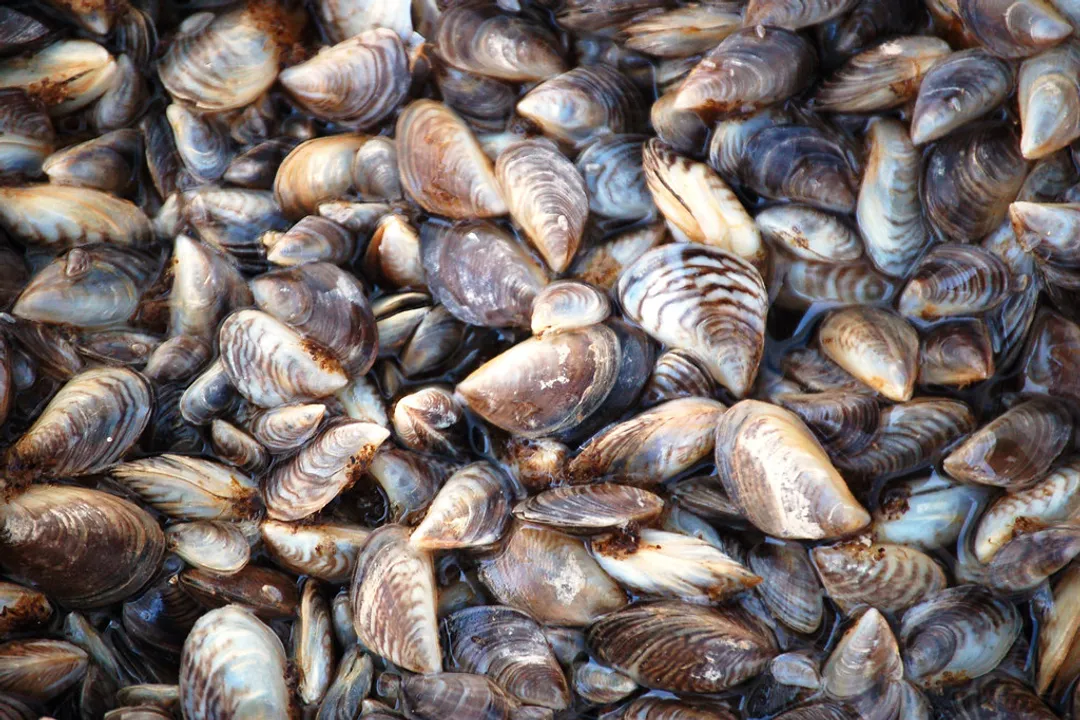
What critical risk must be considered regarding the human edibility of zebra mussels that have accumulated pollutants?
Toxins and pollutants accumulated via bioaccumulation can become concentrated in the mussel tissue
Although zebra mussels filter vast quantities of water, their filtration process is not purely beneficial; it involves bioaccumulation. When the water body they inhabit contains substances that are not filtered out but rather concentrated within their tissues—such as heavy metals, chemical pollutants, or toxins from harmful algal blooms—the mussels themselves become hazardous. If humans attempt to forage them, these accumulated toxins are retained in the edible tissue. Therefore, consuming zebra mussels without extremely rigorous, current testing of the specific water body they came from poses a significant risk of poisoning, as the mussels act as biological concentrators of environmental contaminants.