What term denotes the microscopic larvae spread downstream through river currents?
Answer
Veligers
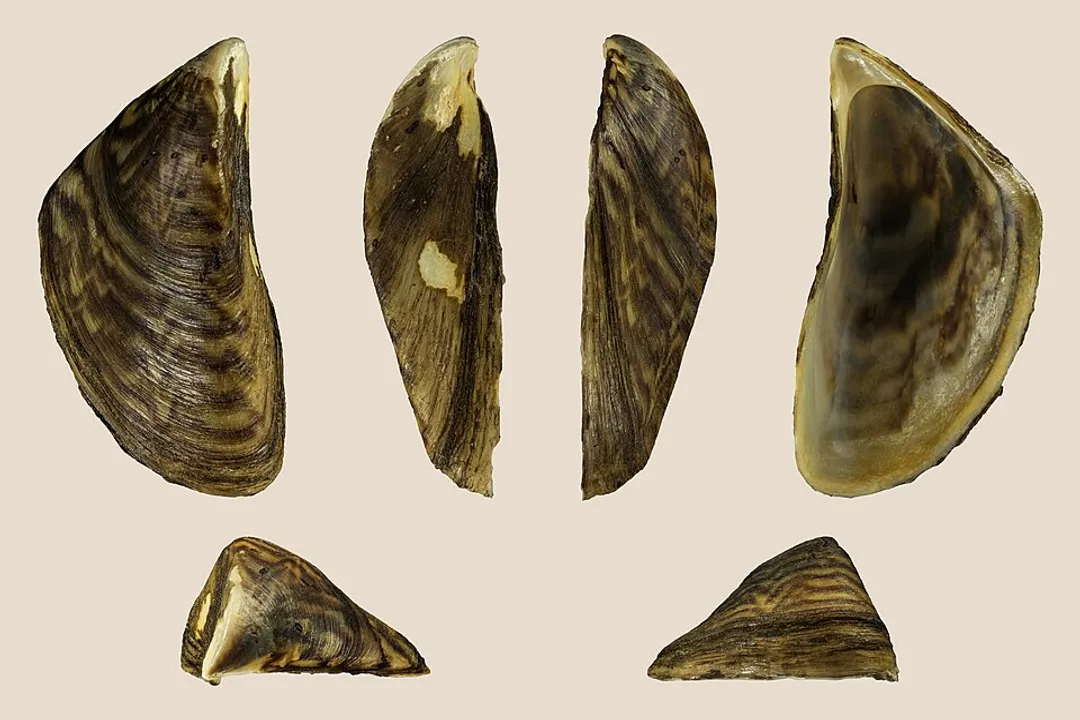
When zebra mussels establish themselves in major river systems, the continuous flow of water facilitates the widespread distribution of their earliest life stages. These microscopic, free-swimming larval forms are specifically identified as veligers. Currents act as the natural conveyor belt, moving these tiny organisms downstream, allowing the infestation to progress sequentially along the entire length of the connected drainage system, such as the Mississippi River basin.
Related Questions
What is the natural habitat for the zebra mussel, *Dreissena polymorpha*?How did *Dreissena polymorpha* likely arrive in the Great Lakes basin?What term denotes the microscopic larvae spread downstream through river currents?Which New York waterway is noted for intense monitoring and community science initiatives regarding zebra mussels?What is identified as the number one vector for spreading zebra mussels between geographically separate lakes?What type of substrate do zebra mussels strongly prefer for attachment in a lake environment?How does the colonization pattern of the quagga mussel differ from the substrate-dependent zebra mussel?After establishing in the Great Lakes, what became a major secondary corridor for zebra mussel expansion?What quantitative risk assessment strategy is considered more effective than static mapping for areas like Lake George?Why is distinguishing between zebra mussels and quagga mussels critical for remediation strategies?