What foraging technique involves the Western Tanager catching flying insects mid-flight during feeding?
Answer
Aerial hawking
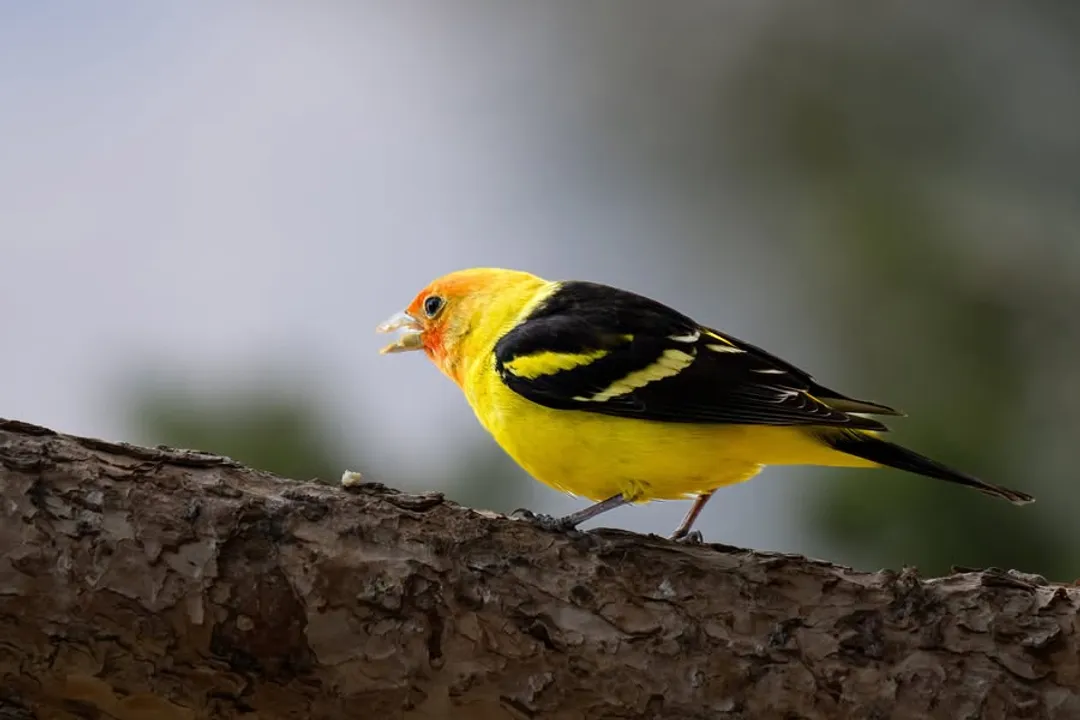
The Western Tanager employs several sophisticated techniques to secure its primary diet of arthropods. While they often glean insects directly from foliage or bark—sometimes hanging inverted like a warbler—they also engage in active pursuit of airborne prey. When they spot a flying insect, they perform swift, brief sallies or darts out into the open air to intercept and catch the prey while in flight. This specific behavior of capturing insects directly from the air is scientifically termed aerial hawking, demonstrating their agility beyond simple foliage gleaning.
Related Questions
What two conspicuous wing bars feature on the Western Tanager male's jet black wings?To which bird family is the Western Tanager (*Piranga ludoviciana*) classified as a striking member?Where are the primary wintering grounds located for the Western Tanager during the non-breeding season?What primary food source replaces insects as the Western Tanager diet shifts during late summer migration?Which parent is primarily responsible for the construction of the cup-shaped Western Tanager nest?How is the full song of the Western Tanager typically described vocally during the breeding season?What foraging technique involves the Western Tanager catching flying insects mid-flight during feeding?In what type of forest habitat are Western Tanagers typically found at higher elevations during the summer months?What is the current broad conservation classification assigned to the Western Tanager species?What characteristic of their migration pattern sets Western Tanagers apart from many other songbirds?