Western Gorilla Facts
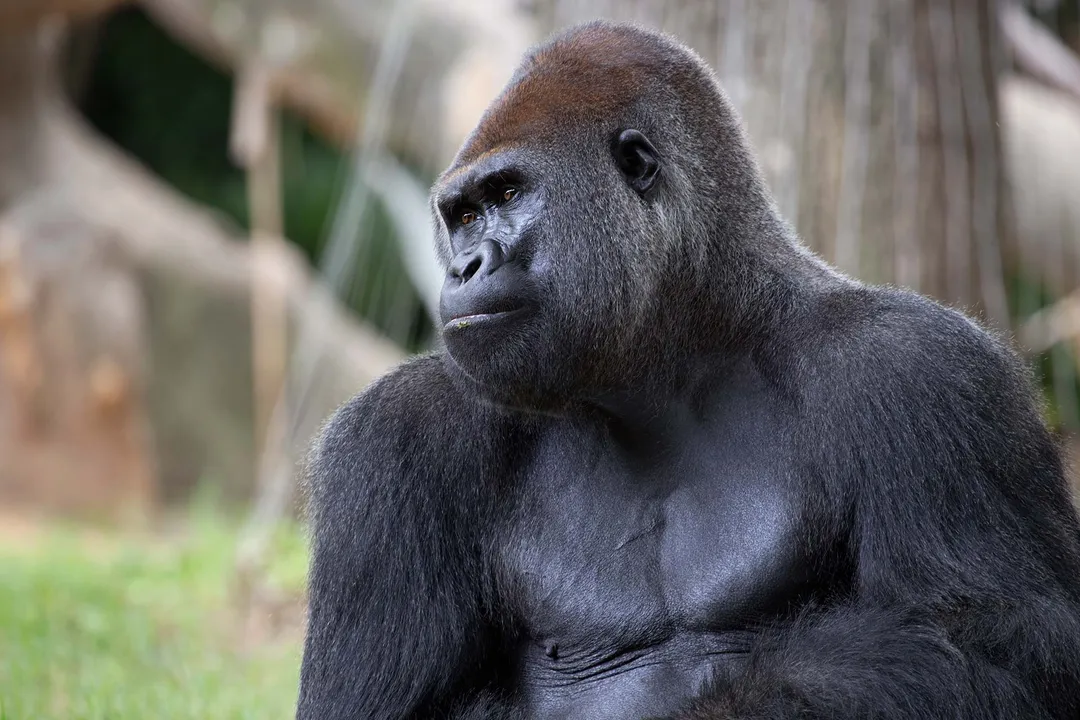
The Western Gorilla, a magnificent and imposing inhabitant of Central Africa’s dense forests, represents one of humanity's closest living relatives, sharing an astonishing amount of genetic material with us. [10] As a species, they command respect through their sheer size and complex social lives, yet they face immense pressure in their natural environment. [5] Understanding these great apes requires looking past the simplified image often presented in popular culture and appreciating the scientific divisions and ecological roles they fulfill. [2] They are generally divided into two distinct subspecies, each inhabiting specific regions and facing unique challenges to their survival. [2]
# Species Division
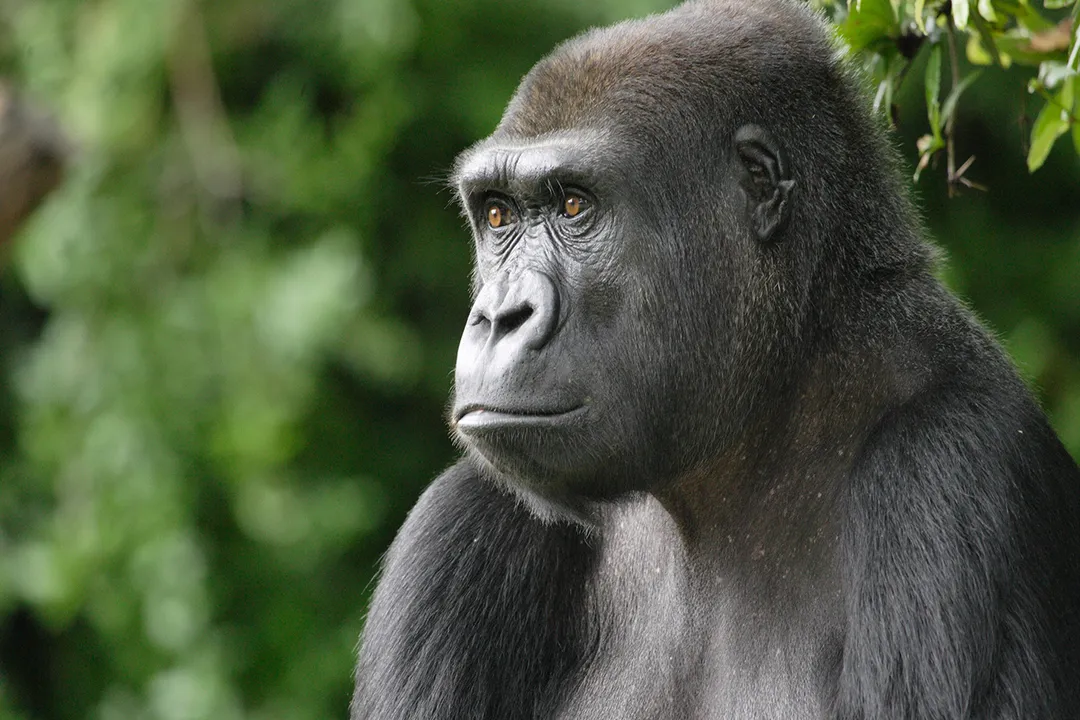
The classification of the Western Gorilla (Gorilla gorilla) separates them into two primary subspecies: the Western Lowland Gorilla (Gorilla gorilla gorilla) and the Cross River Gorilla (Gorilla gorilla diehli). [2] This division is significant both biologically and for conservation efforts, as management strategies must be tailored to each group's specific population size and geographic distribution. [2]
The Western Lowland Gorilla is by far the most numerous of the two, with estimates suggesting a population that may number in the hundreds of thousands across countries like the Republic of the Congo, Gabon, Equatorial Guinea, Cameroon, Central African Republic, and Angola. [2][5] In contrast, the Cross River Gorilla is critically endangered and incredibly rare, residing in a small, fragmented area along the border between Nigeria and Cameroon. [2][8] While both subspecies share general physical characteristics and dietary preferences, their social structures might exhibit subtle differences driven by habitat fragmentation and population density. [2] For instance, observations suggest that groups of Cross River Gorillas might sometimes be smaller or more dispersed due to the scarcity of ideal foraging territories. [2]
# Physical Presence
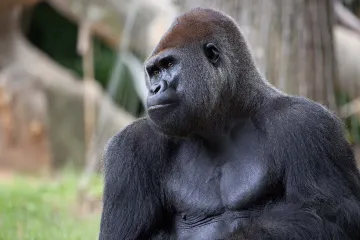
A mature male Western Gorilla is a truly awe-inspiring sight, often reaching heights close to that of a human and weighing considerably more. [4] Adult males, known as silverbacks, earn their title from the saddle of silvery-white hair that develops across their backs as they reach maturity, typically around 12 to 13 years of age. [1][4] This silver mantle signals their full adulthood and leadership status within the group. [1] Males can weigh between 300 and 485 pounds, though individuals in captivity often surpass these figures. [7] Females are considerably smaller, usually weighing between 150 and 250 pounds. [4]
Their powerful build is supported by robust skeletal structure and dense musculature. [4] They possess long arms that are longer than their legs, which facilitates their primary mode of movement: knuckle-walking. [10] Despite their bulk, gorillas are surprisingly agile when navigating the forest understory, using their hands for stability and support. [10] Their teeth are adapted for grinding tough vegetation, with large molars designed to process fibrous plant matter efficiently. [4] The color of their fur varies, but generally ranges from dark grey to black, sometimes exhibiting touches of brown or reddish fur on the head. [2]

# Forest Dwellers

Western Gorillas inhabit a variety of dense forest environments across Central Africa. [5] Their range extends through lowland swamp forests, secondary forests, and primary lowland tropical rainforests. [1][6] The habitat preference often dictates foraging strategies and group size. [5] For example, in areas where swamp forest predominates, access to certain water-rich food sources might allow for larger, more stable home ranges compared to dryer upland areas. [1]
These primates are primarily terrestrial, spending most of their time on the ground, though they are capable of climbing trees to find preferred foods or construct sleeping nests. [10] They build nests, or resting platforms, each night out of gathered vegetation, typically on the ground or low in the trees. [7] This daily reconstruction behavior is crucial for hygiene and comfort, showcasing a routine that repeats across generations within a family unit. [8] When considering the ecological footprint of these animals, one must realize that a healthy gorilla troop can significantly impact local vegetation structure. If a troop of 15 individuals regularly feeds in a localized area, the selective removal of favored saplings and fruit-bearing branches can create distinct 'gorilla gardens' in the forest understory, effectively shaping the next generation of plant life in their immediate vicinity. [8]
# The Herbivorous Diet
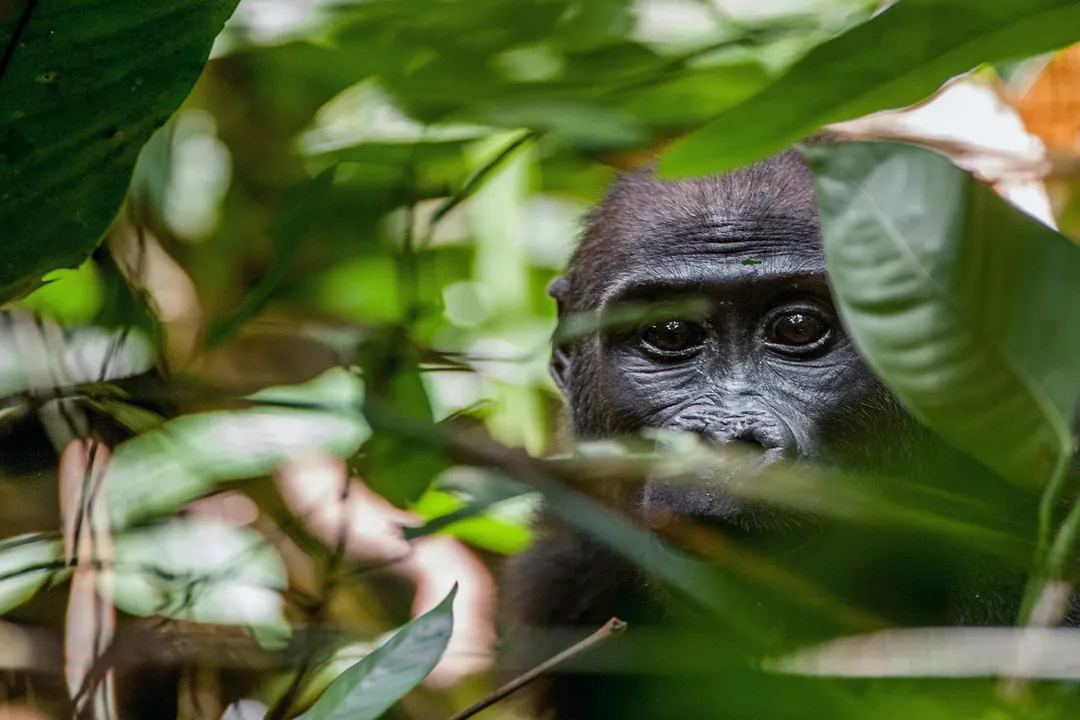
Western Gorillas are overwhelmingly herbivores, with their diet consisting almost entirely of vegetation. [1][7] Their daily foraging schedule is dedicated to consuming vast quantities of leaves, stems, pith, fruit, and shoots. [1][4] While fruit is a preferred food source when available, it often makes up a smaller percentage of the overall diet compared to the more consistently available fibrous material. [7]
In the lowland rainforests, they consume a wide variety of species, including bark, certain vines, and the soft centers of plants. [1] An interesting dietary observation is the consumption of soil or clay—a behavior known as geophagy. [7] This practice is believed to provide essential minerals and salts that might be lacking in their leafy diet, or possibly to help neutralize toxins found in some of the plants they ingest. [7] Unlike some other great apes, insects like ants or termites form only a negligible part of the Western Gorilla’s diet, placing them firmly at the herbivorous end of the spectrum. [4] The sheer volume of food required to sustain a large silverback highlights their role as significant primary consumers in the forest food web. [1]
# Social Structure
Gorilla family groups, often referred to as troops or bands, are complex social units governed by a dominant silverback. [8] This silverback is typically the oldest, largest, and most experienced male, responsible for protecting the entire group from external threats, including predators or rival males. [1][8] A typical group usually consists of one adult male, several adult females, and their dependent offspring. [8] Groups can range in size from just a few individuals up to 30 or more, depending on resource availability. [7]
The silverback's authority is generally maintained through presence and subtle dominance displays rather than constant physical confrontation. [8] He makes key decisions, such as when and where the group will travel and feed. [1] The females within the group maintain strong bonds, often moving between different males over the course of their lives, though daughters usually leave their birth group upon reaching maturity. [8] Communication within the group involves a rich repertoire of vocalizations, including grunts, roars, and screams, as well as physical gestures like chest-beating, which serves as an impressive threat display or a general announcement of presence. [1]
# Life Cycle
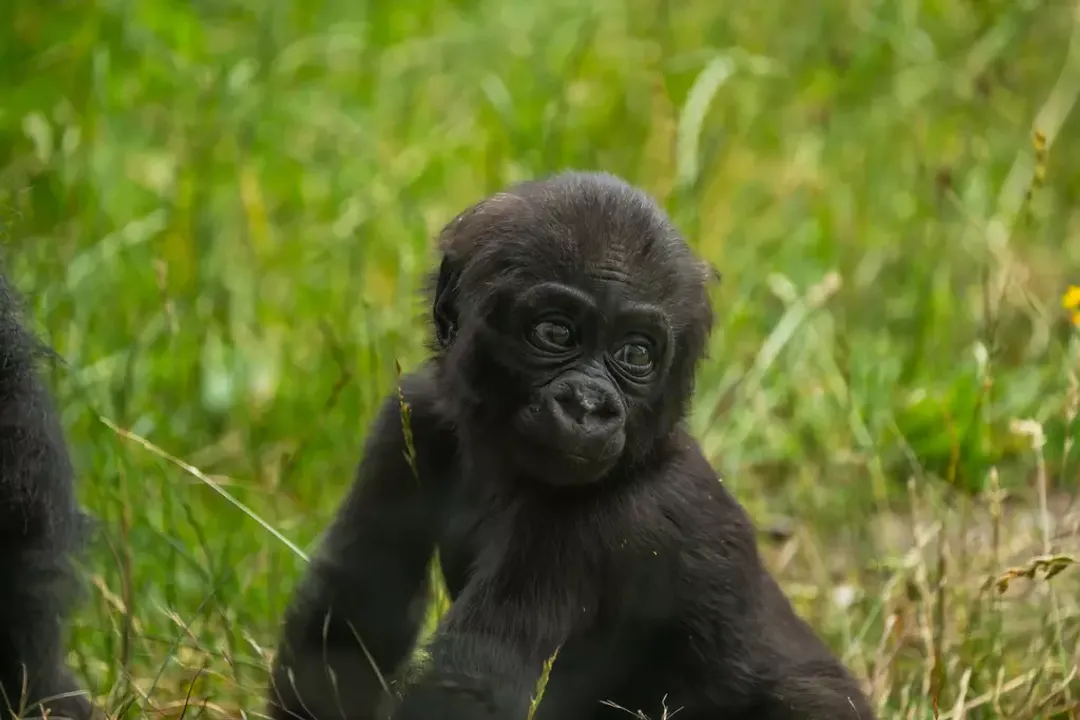
The reproductive cycle of the Western Gorilla is relatively slow, which contributes to the species’ vulnerability to population decline. [7] Females usually reach sexual maturity around eight to ten years of age and typically give birth to only one infant after a gestation period lasting about 8.5 months. [4][7] Newborn gorillas are entirely dependent on their mothers, clinging to their fur for transport and nursing for several years. [7]
Infants remain closely dependent on their mothers for the first few years of life, learning essential survival skills by observing the troop’s behavior. [1] They begin to explore briefly around four months old but do not become fully independent until they are several years old. [7] This extended period of dependency means that females have fewer breeding opportunities throughout their lives, often spacing births by four to six years. [1] In the wild, Western Gorillas can live for approximately 35 to 40 years, though those in protected environments or zoos can sometimes live longer. [7]
# Critical Threats
The conservation status of the Western Gorilla, particularly the Western Lowland subspecies, is Critically Endangered, a designation reflecting severe population reduction across its range. [5] This dire situation is driven by several interacting factors, the most immediate being habitat loss and degradation. [3] Commercial logging, agricultural expansion, and mining operations fragment their forest homes, isolating populations and reducing the resources available to support existing groups. [5]
However, the single most devastating threat in recent decades has been disease, most notably the Ebola virus, which has caused massive die-offs in several populations. [3] Because gorillas share close genetic proximity with humans, they are susceptible to similar pathogens, and in the remote areas where they live, there is no medical intervention possible when an outbreak occurs. [3] Furthermore, illegal commercial poaching for bushmeat has decimated populations in specific regions. [3][8] While some populations are protected by national parks, the effectiveness of enforcement against sophisticated poaching networks remains a constant challenge. [5] Considering the slow reproductive rate mentioned earlier, recovering from these mass mortality events, particularly those caused by Ebola, presents a significant biological hurdle that simple protection alone cannot overcome. [7]
# Conservation Outlook
Protecting the Western Gorilla requires multi-faceted international and local engagement. [5] Efforts focus heavily on securing and managing protected areas where the gorillas live, alongside anti-poaching patrols. [5] Ecotourism, when managed ethically and sustainably, can sometimes provide local communities with an economic alternative to logging or poaching, aligning local livelihoods with the preservation of the wildlife. [6]
A crucial, though perhaps less visible, conservation measure involves monitoring and responding to disease outbreaks. [3] Scientists and conservation groups work to track known populations and, where possible, intervene or at least quarantine areas suspected of harboring the virus to slow its spread. [3] Protecting the Cross River Gorilla specifically involves intense, localized management due to its small, geographically isolated population, often requiring direct engagement with the few local communities living near them to secure their remaining habitat. [2] Furthermore, one can observe that the efficacy of conservation often hinges on political stability within the range countries; areas experiencing protracted conflict see immediate and severe drops in gorilla populations due to unchecked hunting and habitat destruction, underscoring the link between human security and wildlife security. [5] Sustained funding for rangers, veterinary support, and community education remains the lifeline for both subspecies. [6]
# Comparing Lowland and Cross River Groups
While both are Gorilla gorilla, the demographic differences between the Lowland and Cross River subspecies are stark and define their conservation futures. [2] The Lowland population, while still threatened, benefits from a wider distribution across several nations, offering a buffer against localized catastrophe. [5] The Cross River Gorilla, by contrast, exists in perhaps fewer than 300 individuals scattered across fewer than 10 forest blocks. [2] This extreme fragmentation means that the loss of a single local troop due to poaching or disease could represent a substantial percentage loss of the entire subspecies. [2] This fragility demands a highly localized and intensive protection regime focused on securing the specific forest patches they inhabit, contrasting with the broader landscape management needed for the larger, more dispersed Lowland groups. [2]
Related Questions
#Citations
Western lowland gorilla - National Zoo
Western gorilla - Wikipedia
Facts about the western lowland gorilla - IFAW
Western Lowland Gorilla Facts and Information - Seaworld.org
Western Lowland Gorilla | World Wildlife Fund
Western lowland gorilla | London Zoo
Western Lowland Gorilla - Zoo Atlanta
Western Lowland Gorilla Population
Western gorilla Facts for Kids
10 great gorilla facts | National Geographic Kids