Yellow Tanager (Black-and-Yellow Tanager) Facts
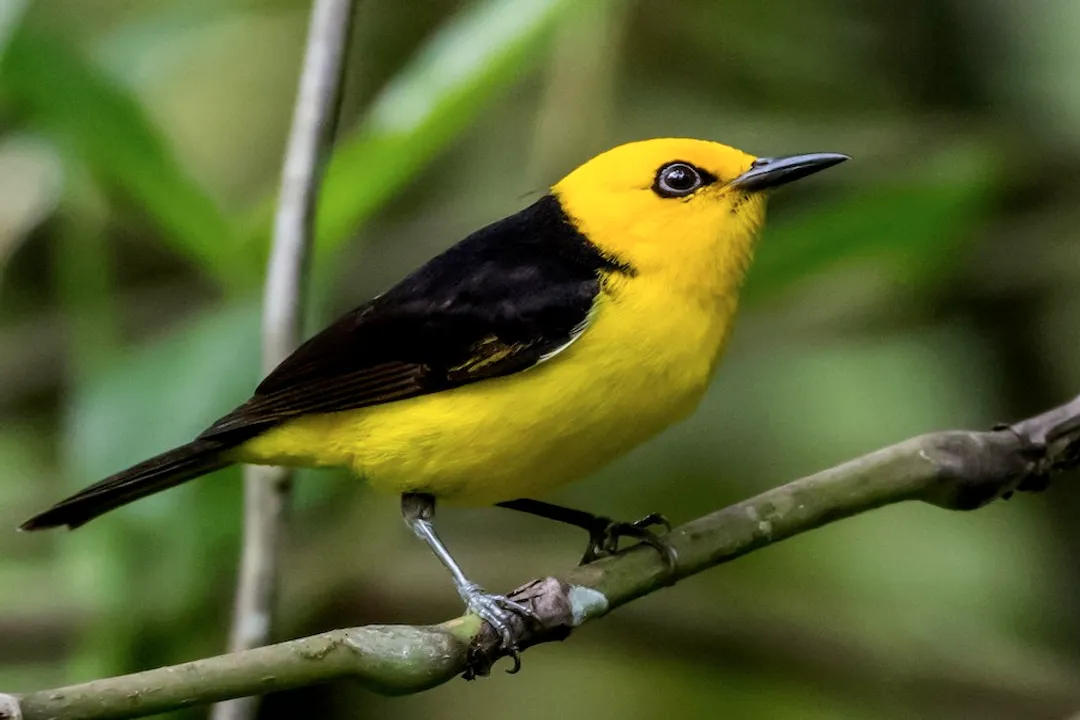
The Black-and-Yellow Tanager, frequently also called the Yellow Tanager, presents a striking appearance that helps it stand out in the forest canopy of its South American home. [1][4] This medium-sized passerine bird is a member of the family Thraupidae, which encompasses the colorful tanagers. [2] For birders hoping to spot this species, knowing the subtle field marks is key, especially since the common names can sometimes lead to misidentification with other similarly colored birds in the region. [1]
# Plumage Description
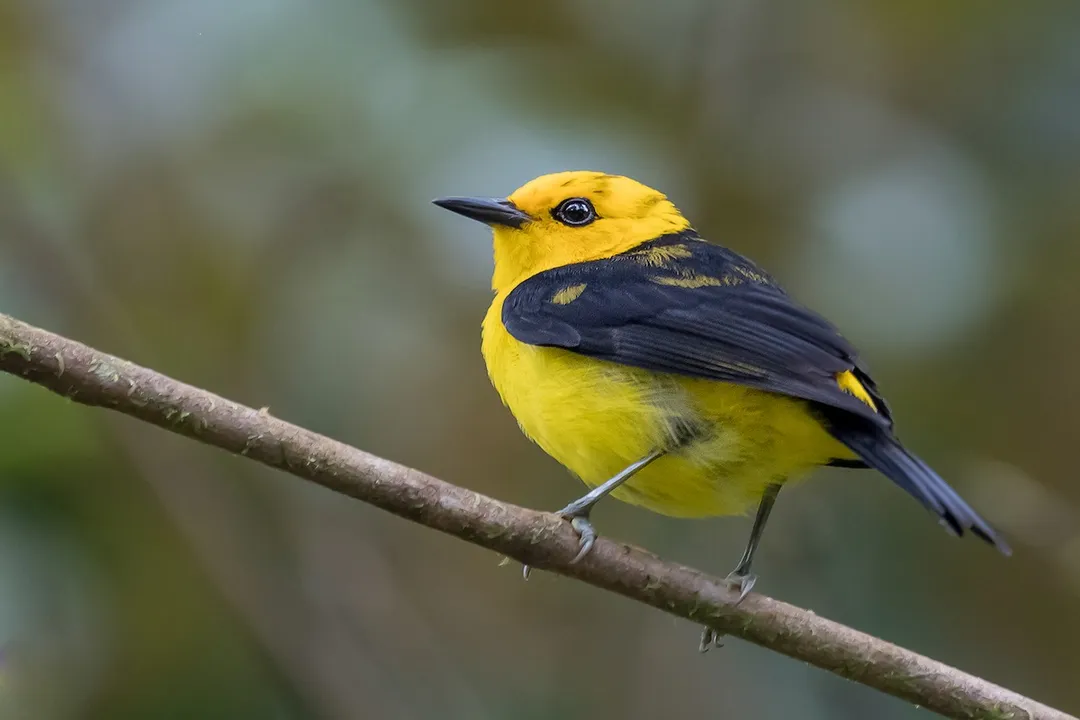
The adult male Black-and-Yellow Tanager showcases a bold pattern of bright yellow and black. [1] The head is predominantly black, offering a sharp contrast to the vivid yellow that covers the back, rump, and underparts. [2][5] This strong yellow coloration covers much of the body, but careful observation reveals key features that help distinguish it from similar species. [1] The wings and tail are generally darker, often appearing blackish or dusky. [5]
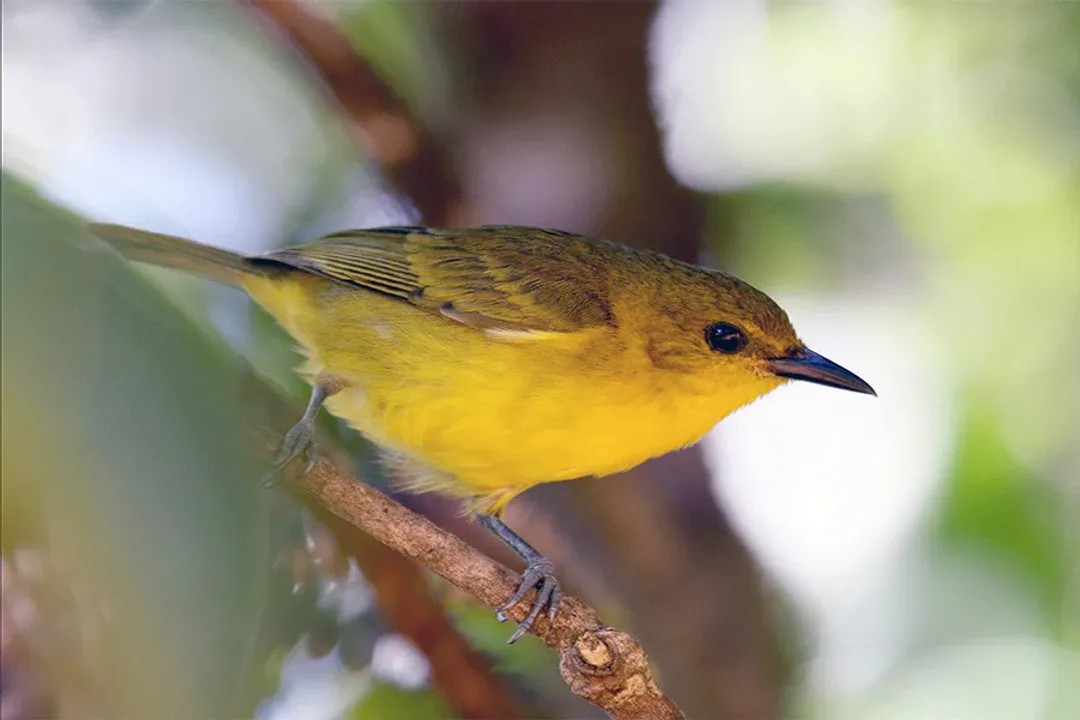
Females exhibit a slightly duller appearance compared to the males, a common pattern in many bird species. [1] While they retain the characteristic black and yellow pattern, the yellow tones may be more greenish-yellow or olive-tinged. [2] Size-wise, these birds are relatively small, measuring around 13 to 14 centimeters in length. [1] If you are observing a bird where the yellow seems muted or more greenish, especially on the back or underparts, you are likely looking at a female, or perhaps an immature bird still developing its full adult livery. [2] Distinguishing features to look for, particularly when the bird is partially obscured, include the contrasting black mask around the eye and the specific pattern of the yellow on the crown and nape, which can vary subtly depending on the subspecies present. [1]
# Habitat Range
The preferred environment for the Black-and-Yellow Tanager is strongly tied to humid, subtropical, or lower montane forests. [2][6] These birds are generally found in the Andes region, inhabiting areas of Colombia, Ecuador, and Peru. [2][6] Specific elevation ranges place them between about 1,000 and 2,500 meters above sea level, though they may occasionally be found slightly lower or higher depending on local conditions and the season. [2][6] They favor humid foothill forests. [6]
While their core habitat is the humid forest, they are also adaptable, often appearing in humid forest edges, secondary growth areas, and semi-open habitats adjacent to the main forest blocks. [1][5] This adaptability means they can sometimes be found in gardens or shade coffee plantations if the surrounding forest is nearby. [1] If you are birding in the Andean foothills of countries like Colombia, looking for this species means focusing your attention near the transition zone where the dense, primary forest gives way to slightly more open vegetation or disturbed areas. [6] Focusing only on the high, windy cloud forest areas or the flat, dry lowlands would likely mean missing them entirely, as their association with humid, middle-elevation slopes is quite strong. [2][5]
# Foraging Habits
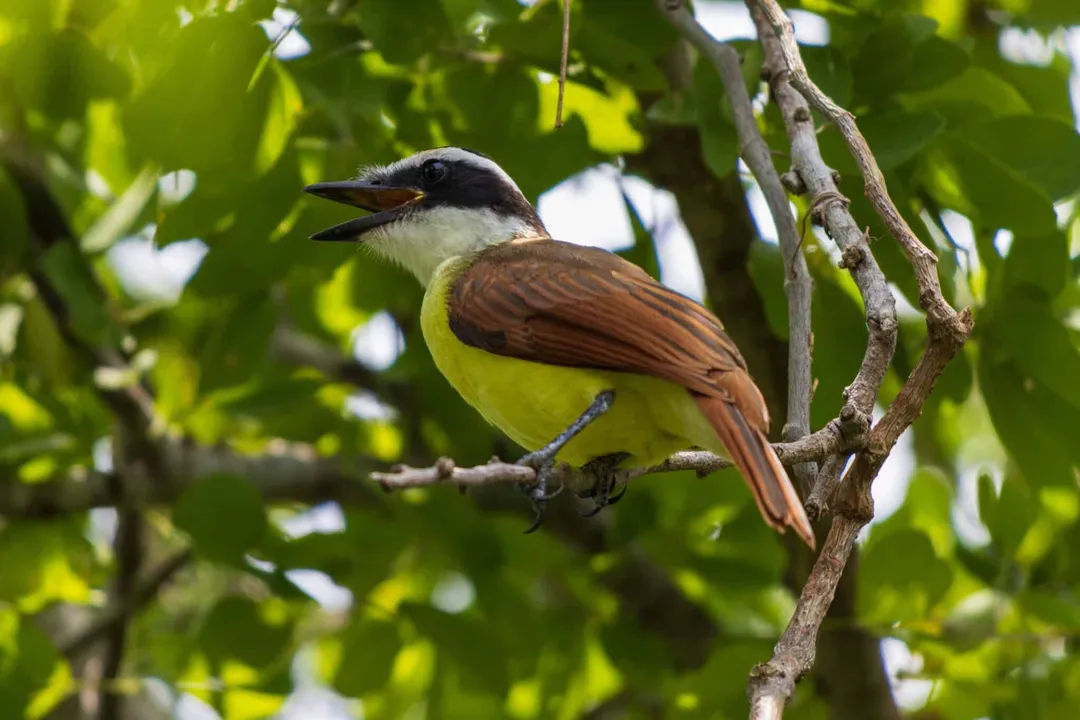
The diet of the Black-and-Yellow Tanager primarily consists of fruit, supplemented by insects. [2][5] Like many tanagers, they spend a good deal of time foraging through the canopy and subcanopy, searching for small berries and insects hidden among the leaves or bark. [2] They are described as being active feeders. [5]
When feeding on fruit, they often move actively among the branches, picking items directly from the surface of the vegetation. [2] Their insect prey usually consists of small invertebrates gleaned from foliage or occasionally caught in short sallies. [5] This mixed diet allows them to take advantage of seasonal fruit availability while maintaining a necessary protein intake from insects. A successful observation session often involves locating a fruiting tree utilized by several tanager species; the Black-and-Yellow Tanager is known to join mixed-species foraging flocks, which can make spotting them easier, though they may move quickly within the group. [1][2]
# Song Notes
The vocalizations of the Black-and-Yellow Tanager are not overly complex but serve important functions for communication, territory defense, and mate attraction. [6] The song is typically described as a series of clear, high-pitched notes or short, rapid phrases. [2] It is often a thin, somewhat weak song compared to some other tropical birds. [2]
In addition to the full song, the species gives various calls. These calls are often simple chips or squeaks used for contact when foraging or alarm calls when a potential threat is perceived. [2] While not renowned for an elaborate melody, the distinct quality of their high, clear notes can be an excellent way to locate them when visual identification is difficult due to dense foliage. [6] Experienced local birders often rely on recognizing these specific call notes to track the bird's movement through the canopy layers. [2]
# Classification Details
Scientifically, this bird has been classified under different genera over time, reflecting ongoing taxonomic research within the tanager family. [2] Most current references associate the Black-and-Yellow Tanager with the genus Thraupis, carrying the binomial nomenclature Thraupis flavovirens. [2][5] It belongs to the large and diverse Neotropical bird family Thraupidae. [2]
It is important to note the potential for confusion with other tanagers, even within the Thraupis genus, based on color alone. While the specific range information points clearly to the Andean foothills, variations in taxonomy or common naming practices across different guidebooks can sometimes lead to cross-referencing issues if a guide uses an older name or focuses on a different Yellow Tanager found elsewhere. [1][9] For instance, while the general term "Yellow Tanager" appears, the specifics regarding plumage and range help isolate T. flavovirens. [1][4]
# Status Overview
The conservation status of the Black-and-Yellow Tanager is generally considered secure, listed as Least Concern by assessment bodies. [2] This classification suggests that the population is currently stable and widespread enough not to warrant immediate concern for major declines. [5]
However, like nearly all species reliant on Neotropical forest, they face the ever-present threat of habitat loss and fragmentation due to agricultural expansion, logging, and development in the Andean foothills. [2][6] While their use of secondary growth gives them some flexibility, the continued destruction of primary humid forest patches ultimately limits the available territory for successful breeding and foraging. [5] Monitoring their population trends in specific areas where deforestation is rapid remains important for long-term stability, even if the global status is currently favorable. [2]
Related Questions
#Citations
Yellow Tanager (Black-and-Yellow Tanager) Bird Facts - A-Z Animals
Black-and-yellow tanager - Wikipedia
Black-and-yellow Tanager - Chrysothlypis chrysomelas
Yellow Tanager (Black-and-Yellow Tanager) Facts & Photos
Black-and-yellow tanager - Facts, Diet, Habitat & Pictures ... - Animalia
Black-and-yellow Tanager - Birds of Colombia
Black-and-yellow Tanager Chrysothlypis chrysomelas - eBird
Western Tanager - Montana Field Guide
Yellow Tanager: Birding ID Challenge - Birds and Blooms