Western Tanager Facts
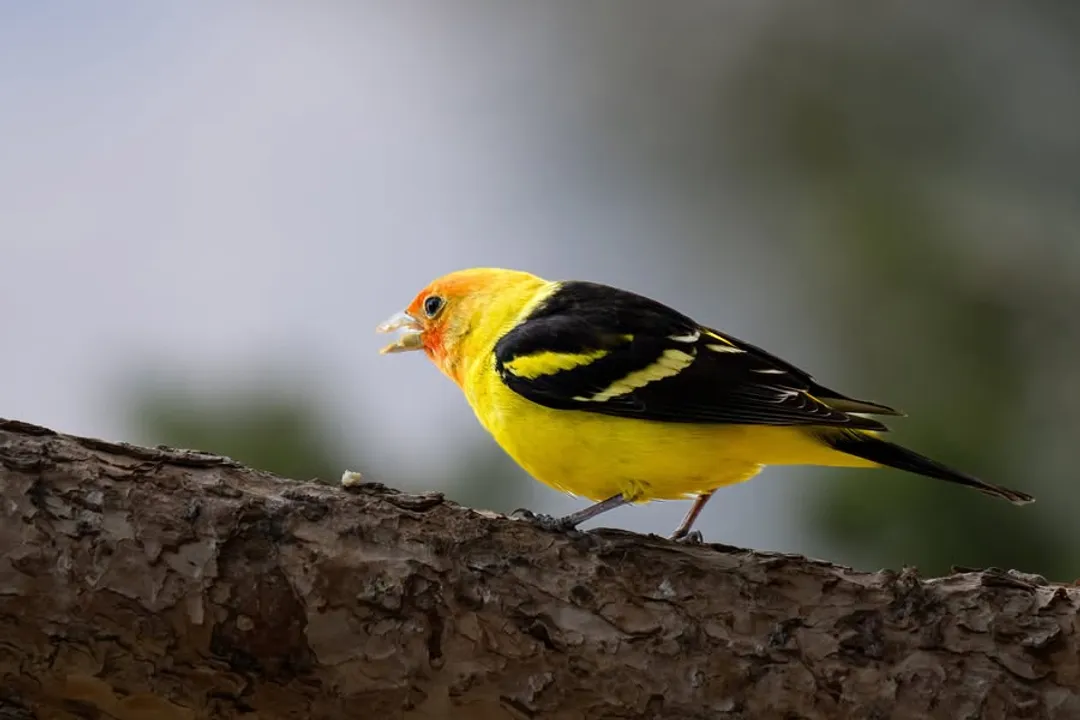
The Western Tanager arrives on the spring breeding grounds as a splash of pure, saturated color against the evergreens, instantly drawing the eye away from more subtly dressed woodland birds. Seeing one, particularly the brilliant male, feels like spotting a piece of stained glass flitting among the branches. These birds, whose scientific name is Piranga ludoviciana, are striking members of the cardinal family, though they look superficially similar to orioles and tanagers found in Central and South America. [2][6] Their presence is strongly tied to the rhythms of the seasons, moving vast distances between the temperate forests of western North America and the warmer climes further south. [1]
# Plumage Colors
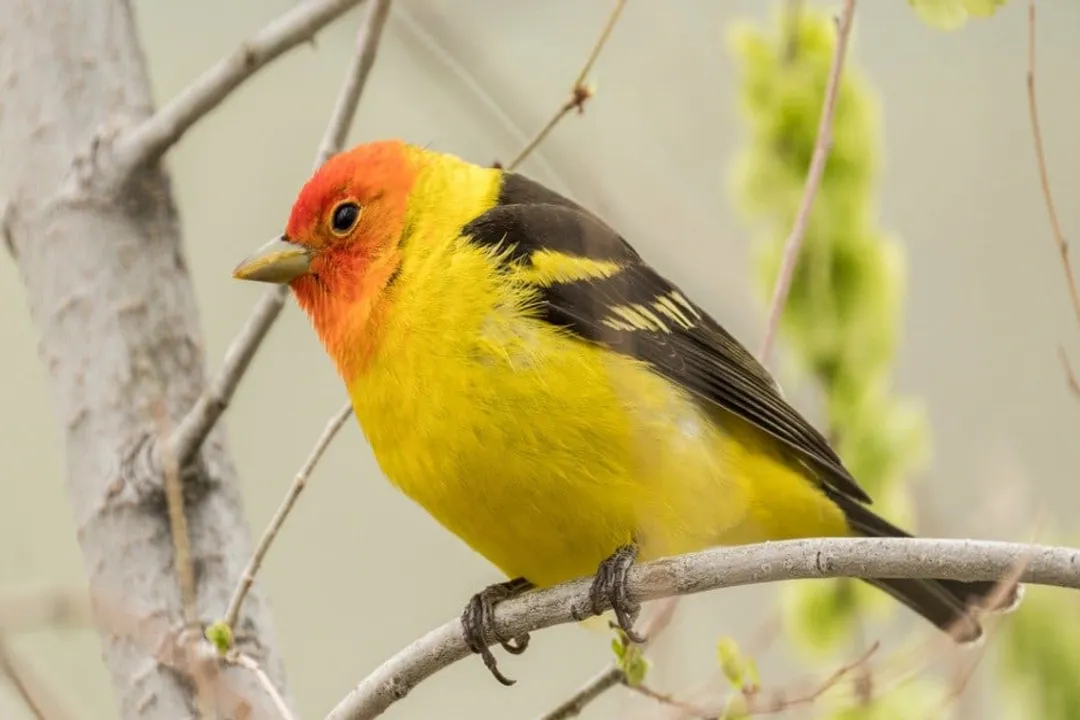
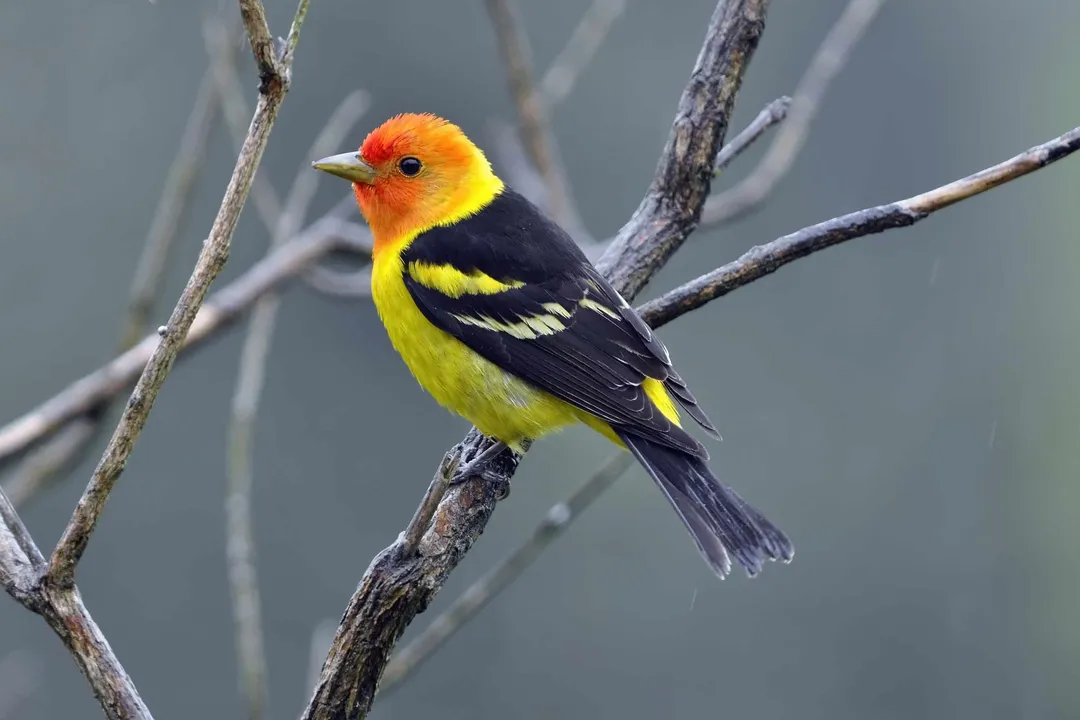
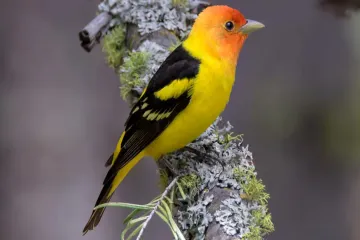
The most immediate identifier for the Western Tanager is the male’s unmistakable breeding plumage. This bird displays a dazzling lemon-yellow body, contrasting sharply with a bright, fiery red head that can sometimes appear orange depending on the light. [1][4] The back, wings, and tail are jet black, but the wings are further highlighted by two conspicuous wing bars: one broad, creamy white bar and a narrower, yellowish one just below it. [2][4] The combination of red, yellow, and black makes the male a spectacular sight, though they can be surprisingly hard to spot when feeding deep within a dense canopy. [3]
The females, and the first-year males, offer a much more subdued palette. They generally present an olive-green or yellowish-green overall appearance. [1][4] Their wings and tail are darker than the body, and they possess those same two pale wing bars, which serve as a key identification feature even on the duller birds. [2] Immature males gradually acquire the adult male's colors, often looking patchy or mixed with yellow and red before achieving the full adult splendor. [5] All Western Tanagers share a thick, conical bill, ideal for cracking seeds when necessary, though it's primarily used for picking insects off leaves and bark. [3]
# Where Found
The distribution of the Western Tanager spans a significant portion of western North America during the breeding season. They favor coniferous and mixed-wood forests, especially those containing spruce, pine, and fir trees. [1][2] Their range stretches from the Rocky Mountains westward to the Pacific Coast, extending north into British Columbia and sometimes into Alaska. [4] They are typically found at higher elevations within these western forests during the summer months. [6]
When late summer arrives, they begin their southward migration, which is often less conspicuous than their spring arrival. Unlike many songbirds that move in large, tightly packed flocks, Western Tanagers often travel singly or in small, loose groups. [5] Their wintering grounds are primarily found in Mexico and Central America, ranging down to Panama, where they trade the high mountain conifers for tropical deciduous forests. [1][2] This dramatic shift in habitat, from high-altitude pine forests to tropical lowlands, underscores their adaptability to varied food sources across the year. [3] While generally predictable in their migration routes, birds occasionally show up far east of their typical pathways, sometimes appearing in the eastern or central United States or Canada, acting as intriguing, out-of-place visitors. [5]
# Eating Habits
Insects form the bedrock of the Western Tanager's diet, especially when feeding their young during the breeding season. They consume a wide variety of arthropods, including caterpillars, grasshoppers, beetles, ants, and wasps. [1][3] Their foraging technique often involves picking insects directly from foliage or bark, sometimes hanging upside down like a titmouse or warbler to reach sheltered prey. [4] They are also known to perform brief, fluttering sallies into the air to catch flying insects mid-flight, a behavior termed aerial hawking. [3]
As the breeding season wanes and migration begins, the diet often sees a notable shift toward fruits and berries. [1][3] This switch is essential for building up the fat reserves needed for their long journey south. They readily consume wild berries found in their breeding or migratory stopover areas, such as elderberries and serviceberries. [4] If you are fortunate enough to host them briefly at a backyard feeder during their passage north or south, they may show interest in high-quality suet mixtures, or perhaps even sliced oranges or grape jelly—a taste preference sometimes shared by orioles but worth testing for the dedicated observer. [7] Observing the speed at which they clear a patch of fruiting shrubs during migration offers a good indicator of how urgently they are fueling up for the next leg of their journey.
# Nesting Facts
The nest construction is primarily the work of the female Western Tanager. She selects a site high up in a tree, often placing the cup-shaped nest on a horizontal branch or near the trunk, usually in conifers, though deciduous trees are sometimes used. [2] The nest is woven together from fine twigs, grasses, rootlets, pine needles, and bark shreds, often lined with softer materials like fine grasses or even animal hair to insulate the eggs. [3] It must be sturdy enough to withstand the winds common in their mountain breeding habitats. [2]
Once the nest is complete, the clutch typically consists of three to five pale, greenish-white eggs heavily marked with brown or olive spots, concentrated mostly around the larger end. [2] The female handles the incubation duties alone, sitting on the eggs for about two weeks until they hatch. [2] After the young emerge, both parents share the responsibility of feeding the nestlings, provisioning them almost exclusively with insects until they fledge, usually around ten days after hatching. [3] Once they leave the nest, the young birds still rely on their parents for a short period before achieving full independence. [2]
# Bird Song
The vocalizations of the Western Tanager serve distinct purposes: one for communication and another for territorial declaration or mating display. [1] The most recognizable sound is a sharp, quick chip or pit-tik call, often heard when the bird is alarmed or communicating over short distances within the canopy. [4]
The full song, however, is quite different. It is often described as a rambling, sometimes hesitant series of buzzy notes, interspersed with clear whistles. [1] It is generally considered less musical or complex than the songs of some other western songbirds. During the breeding season, the male sings from an exposed perch high in a tree to announce his presence and defend his territory. [4] Listening for that distinct buzzy quality is the key to separating it from other yellow-bodied migrants during their brief stopovers.
# Behavior Notes
Western Tanagers are generally considered somewhat secretive while in the dense canopy of their breeding grounds, often revealed more by their calls or flashes of color than by prolonged observation. [3] While they are insectivores, their generalist approach to foraging, moving from catching insects on the wing to gleaning them from leaves, and supplementing with fruit, speaks to a high level of behavioral flexibility that aids their survival across diverse environments. [6]
For those hoping to attract them to a property, timing is everything. Since they move through many areas only briefly during migration, placing out potential food sources—like fresh, high-quality fruit or suet—right as the local weather patterns suggest the tail end of spring migration might be occurring gives you the best, albeit short, window of opportunity. [7] Unlike some resident species, the Western Tanager isn't one you can count on visiting your feeder for weeks on end; they are often transient travelers stocking up before moving on to the next stage of their cycle. [1][5]

# Status Review
From a broad conservation standpoint, the Western Tanager is currently classified as a species of Least Concern. [1] Their wide geographic range and relatively large population suggest they are not immediately threatened on a global scale. [4] Bird monitoring programs continue to track their numbers, noting that while locally populations might fluctuate due to habitat changes, the species as a whole remains stable enough to warrant this status. [1] However, the pressures of habitat fragmentation in their breeding forests and changes in their tropical wintering grounds remain points of necessary ecological observation for the future health of the species. [6]
Related Questions
#Citations
Western Tanager Overview, All About Birds, Cornell Lab of Ornithology
Western tanager - Wikipedia
Meet the Western Tanager - Birds and Blooms
Western tanager bird description and habitat - Facebook
Piranga ludoviciana (western tanager) - Animal Diversity Web
Western Tanager - Wild Birds Unlimited
Western Tanager | Wyoming Game & Fish Department
Western Tanager Bird Facts - Piranga Ludoviciana - A-Z Animals