What environmental pressures are cited as highly influential in shaping the diverse phenotypes within the *C. oreganus* species complex?
Answer
Prey availability, ground substrate color, and regional climate.
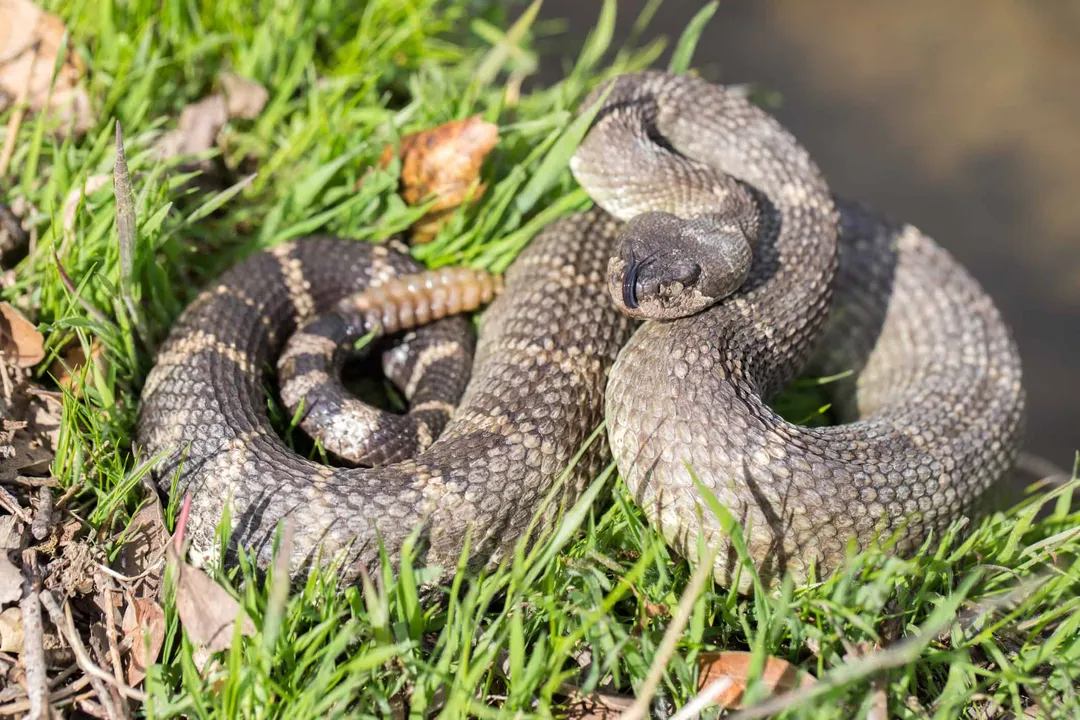
The Western Rattlesnake exhibits significant inherent plasticity, allowing it to inhabit diverse environments ranging from the Pacific Northwest undergrowth to arid Great Basin interiors. This variation in phenotype and physiology is rapidly shaped by local selective pressures inherent to these specific niches. Key factors driving these adaptations include what food sources are locally available (prey availability), the visual necessity of matching the local ground substrate color for camouflage, and the specific thermal characteristics of the regional climate under which the snake must regulate its body temperature.
Related Questions
What distinguishes the Crotalinae subfamily, to which *Crotalus oreganus* belongs?What biological event, contrary to popular myth, does the segmented rattle of *Crotalus oreganus* actually indicate?Under which broader historical classification were many populations now recognized as *C. oreganus* previously grouped?What major geological era is central to the deep evolutionary history and range dynamics of *C. oreganus*?What process, revealed by phylogeographic analysis, is evidenced by genetic breaks tracing back to barriers present during glacial maximums?What environmental pressures are cited as highly influential in shaping the diverse phenotypes within the *C. oreganus* species complex?What finding often results when comparing the deep genetic separations in *C. oreganus* molecular data with current subspecies classifications?What biochemical defense mechanism in *C. oreganus* varies significantly based on geographic location?What modern human activities pose a threat by causing fragmentation to localized *C. oreganus* populations?What is the general conservation security ranking assigned to the *Crotalus oreganus* designation by conservation bodies?