Why do ground-dwelling bandicoots typically have tails short relative to body length?
Answer
A long tail offers little advantage and could impede movement through dense undergrowth
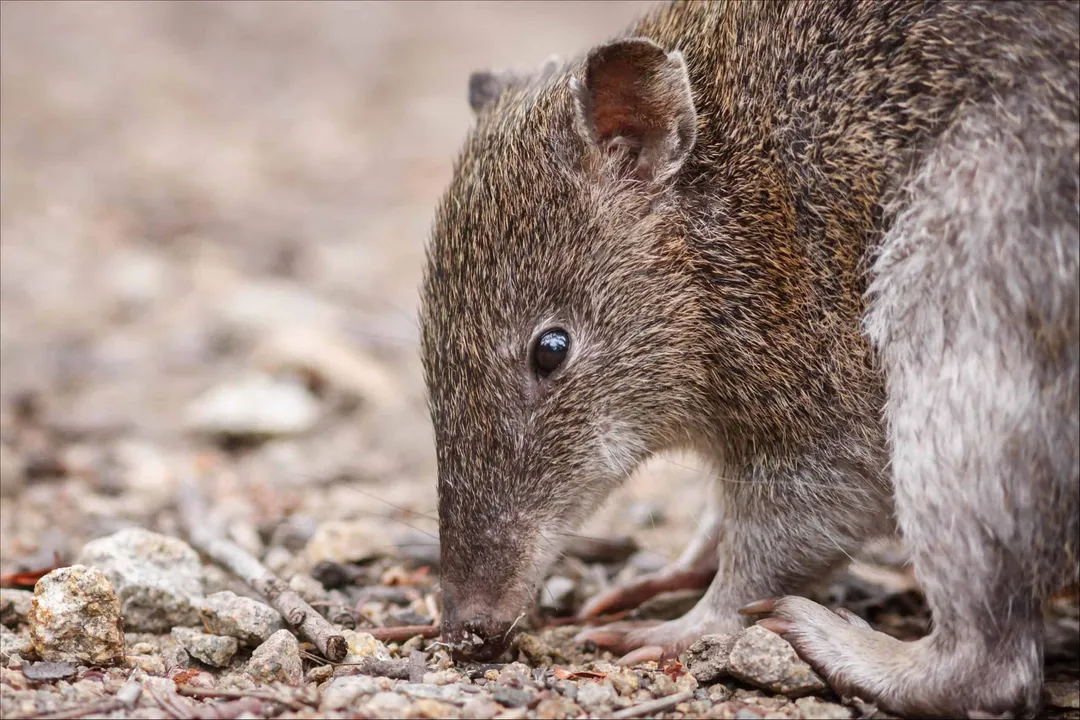
The tail length in bandicoots is characteristic of many fossorial or ground-dwelling mammals. In environments characterized by thick undergrowth, tight spaces, or burrowing activity, a long, trailing tail offers no tactical advantage. Instead, it presents a liability, potentially becoming snagged or impeding quick, necessary movements through dense vegetation or narrow passages. Evolutionary pressure favors a shorter tail which allows for streamlined terrestrial movement close to the ground, aligning with the animal's need for swift escape and efficient burrowing/foraging near the substrate.
Related Questions
What system is optimized for elastic recoil in the bandicoot's disproportionately long hind limbs?How does the elongated snout of the Long-Nosed Bandicoot aid in foraging efficiency?Why do ground-dwelling bandicoots typically have tails short relative to body length?What characteristic of bandicoot teeth reflects their omnivorous diet requiring varied processing?What is the primary function of the earthy coloration and coarse fur seen on the Northern Brown Bandicoot?Which term describes the characteristic locomotion driven by the bandicoot's long and powerful hind legs?What primary evolutionary pressure is highlighted by the functional separation of hind and forelimb duties?What is the functional specialization of the bandicoot's shorter, immensely strong forelimbs?Due to their small, compact body size, what physiological tendency related to temperature regulation do bandicoots face?How do the hind limbs compare biomechanically to the forelimbs during the power stroke of digging for the bandicoot?