Due to their small, compact body size, what physiological tendency related to temperature regulation do bandicoots face?
Answer
A higher surface area to volume ratio, making them prone to rapid heat loss or gain
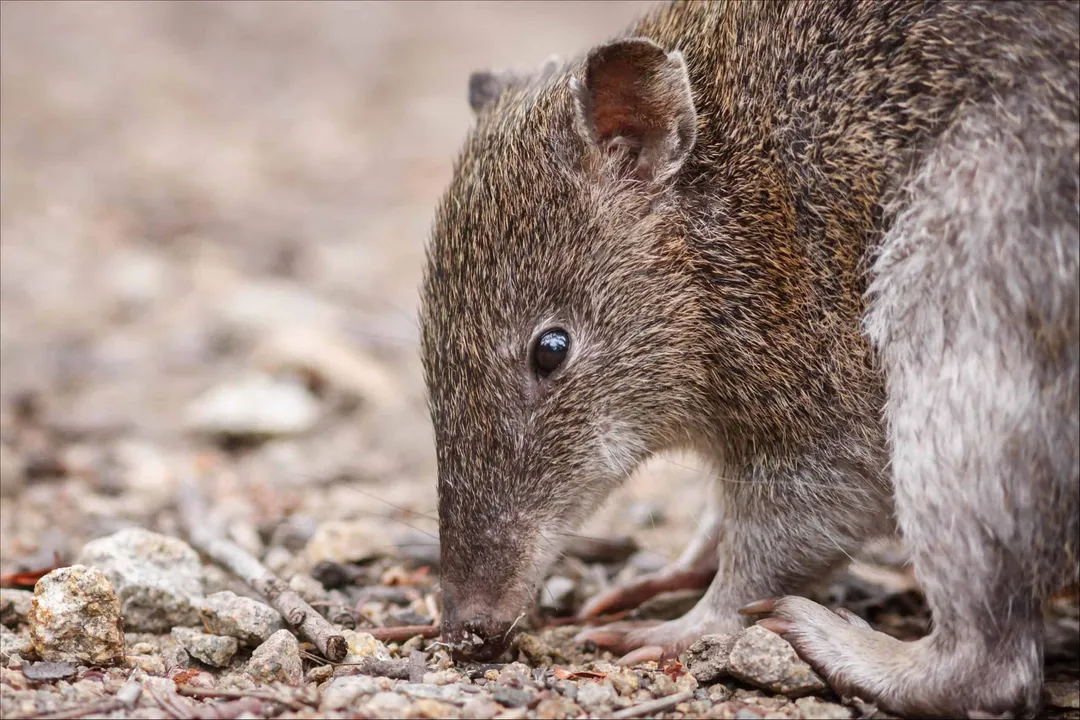
Small mammals, including bandicoots, inherently possess a high surface area to volume ratio compared to larger animals. This physical reality means that they exchange heat with their surroundings much more quickly. Consequently, they are highly susceptible to rapid temperature fluctuations; they can lose vital body heat quickly in cool conditions or gain excessive heat rapidly when exposed to warmth. Their strictly nocturnal habits are a direct behavioral adaptation to mitigate this vulnerability, ensuring they conduct essential foraging activities only when the intense daytime heat of much of their range subsides.
Related Questions
What system is optimized for elastic recoil in the bandicoot's disproportionately long hind limbs?How does the elongated snout of the Long-Nosed Bandicoot aid in foraging efficiency?Why do ground-dwelling bandicoots typically have tails short relative to body length?What characteristic of bandicoot teeth reflects their omnivorous diet requiring varied processing?What is the primary function of the earthy coloration and coarse fur seen on the Northern Brown Bandicoot?Which term describes the characteristic locomotion driven by the bandicoot's long and powerful hind legs?What primary evolutionary pressure is highlighted by the functional separation of hind and forelimb duties?What is the functional specialization of the bandicoot's shorter, immensely strong forelimbs?Due to their small, compact body size, what physiological tendency related to temperature regulation do bandicoots face?How do the hind limbs compare biomechanically to the forelimbs during the power stroke of digging for the bandicoot?