What adaptations do lace monitors have for survival?
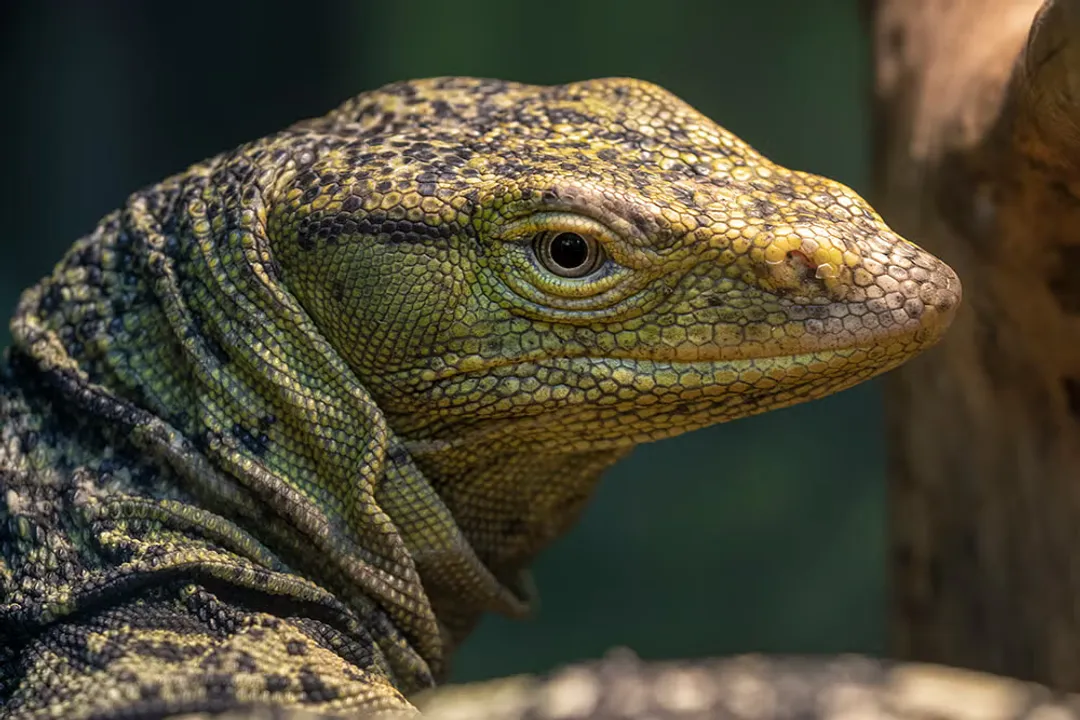
The Lace Monitor (Varanus varius), often called a tree goanna in its native habitat, presents a masterclass in reptilian survival across the eastern Australian forests and coastal woodlands it calls home. As the second-largest monitor species in the country, its suite of physical traits and learned behaviors allows it to thrive where many other reptiles might struggle, successfully navigating both high canopy and forest floor. These lizards are imposing, typically reaching lengths of 1.5 to 2 meters and sometimes exceeding 14 kilograms in weight.
# Appearance Camouflage
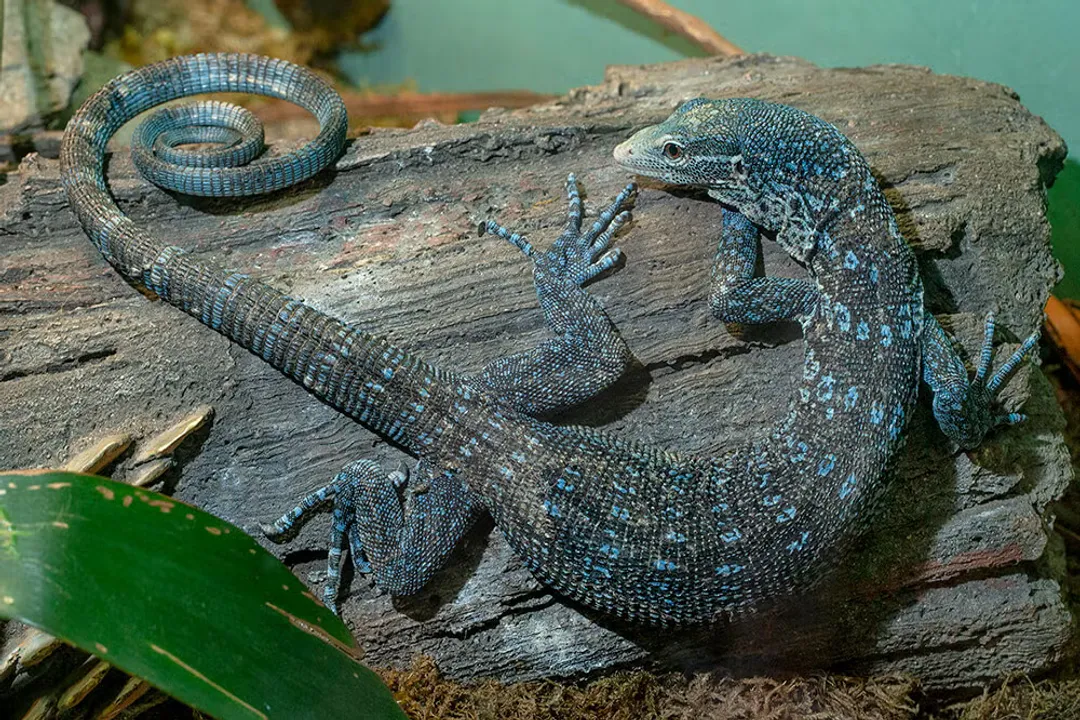
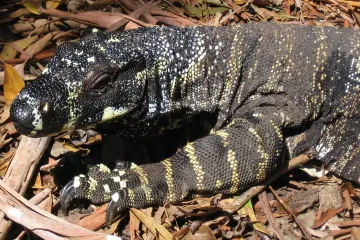
The very visual identity of the Lace Monitor is an adaptation in itself. Its skin is characterized by a striking pattern of dark grey or black overlaid with irregular cream or yellow spots and stripes, giving rise to its common name. This patterning is not merely decorative; it provides essential camouflage within the dappled light and shadows of the forest canopy where they spend considerable time. Interestingly, populations in drier regions of New South Wales and Queensland sometimes exhibit a different look, known as the 'Bells' form, which features broader black and yellow banding. This variation suggests an ongoing minor evolutionary fine-tuning based on local environmental light and substrate, an adaptation that continues even in a species with such deep evolutionary roots.
# Sensory Tracking
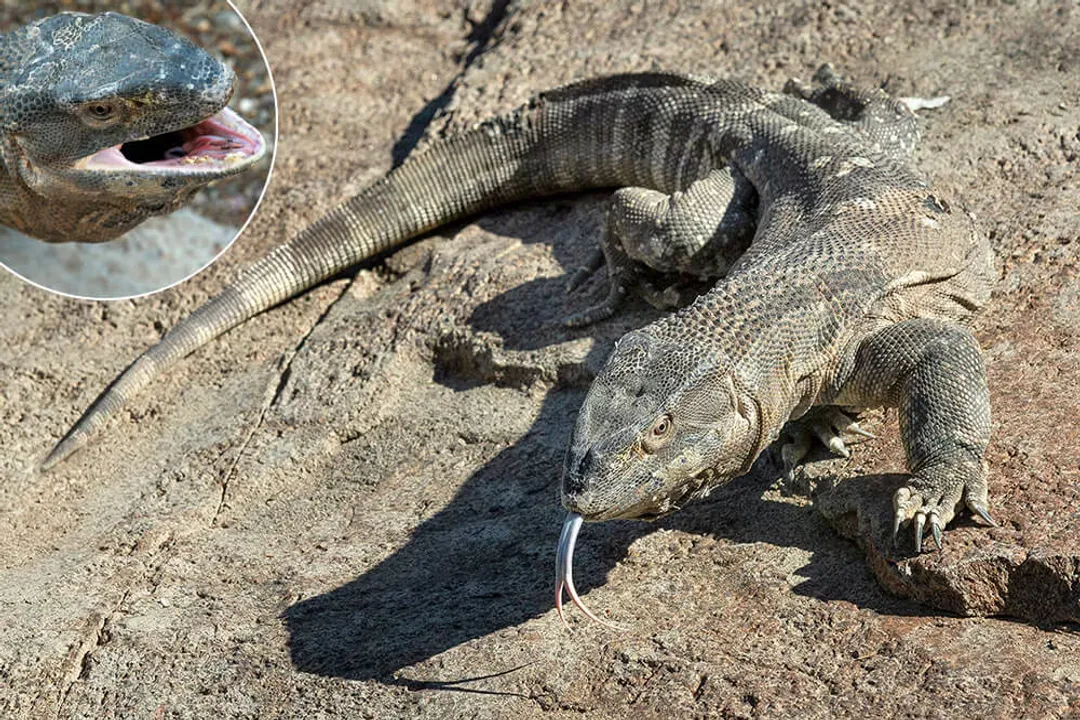
Like their snake relatives, Lace Monitors possess a highly specialized sensory tool: the forked tongue. They utilize this organ not for striking, but for highly efficient environmental sampling, rapidly flicking it to collect airborne chemical particles. These particles are then delivered to the Jacobson’s organ in the roof of the mouth, allowing the lizard to essentially "smell in stereo," determining the direction of scent trails with precision. This adaptation is critical for an opportunistic feeder that relies on detecting widely dispersed food sources, whether it is an animal carcass or the chemical signature of a hidden bird’s nest.
# Physical Weaponry
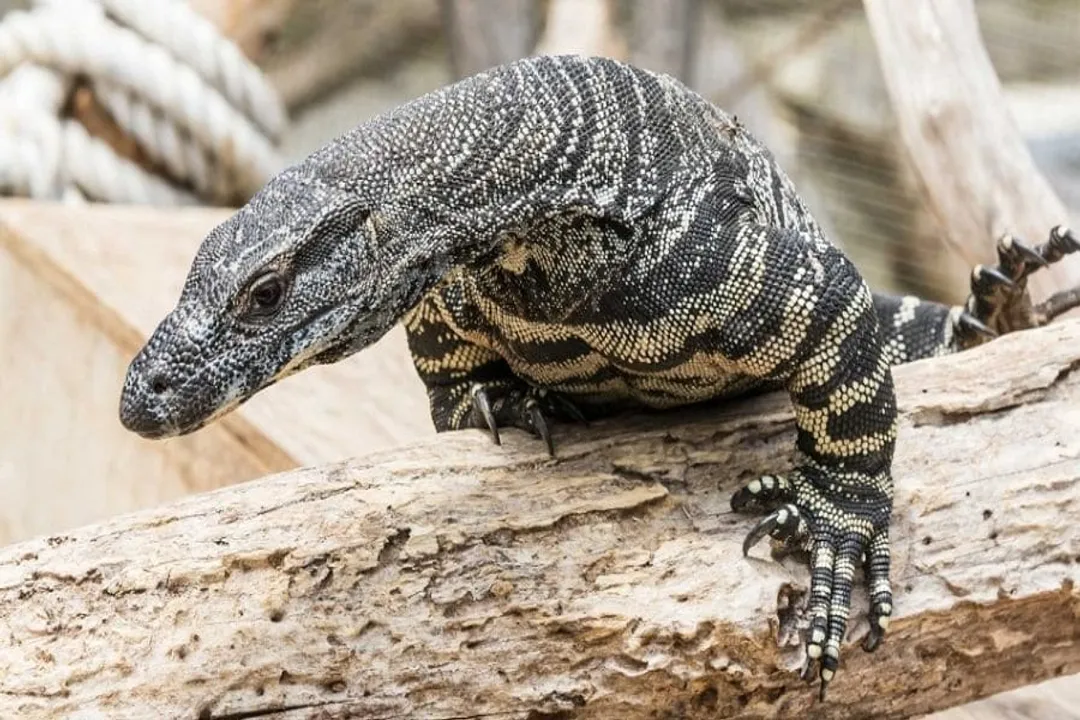
Survival demands both offense and defense, and the Lace Monitor is physically equipped for both. Its limbs are strong and muscular, terminating in very long, sharp claws. These claws are indispensable for rapid locomotion—climbing, digging, and sprinting across the ground. Beyond climbing, their mouths house sharp teeth for gripping prey. Furthermore, the existence of mild venom in their saliva acts as a supplementary tool, potentially helping to subdue prey or discourage rivals and predators. The tail is another key adaptation; it is exceptionally long—almost twice the length of the head and body—serving as a counterbalance when the lizard rears up and acting as a powerful, whip-like weapon when necessary for defense.
# Arboreal Movement
The Lace Monitor is fundamentally an arboreal species, meaning a significant part of its survival strategy revolves around the trees. They must be exceptionally competent climbers to raid nests high in eucalyptus for eggs and nestlings. Their structural adaptations—the strong legs and sharp claws—make ascending swift. However, the descent reveals a remarkable specialization. While many lizards cautiously back down tree trunks tail-first, the Lace Monitor is known to rotate its hind legs backward and descend headfirst. This specialized maneuver is far more efficient for a lizard of this size and weight, allowing for a quicker return to the ground to forage or escape a ground-based threat, minimizing exposure time in potentially vulnerable positions. This adaptation likely reduces the energy spent on the awkward maneuvering required of non-specialist descenders, providing a subtle but constant advantage in an environment of high predation pressure.
# Dietary Strategy
The Lace Monitor excels as an opportunistic, carnivorous scavenger. Their diet is remarkably flexible, shifting based on what is seasonally available, which is a key element of their broad distribution across eastern Australia. They consume insects, smaller reptiles, birds, and eggs, but they are particularly drawn to carrion (dead animals), often monitoring roadsides for roadkill.
Their ability to consume a large meal and then go for weeks without eating again provides a huge buffer against unpredictable food supplies. When assessing the dietary flexibility of monitor lizards broadly, it is noteworthy that while most are strictly carnivorous, other species, like Gray's monitor, incorporate fruit into their adult diet. The Lace Monitor, however, demonstrates a focus on protein sources, even utilizing its strong claws to tear open termite mounds for food. This dietary focus, coupled with their ability to thrive near human settlements by raiding bins and picnic sites, showcases a behavioural plasticity that aids survival in altered landscapes.
# Reproduction Nests
Successful continuation of the species depends on a safe nursery, and the Lace Monitor has ingeniously adapted its nesting strategy by involving another resident of the ecosystem: the termite. Females typically deposit a clutch of about 6 to 12 eggs inside or near a termite mound, particularly those built high up in trees.
This nesting choice provides a superb natural incubator, offering constant, favorable temperature and humidity levels throughout the long incubation period, which can last between eight and nine months. The benefit of this strategy is immense for survival rates. Once the female leaves, the termites naturally repair the breach, effectively walling the eggs into a protected chamber safe from many predators. Yet, the mother invests further: unlike related species such as the Heath Monitor, the Lace Monitor mother returns when hatching is imminent to use her claws to break open the structure and allow the newly emerged, small juveniles (around 300 mm long) to escape. This dual strategy—using external factors (termites) for incubation, followed by direct maternal assistance at emergence—suggests that while the early development phase is vulnerable, the initial energy investment is maximized for the highest possible number of young to enter the environment ready to fend for themselves.

# Human Interaction
Lace Monitors demonstrate a complex, learned interaction with the human environment that speaks to their adaptability. While they are naturally cautious and will retreat when threatened, they have become habituated to human activity in many areas. They have learned that human refuse sites, picnic tables, and farm enclosures (like chicken coops) offer reliable, energy-rich food sources. This learned foraging behavior allows them to exploit an easy, though sometimes conflict-ridden, food stream. Historically, this species was also an important and valued traditional food source for Aboriginal communities, illustrating a long-established cultural and ecological relationship that predates modern urbanization.
To summarize the diverse suite of survival tools employed by this goanna, one can see a reliance on physical armament, specialized sensory input, and behavioral flexibility, whether that flexibility means climbing head-down from a tall tree or venturing close to human camps for an easy meal.
| Adaptation Category | Key Feature | Survival Benefit |
|---|---|---|
| Structural | Strong Claws | Climbing, digging, defense display |
| Physiological | Forked Tongue | Precise scent tracking/locating prey |
| Behavioral | Arboreal Habit | Safety from ground predators; access to bird nests |
| Reproductive | Termite Mound Nesting | Constant temperature/humidity for long incubation |
| Behavioral | Head-first Descent | Efficient, rapid exit from trees |
The successful navigation of environments from dense forest to urban fringe by the Lace Monitor underscores why the genus Varanus has remained successful across continents for millions of years. Their survival hinges on this combination of ancient reptilian traits and highly localized, learned behavioral adjustments.
Related Questions
#Citations
Lace Monitor Adaptions
Lace Monitor - Toohey Forest Environmental Education Centre
Lace Monitor - Our Ranges
Living "Dragons" | San Diego Zoo Wildlife Alliance
Lace Monitor - Facts, Habitat, Diet, Life Cycle, Pictures - Animal Spot
Goannas (Monitor Lizards) - Bush Heritage Australia
12 Fascinating Facts About Monitors Lizards - Wildlife Nomads
Lace Monitor - Sydney Zoo