What are the physical adaptations of a bandicoot?
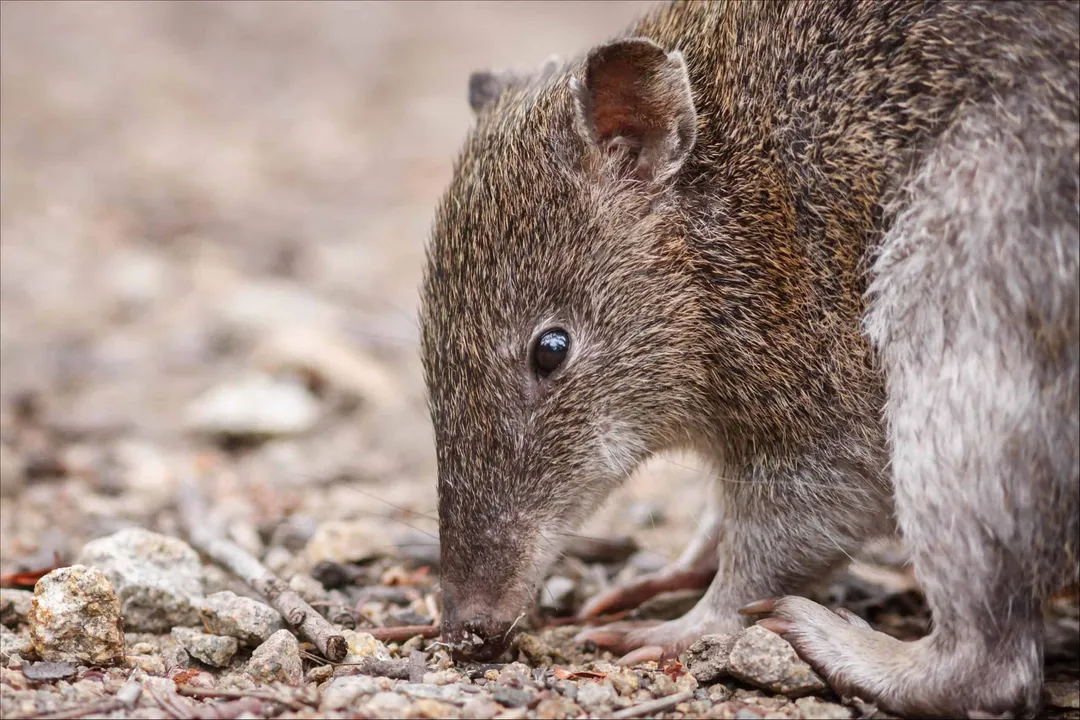
Bandicoots, those small, often overlooked marsupials of Australia and New Guinea, possess a suite of physical characteristics finely tuned for a life spent close to the ground, often in darkness. Their very form is a testament to evolutionary pressure shaping an animal whose primary means of survival revolves around scent, swift escape, and the ability to excavate its next meal. They are generally solitary and active at night, meaning their morphology prioritizes sensory input and quick terrestrial movement over visual prowess or arboreal skill.
# General Build
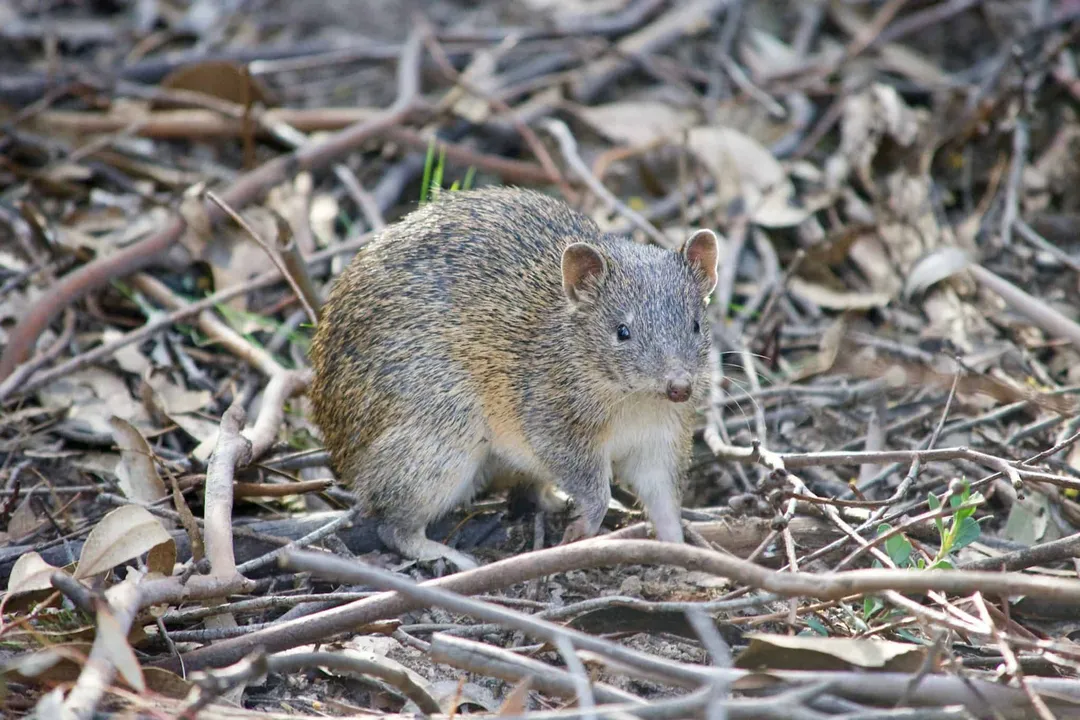
The overall body plan of a bandicoot is compact, though size can vary significantly between the roughly twenty recognized species. Generally speaking, they are small mammals, often possessing a somewhat stout appearance when not in motion. One of the most immediately recognizable features across many species, such as the Long-Nosed Bandicoot (Perameles nasuta), is their distinctly pointed and elongated snout. This feature is not merely aesthetic; it is deeply connected to their feeding habits, acting as a specialized probe. In contrast to this pointed front end, many species have relatively small ears compared to other nocturnal foragers. Their tail is typically short relative to their body length, which is common among ground-dwelling, burrowing, or fossorial mammals where a long tail offers little advantage and could potentially impede movement through dense undergrowth or tight spaces.
# Limb Proportions
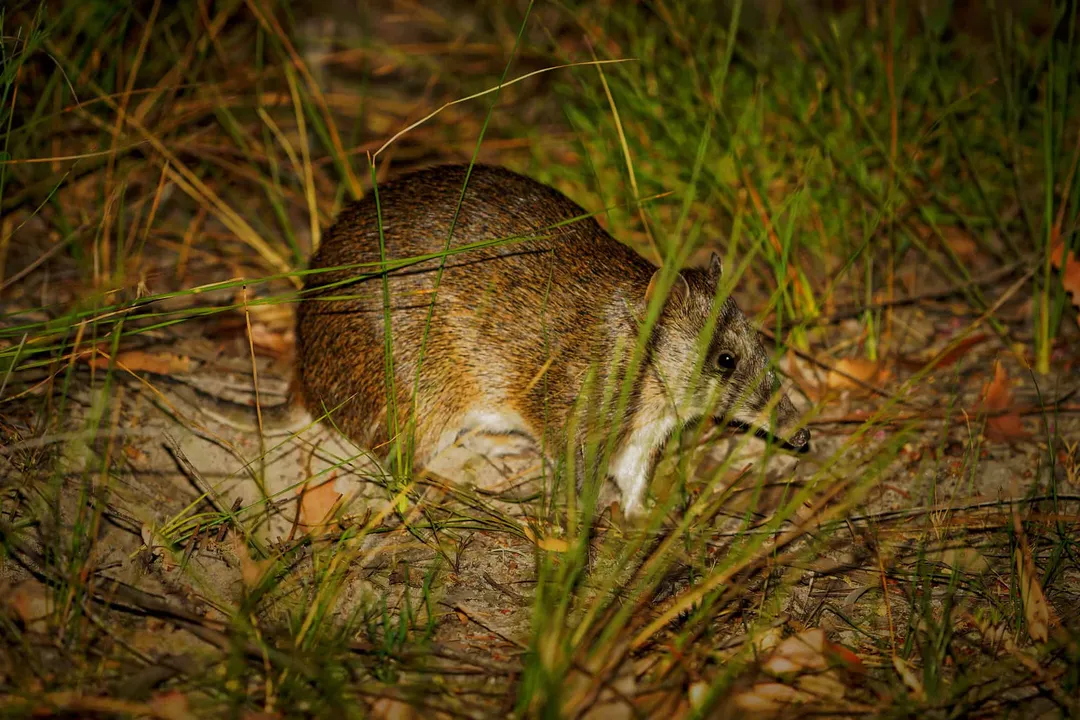
Perhaps the most striking aspect of a bandicoot’s physical structure is the uneven development of its limbs, a clear indicator of its primary activities: moving quickly and digging. The hind legs are disproportionately long and powerful compared to the forelimbs. This strong rear-end musculature drives their characteristic mode of locomotion, which is often described as a bounding or hopping gait, similar in some ways to a rabbit but distinct in its execution. This bounding motion is highly effective for rapid bursts of speed necessary to evade predators in the thick Australian bush or forest floor litter.
The forelimbs, however, tell a different story of adaptation. While shorter than the rear legs, they are immensely strong and specialized for excavation. Bandicoots are insectivores and carnivores that rely on digging to uncover buried invertebrates, grubs, fungi, and small vertebrates. This necessity has driven the evolution of highly adapted digging tools. The front paws are equipped with long, robust claws. Beneath the skin, this adaptation involves significant musculature supporting the forelimb structure, enabling repeated, forceful thrusts into the soil. One can observe a clear trade-off in their anatomy: maximizing the propulsion system in the rear for escape while dedicating substantial, dense musculature and reinforced structures in the front for foraging. This structural division of labor—powered hopping for defense and strong, clawed shovels for offense (against prey)—is key to their ecological niche. It suggests an environment where rapid escape from ground predators is as crucial as securing subsurface food resources.

# Sensory Apparatus
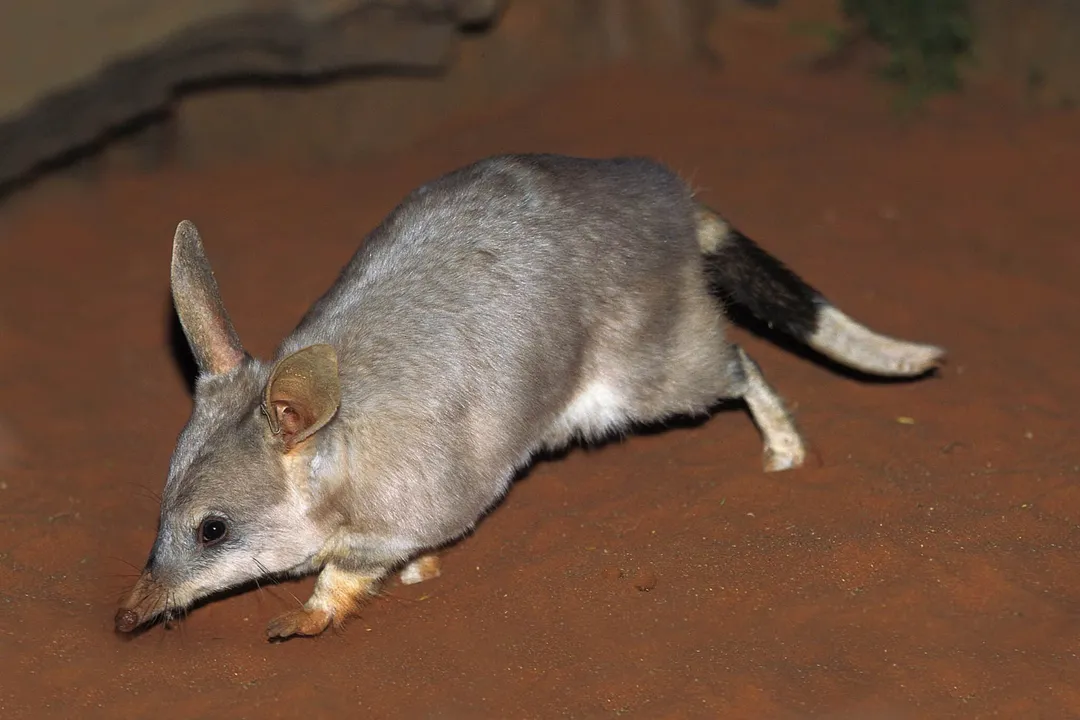
Living a largely nocturnal life means that relying on sight is secondary to other senses, and the bandicoot's head morphology reflects this specialization toward scent and sound.
# Snout Morphology
The aforementioned elongated, tapering snout is a primary sensory adaptation. This structure houses an extensive network of olfactory tissues, granting the bandicoot an exceptional sense of smell. For an animal that spends its night rooting through leaf litter, damp soil, or decomposing logs searching for insect larvae, worms, or other hidden food items, the nose acts as a primary guide. The shape of the snout allows the bandicoot to effectively sniff out subterranean prey, acting as a biological detector that minimizes the need for extensive, energy-draining excavation when the target is not present.
# Auditory Acuity
Coupled with their acute sense of smell, bandicoots possess good hearing. Their ears are generally small, which, in some contexts, can help reduce heat loss or abrasion when pushing through dense vegetation or burrowing. However, their auditory sensitivity is crucial for detecting the faint sounds made by their invertebrate prey moving underground, or conversely, the soft approach of a predator like a dingo or owl. The combination of smell and hearing creates a highly effective nocturnal detection system that compensates for lower light visibility.
# Fur and Camouflage
Bandicoots utilize their coat for more than just insulation; their fur provides necessary camouflage within their habitat. Species like the Northern Brown Bandicoot (Isoodon macrourus) are described as having stout bodies and coarse fur. The coloration typically involves earthy tones—browns, tans, and sometimes grayish hues—which allows them to blend seamlessly into the leaf litter, soil, and shadows of the forest floor or grassland where they reside. This cryptic coloration is a passive defense mechanism, making them less detectable to predators when they pause between bursts of movement or when resting in shallow scrapes during the day.
# Specialized Digestive and Internal Features
While the external features dictate how a bandicoot finds and accesses food, its internal structure must handle the resulting diet. Bandicoots are omnivorous, consuming a wide array of items from insects and spiders to soft fruits and fungi. This flexible diet necessitates a digestive system capable of processing both tough chitin from insects and softer plant materials. Their teeth reflect this omnivorous requirement; they are not specialized for heavy grinding like a herbivore, nor are they massive canines for tearing flesh, but rather small, sharp teeth suited for crushing exoskeletons and nipping at soft tissues.
It is interesting to note the relationship between the size of the animal and its ability to regulate temperature in environments that can fluctuate wildly, such as the Australian outback or dry sclerophyll forests. Although specific thermoregulatory adaptations are not universally detailed across all species in the provided data, the general small, compact body size (a feature common to many small mammals) means they have a higher surface area to volume ratio than larger animals. This ratio makes them prone to rapid heat loss or gain. Their primarily nocturnal habits are a direct adaptation to mitigate the intense daytime heat common across much of their range, forcing them to rely on the cooler night temperatures to conduct their essential foraging activities.
# A Comparison of Digging Efficiency
The effectiveness of the bandicoot’s forelimb adaptation can be further analyzed by contrasting the muscular investment. Research into the biomechanics of digging animals often highlights the structural requirements of the pectoral girdle and forelimb muscles. For a bandicoot, the power stroke of the digging motion—the downward thrust used to displace soil—requires significant anchoring of the limb to the body and powerful extensor muscles. Compared to an animal that primarily uses its limbs for running, like a cursorial predator, the bandicoot has developed a compromise: hind limbs optimized for elastic recoil (hopping) and forelimbs optimized for static, isometric resistance and powerful leverage during digging. If we consider the energy cost, a long dig in hard ground is metabolically expensive. The fine-tuned olfactory probe (the snout) acts as an initial filter, reducing the frequency of high-cost digging attempts by confirming the presence of prey first, making the overall foraging strategy more energy-efficient. A lesser-adapted snout would lead to more blind digging, potentially exhausting the animal before a sufficient meal is secured.
The variation in snout length among species, like the extremely long snout of P. nasuta versus potentially shorter-snouted relatives, might correlate directly with soil type preference or primary prey depth. Species living in very sandy, loose soil might be able to get away with shorter claws and less intense muscle structure, whereas those in harder clay soils would require the stout build and reinforced forelimbs seen in the more generalized digging types. This subtle morphological variation across the family demonstrates adaptation not just to a lifestyle, but to specific substrate conditions within that lifestyle.
# Locomotion Versus Burrowing
The defining physical characteristic remains the contrast between the hind and forelimbs. Imagine a bandicoot startled by a sudden noise; it springs away using its powerful hind legs in a distinctive, almost awkward bound. This is a system built for explosive, short-distance evasion. If that same bandicoot is calmly foraging, it may adopt a slower, almost shuffling walk, using its forelimbs to gently scratch at the surface litter. When food is located, the hind legs cease their propulsive function, and the forelimbs take over as the primary tools, digging rapidly to unearth the target. This physical separation of duties in the limb sets highlights a primary evolutionary pressure: survive first, eat second. The investment in escape mechanics (hind legs) is massive, but the specialization for feeding (forelimbs) must also be sufficient to sustain the animal through the night. The ability to move rapidly across uneven terrain, facilitated by the long hind limbs, is also essential for traversing a range that might take them far from their daytime resting scrape.
The Long-Nosed Bandicoot, for example, is known for making shallow depressions or scrapes in the soil as it forages, a direct result of these powerful forelimbs at work. This action itself disturbs the ground, potentially making prey visible to other senses or driving prey further to the surface, creating a secondary benefit from the primary digging adaptation.
In summary, the physical adaptations of the bandicoot—from the finely tuned olfactory probe of its snout and the auditory sensors in its head, to the dual specialization of its limbs—paint a picture of a dedicated ground-dwelling, nocturnal insectivore. Every feature, whether it is the color of its coarse fur or the length of its digging claws, is calibrated to maximize the chances of finding food and avoiding becoming food in the shadowed world beneath the canopy. This successful physical blueprint has allowed them to persist across diverse habitats in Australasia.
The structural efficiency demonstrated by the forelimb adaptations for digging, where muscle attachments are specifically suited to withstand the reaction forces of soil displacement, is an advanced evolutionary solution for an omnivore dependent on subterranean resources. It's a clear example of form following function at a biomechanical level, ensuring that the energy expended on excavation yields a reliable return in calories.Bandicoots, those small, often overlooked marsupials of Australia and New Guinea, possess a suite of physical characteristics finely tuned for a life spent close to the ground, often in darkness. Their very form is a testament to evolutionary pressure shaping an animal whose primary means of survival revolves around scent, swift escape, and the ability to excavate its next meal. They are generally solitary and active at night, meaning their morphology prioritizes sensory input and quick terrestrial movement over visual prowess or arboreal skill.
# General Build
The overall body plan of a bandicoot is compact, though size can vary significantly between the roughly twenty recognized species. Generally speaking, they are small mammals, often possessing a somewhat stout appearance when not in motion. One of the most immediately recognizable features across many species, such as the Long-Nosed Bandicoot (Perameles nasuta), is their distinctly pointed and elongated snout. This feature is not merely aesthetic; it is deeply connected to their feeding habits, acting as a specialized probe. In contrast to this pointed front end, many species have relatively small ears compared to other nocturnal foragers. Their tail is typically short relative to their body length, which is common among ground-dwelling, burrowing, or fossorial mammals where a long tail offers little advantage and could potentially impede movement through dense undergrowth or tight spaces.
# Limb Proportions
Perhaps the most striking aspect of a bandicoot’s physical structure is the uneven development of its limbs, a clear indicator of its primary activities: moving quickly and digging. The hind legs are disproportionately long and powerful compared to the forelimbs. This strong rear-end musculature drives their characteristic mode of locomotion, which is often described as a bounding or hopping gait, similar in some ways to a rabbit but distinct in its execution. This bounding motion is highly effective for rapid bursts of speed necessary to evade predators in the thick Australian bush or forest floor litter.
The forelimbs, however, tell a different story of adaptation. While shorter than the rear legs, they are immensely strong and specialized for excavation. Bandicoots are insectivores and carnivores that rely on digging to uncover buried invertebrates, grubs, fungi, and small vertebrates. This necessity has driven the evolution of highly adapted digging tools. The front paws are equipped with long, robust claws. Beneath the skin, this adaptation involves significant musculature supporting the forelimb structure, enabling repeated, forceful thrusts into the soil. One can observe a clear trade-off in their anatomy: maximizing the propulsion system in the rear for escape while dedicating substantial, dense musculature and reinforced structures in the front for foraging. This structural division of labor—powered hopping for defense and strong, clawed shovels for offense (against prey)—is key to their ecological niche. It suggests an environment where rapid escape from ground predators is as crucial as securing subsurface food resources.
# Sensory Apparatus
Living a largely nocturnal life means that relying on sight is secondary to other senses, and the bandicoot's head morphology reflects this specialization toward scent and sound.
# Snout Morphology
The elongated, tapering snout is a primary sensory adaptation. This structure houses an extensive network of olfactory tissues, granting the bandicoot an exceptional sense of smell. For an animal that spends its night rooting through leaf litter, damp soil, or decomposing logs searching for insect larvae, worms, or other hidden food items, the nose acts as a primary guide. The shape of the snout allows the bandicoot to effectively sniff out subterranean prey, acting as a biological detector that minimizes the need for extensive, energy-draining excavation when the target is not present.
# Auditory Acuity
Coupled with their acute sense of smell, bandicoots possess good hearing. Their ears are generally small, which, in some contexts, can help reduce heat loss or abrasion when pushing through dense vegetation or burrowing. However, their auditory sensitivity is crucial for detecting the faint sounds made by their invertebrate prey moving underground, or conversely, the soft approach of a predator like a dingo or owl. The combination of smell and hearing creates a highly effective nocturnal detection system that compensates for lower light visibility.
# Fur and Camouflage
Bandicoots utilize their coat for more than just insulation; their fur provides necessary camouflage within their habitat. Species like the Northern Brown Bandicoot (Isoodon macrourus) are described as having stout bodies and coarse fur. The coloration typically involves earthy tones—browns, tans, and sometimes grayish hues—which allows them to blend seamlessly into the leaf litter, soil, and shadows of the forest floor or grassland where they reside. This cryptic coloration is a passive defense mechanism, making them less detectable to predators when they pause between bursts of movement or when resting in shallow scrapes during the day.
# Specialized Digestive and Internal Features
While the external features dictate how a bandicoot finds and accesses food, its internal structure must handle the resulting diet. Bandicoots are omnivorous, consuming a wide array of items from insects and spiders to soft fruits and fungi. This flexible diet necessitates a digestive system capable of processing both tough chitin from insects and softer plant materials. Their teeth reflect this omnivorous requirement; they are not specialized for heavy grinding like a herbivore, nor are they massive canines for tearing flesh, but rather small, sharp teeth suited for crushing exoskeletons and nipping at soft tissues.
It is interesting to note the relationship between the size of the animal and its ability to regulate temperature in environments that can fluctuate wildly, such as the Australian outback or dry sclerophyll forests. Although specific thermoregulatory adaptations are not universally detailed across all species in the provided data, the general small, compact body size (a feature common to many small mammals) means they have a higher surface area to volume ratio than larger animals. This ratio makes them prone to rapid heat loss or gain. Their primarily nocturnal habits are a direct adaptation to mitigate the intense daytime heat common across much of their range, forcing them to rely on the cooler night temperatures to conduct their essential foraging activities.
# A Comparison of Digging Efficiency
The effectiveness of the bandicoot’s forelimb adaptation can be further analyzed by contrasting the muscular investment. Research into the biomechanics of digging animals often highlights the structural requirements of the pectoral girdle and forelimb muscles. For a bandicoot, the power stroke of the digging motion—the downward thrust used to displace soil—requires significant anchoring of the limb to the body and powerful extensor muscles. Compared to an animal that primarily uses its limbs for running, like a cursorial predator, the bandicoot has developed a compromise: hind limbs optimized for elastic recoil (hopping) and forelimbs optimized for static, isometric resistance and powerful leverage during digging. If we consider the energy cost, a long dig in hard ground is metabolically expensive. The fine-tuned olfactory probe (the snout) acts as an initial filter, reducing the frequency of high-cost digging attempts by confirming the presence of prey first, making the overall foraging strategy more energy-efficient. A lesser-adapted snout would lead to more blind digging, potentially exhausting the animal before a sufficient meal is secured.
The variation in snout length among species, like the extremely long snout of P. nasuta versus potentially shorter-snouted relatives, might correlate directly with soil type preference or primary prey depth. Species living in very sandy, loose soil might be able to get away with shorter claws and less intense muscle structure, whereas those in harder clay soils would require the stout build and reinforced forelimbs seen in the more generalized digging types. This subtle morphological variation across the family demonstrates adaptation not just to a lifestyle, but to specific substrate conditions within that lifestyle.
# Locomotion Versus Digging
The defining physical characteristic remains the contrast between the hind and forelimbs. Imagine a bandicoot startled by a sudden noise; it springs away using its powerful hind legs in a distinctive, almost awkward bound. This is a system built for explosive, short-distance evasion. If that same bandicoot is calmly foraging, it may adopt a slower, almost shuffling walk, using its forelimbs to gently scratch at the surface litter. When food is located, the hind legs cease their propulsive function, and the forelimbs take over as the primary tools, digging rapidly to unearth the target. This physical separation of duties in the limb sets highlights a primary evolutionary pressure: survive first, eat second. The investment in escape mechanics (hind legs) is massive, but the specialization for feeding (forelimbs) must also be sufficient to sustain the animal through the night. The ability to move rapidly across uneven terrain, facilitated by the long hind limbs, is also essential for traversing a range that might take them far from their daytime resting scrape.
The Long-Nosed Bandicoot, for example, is known for making shallow depressions or scrapes in the soil as it forages, a direct result of these powerful forelimbs at work. This action itself disturbs the ground, potentially making prey visible to other senses or driving prey further to the surface, creating a secondary benefit from the primary digging adaptation.
In summary, the physical adaptations of the bandicoot—from the finely tuned olfactory probe of its snout and the auditory sensors in its head, to the dual specialization of its limbs—paint a picture of a dedicated ground-dwelling, nocturnal insectivore. Every feature, whether it is the color of its coarse fur or the length of its digging claws, is calibrated to maximize the chances of finding food and avoiding becoming food in the shadowed world beneath the canopy. This successful physical blueprint has allowed them to persist across diverse habitats in Australasia.
The structural efficiency demonstrated by the forelimb adaptations for digging, where muscle attachments are specifically suited to withstand the reaction forces of soil displacement, is an advanced evolutionary solution for an omnivore dependent on subterranean resources. It's a clear example of form following function at a biomechanical level, ensuring that the energy expended on excavation yields a reliable return in calories.
Related Questions
#Citations
Bandicoot - Diet, Habitat, Reproduction, Adaptations
Bandicoot Animal Facts - Perameles
Bandicoot | Habitat & Facts | Britannica
Long-nosed Bandicoot - The Australian Museum
Bandicoot - Types, Size, Habitat, Lifespan, Adaptations, & Images
The Long-Nosed Bandicoot - Adaptations of Australia's Plants ...
Isoodon macrourus (northern brown bandicoot) - Animal Diversity Web
Adaptations for digging in the forelimb muscle anatomy ... - ConnectSci
Long-Nosed Bandicoot (Perameles nasuta) Dimensions & Drawings