What are the physical adaptations of the saber tooth tiger?
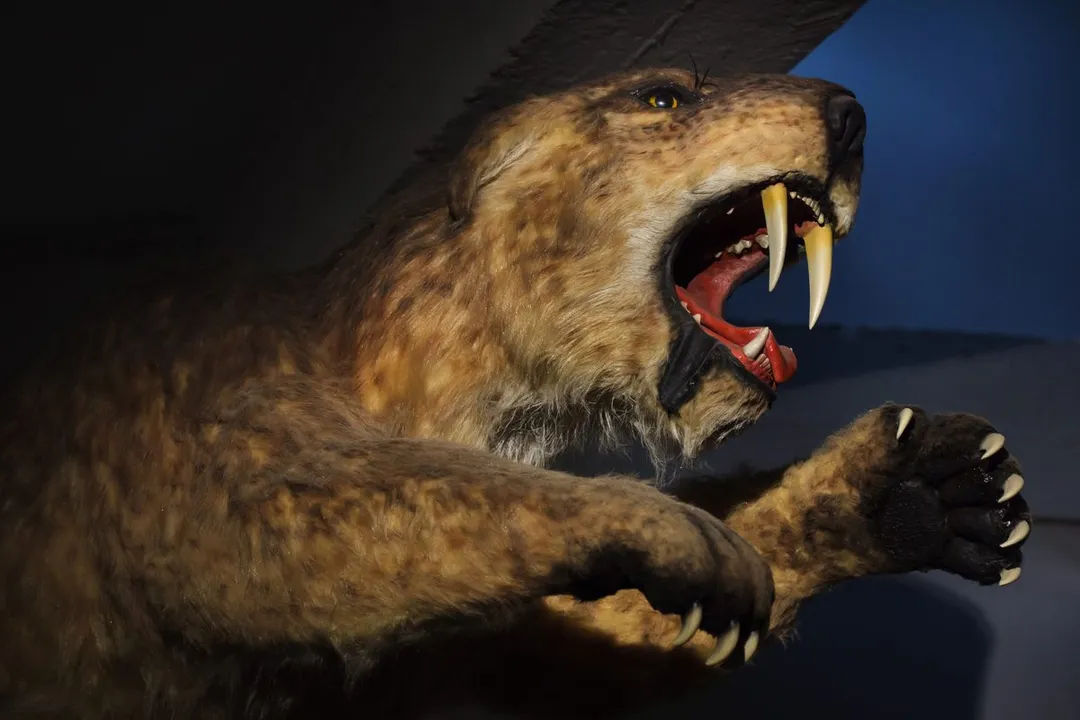
The world once held predators that look something from myth, chief among them the iconic saber-toothed cat, most famously Smilodon fatalis. [6][7] These extinct carnivores, which roamed across North and South America for millions of years, were not simply larger versions of today's tigers; they possessed a unique suite of physical adaptations tailored for a very specific style of hunting and dealing with the massive herbivores of the Pleistocene epoch. [5][9] Understanding their success requires looking past the fearsome grin and examining the precise engineering of their entire anatomy, from the incredible length of their canine teeth to the sheer power packed into their shoulders. [1][7]
# The Fangs
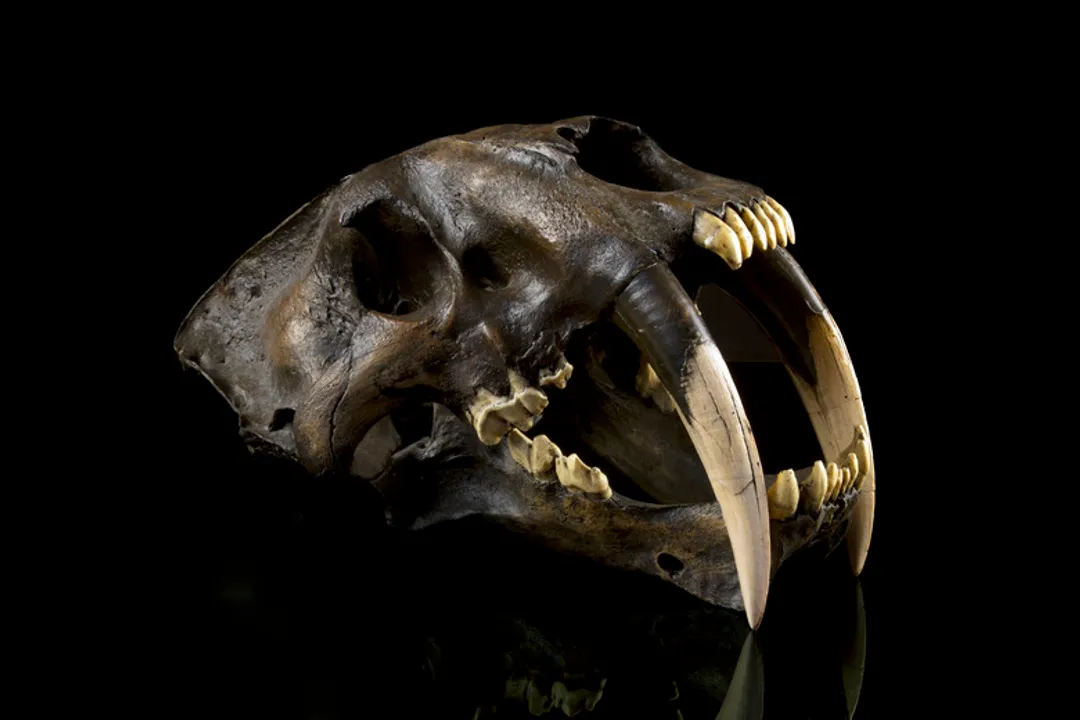
The most recognizable feature is undeniably the pair of elongated upper canine teeth, which give the group its common name, the saber-toothed cats. [2][6] In the largest species, like Smilodon fatalis, these canines could reach lengths of up to 11 inches (28 centimeters). [1][5] To put that size into perspective, a modern African lion’s canines rarely exceed 1.5 inches. [1] This extreme length meant that the entire mechanism supporting these weapons had to evolve alongside them. [7]
These teeth were not solid bone-crushers; in fact, they were relatively delicate structures, more akin to steak knives than heavy bone saws. [4][7] They possessed a relatively small root system, making them susceptible to breaking if used incorrectly, such as attempting to bite bone or wrestle prey into submission like a modern bear might. [4][7] The cutting edges were finely serrated, resembling steak knives, which would have aided in cleanly slicing through tough hide and muscle once penetration was achieved. [4][7] A common misconception is that they would stab downward from a vertical position; given the leverage issues and fragility, a more nuanced attack was required. [4]
# Jaw Mechanics
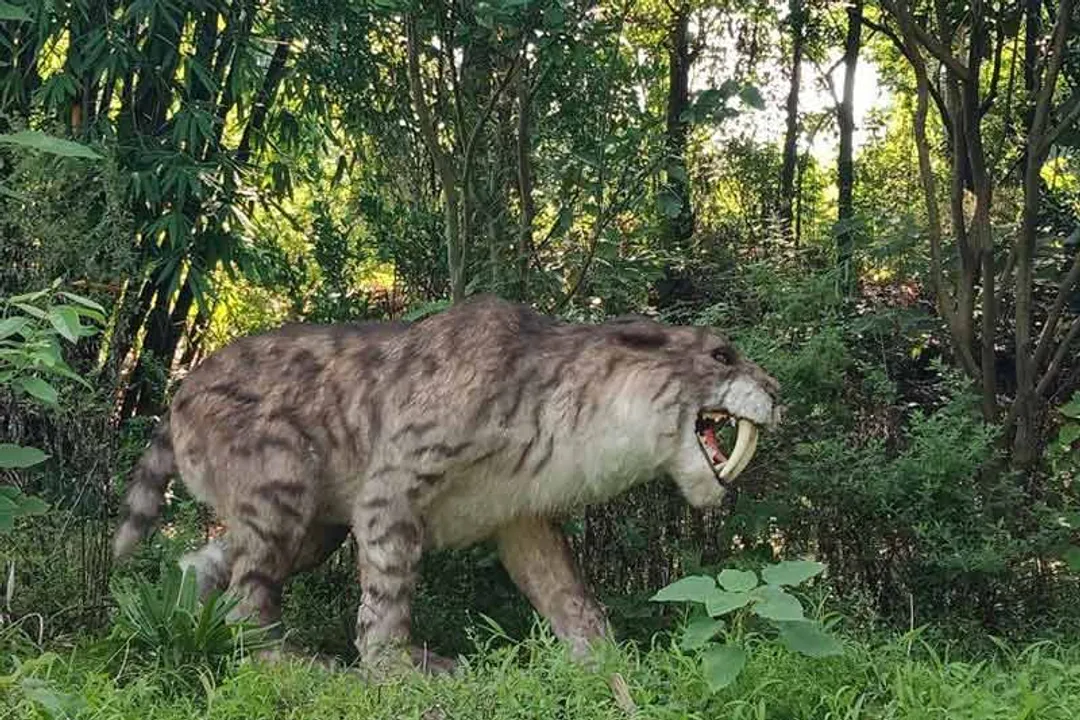
The extreme length of the saber required a corresponding modification in the skull, specifically concerning the jaw opening. [1] Saber-toothed cats, particularly Smilodon, evolved an astonishingly wide gape, capable of opening their jaws nearly 120 degrees. [2][6] Compare this to the gape of a modern lion, which is usually limited to around 65 degrees. [2] This massive hinge-like movement was essential because the sheer length of the canines prevented the upper and lower jaws from closing normally on an object held between them. [4]
The lower jaw, or mandible, had a distinctive shape, appearing shorter and having a reduced chin or mental prominence compared to modern cats. [7] This structure allowed the massive saber teeth to pass clear of the lower jaw when the mouth was opening. [2][7] The musculature attaching the skull to the lower jaw, designed for biting force, was actually somewhat reduced compared to powerful ambush predators today, suggesting that the primary force was not in the initial bite but in the stabilization of the prey while the stab was delivered. [1][8] The specialized bite, therefore, was an act of precision slicing rather than brute crushing power. [8]
# Body Proportions
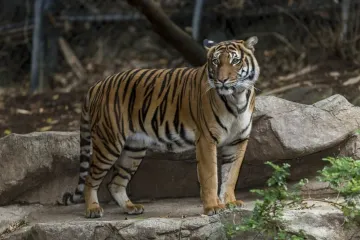
Moving away from the head, the overall body structure of the saber-toothed cat presented an image of compact, explosive strength, very different from the lithe, long-legged build favored by pursuit hunters. [6][5] Smilodon was stockier and more heavily built than any modern big cat. [7] While estimations vary, Smilodon fatalis might have weighed between 400 and 550 pounds (180 to 250 kg). [7] This bulkiness positioned them as masters of close-quarters combat and ambush rather than long-distance chases. [5][6]
The forelimbs were exceptionally powerful, likely providing the necessary stability and leverage for pinning large prey. [1][7] The shoulder muscles were particularly well-developed, suggesting that the animal could hold struggling megafauna down while aiming the fatal throat or belly strike. [6] When considering the biomechanics, one might picture a creature that relied on stealth to get within striking distance, then used its entire body weight and incredible forelimb strength to fell the target, rather than using speed to outrun it. [3]
This body plan suggests a hunting strategy heavily reliant on surprise. A modern cat like the cheetah is built for sustained high-speed sprinting, possessing a flexible spine and long limbs optimized for acceleration and speed over flat ground. [5] The saber-tooth, conversely, appears engineered for rapid, short bursts of overwhelming force against a static or slowly moving target. [6] It’s an evolutionary trade-off: sacrificing endurance for immediate, localized grappling power. [5] This contrast is fascinating when you consider that modern tigers, while excellent ambushers, rely more on a neck bite to crush the windpipe or sever the spinal cord, which is a lower-risk, lower-reward strategy compared to the saber-tooth's high-risk, high-reward deep penetration. [4] The sheer biomass these animals needed to sustain themselves would have necessitated success against very large prey items.
# Prey Ecosystem
The physical adaptations must be viewed through the lens of the prey available during the Pleistocene. [9] The environment was populated by massive creatures, including mammoths, giant ground sloths, and ancient bison, all possessing thick hides and substantial body mass. [9][5] The saber-tooth’s ability to deliver a massive, quick bleed-out, perhaps by severing major arteries in the neck or abdomen, would have been highly effective against these large, slow-moving animals. [4][7]
If a saber-tooth were to grapple a smaller, faster animal today, the risk of the canine tooth snapping or the animal twisting free before the kill was made would increase substantially. [4] The evolution of the massive canines seems directly linked to the size and necessity of taking down Pleistocene megafauna efficiently enough to secure a meal without being injured by the struggle. [5]
This body of evidence suggests that the saber-tooth was the ultimate specialist in heavyweight takedowns. Unlike generalists that can adapt their killing methods based on the thickness of the hide or the speed of the animal, the saber-tooth seems locked into a single, high-leverage scenario where its primary tools (the teeth) demanded significant physical restraint (the forelimbs) to function correctly. This specialization would have required the predator to be highly efficient at recognizing and selecting the perfect target—a large, powerful animal that could be subdued quickly by focused trauma rather than prolonged wrestling.
# Species Variation
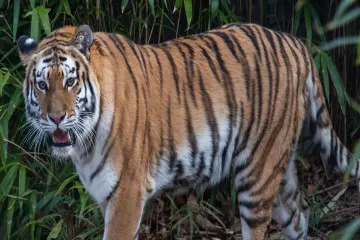
It is important to remember that "saber-toothed tiger" is a common name applied loosely to several distinct, extinct lineages, not just Smilodon. [2][6] Another prominent genus, Homotherium (the scimitar-toothed cat), presents a different set of adaptations. [6][8] While they also possessed enlarged upper canines, they were shorter, wider, and more heavily serrated than the dagger-like sabers of Smilodon. [6][7]
The dentition of Homotherium suggests a different application. Their teeth were better suited for shearing through connective tissue and muscle rather than deep stabbing, leading some paleontologists to suggest they might have been more effective against slightly smaller prey or perhaps even specialized in scavenging on fresh kills left by other predators. [6][8] Their limbs were also relatively longer than Smilodon's, hinting at a greater reliance on moderate speed, though still within the ambush specialist category when compared to modern carnivores. [5][6] This variety shows that the long canine was an evolutionary success story that occurred multiple times across different felid families, each adapting the basic concept to slightly different environmental pressures. [2][8]
# Supporting Structure
Beyond the obvious weapons and frame, other skeletal aspects underpinned their lifestyle. The structure of the neck vertebrae in Smilodon was relatively short and stout. [1] This robustness was necessary to absorb the immense forces generated when pinning down a large, thrashing animal while the canines were employed. [1] A long, slender neck, effective for a modern cat’s grappling style, would have been a catastrophic weak point under the strain imposed by a struggling sloth weighing a ton. [1]
Furthermore, the feet also exhibited traits supporting a powerful grappling stance. While their claws were retractable, like modern cats, the bone structure suggests that their paws were perhaps even more adapted for gripping and holding than for a typical cat's pounce-and-slash maneuver. [7] Evidence suggests their paws were robust, designed to absorb impact and maintain purchase on their quarry during the struggle. [7]
Another point of consideration is the implied wear pattern on the teeth. Because the sabers were so critical, any behavior that caused unnecessary abrasion or chipping, like chewing on bones or engaging in prolonged fights over a carcass, would have been severely penalized by natural selection. This means that, unlike hyenas or even modern lions who often chew bone fragments or fight aggressively for access to a carcass, the saber-tooth likely needed to dispatch prey quickly and secure the soft tissue targets—the throat or abdomen—to minimize damage to its specialized dentition, reinforcing the ambush-and-stab hypothesis. [4][7]
# Time and Extinction
These physical adaptations peaked during the Pleistocene, persisting until around 10,000 years ago. [9] Their specialization, which made them supremely adapted to their ecosystem, may also have contributed to their demise when that ecosystem collapsed. [5][9] As the large herbivore megafauna they specialized in hunting began to disappear due to climate change or human predation, the saber-toothed cat's specialized killing tools became a liability rather than an advantage. [5][9] A highly specialized hunter cannot easily pivot to smaller, faster, or more numerous prey when its main food source vanishes, contrasting with more generalized predators that survived the extinction event. [8] The very perfection of their adaptation to the giant herbivores locked them into a niche that ultimately disappeared. [9]
# Comparison Summary
To clearly illustrate the unique morphology that defined these apex predators, a comparative summary of key adaptations is useful:
| Feature | Smilodon fatalis | Modern Tiger (Panthera tigris) | Implied Function |
|---|---|---|---|
| Upper Canines | Up to 11 inches, relatively thin [1][5] | Up to 4 inches, thick, conical [1] | Deep, slicing wound on large prey [4] |
| Jaw Gape | Nearly 120 degrees [2][6] | Approximately 65 degrees [2] | Allows canines to pass over lower jaw [2] |
| Build | Stocky, massive forequarters [7][6] | Lithe, muscular, balanced [5] | Pinning and stabilizing large, struggling prey [1] |
| Skull/Neck | Short, robust neck structure [1] | Longer, more flexible neck [1] | Absorbing downward impact force [1] |
This shows that the saber-tooth was built not just to bite, but to deliver a catastrophic, targeted injury using an immense, specialized weapon system that required corresponding skeletal reinforcement. [1][7] The existence of these specialized predators across different genera over millions of years demonstrates that the evolution of the saber was a successful, repeatable response to the availability of large, slow-moving prey in various global environments. [2][6] The adaptation was modular: the basic concept (long upper canine) was retained, but the execution (tooth shape, body size, limb length) was finely tuned to local conditions. [6][8] The common thread remains the adaptation for a killing blow that relied on piercing a vital area quickly, minimizing the risk of a prolonged fight where the delicate weapons might fail. [4]
Related Questions
#Citations
Adaptations Of A Saber-Toothed Tiger - Sciencing
Saber Tooth Tiger - Facts and Beyond | Biology Dictionary
How were Saber-toothed tigers adapted to their environment? - Quora
The Extraordinary Truth About The Saber Tooth Tiger - Dino Walk
How deadly, prehistoric sabre-tooth cats developed their lethal ...
Sabre-toothed cat | Size, Extinction, & Facts - Britannica
Extinct Saber-toothed Cat (Smilodon fatalis) Fact Sheet ... - LibGuides
Saber-Toothed Cat - an overview | ScienceDirect Topics
Saber-Toothed Tiger: Facts, Habitat, And Extinction