What are the physical adaptations of an ostrich?

The sheer scale of the ostrich immediately sets it apart in the avian world. As the largest bird currently living, this flightless creature has developed a suite of physical tools perfectly suited for survival across the open savannas and semi-arid regions of Africa. [2][5] Its adaptations are a masterclass in biomechanical specialization, prioritizing swift terrestrial movement and extreme tolerance for heat and drought over the ability to take to the air. [2] Observing an ostrich is to witness an evolutionary path that traded soaring for sprinting, resulting in a surprisingly efficient, six-foot-tall survivor. [1][5]
# Speed Machine
The most striking adaptation is undoubtedly the ostrich’s massive, muscular legs. [1][3] These limbs are not merely for walking; they are built for serious velocity. An ostrich can reach speeds up to 43 miles per hour (approximately 70 kilometers per hour). [1][2][3] What makes this speed so remarkable is the biomechanics of the stride. In a full run, an ostrich can cover between 10 to 16 feet (3 to 5 meters) in a single step. [1][3] This enormous stride length, combined with the high rate of leg turnover, allows them to maintain impressive speed with surprising efficiency, requiring less energy output per mile traveled at top speed than many smaller, faster mammals might need to maintain a sustained gallop. [1]
This powerful locomotion is structurally simplified at the foot. Unlike most birds, which possess three or four toes, the ostrich has only two toes on each foot. [1][2][5] This reduction is a key feature of cursorial (running) adaptations, minimizing ground contact points and streamlining the foot's structure for rapid forward propulsion. The larger, inner toe bears the majority of the weight and is equipped with a formidable nail that functions much like a claw. [1][5] These legs serve a dual purpose; while essential for escape, they are also formidable defensive weapons capable of delivering lethal kicks, especially when directed at predators like lions. [1][5]
# Giant Eye Sight
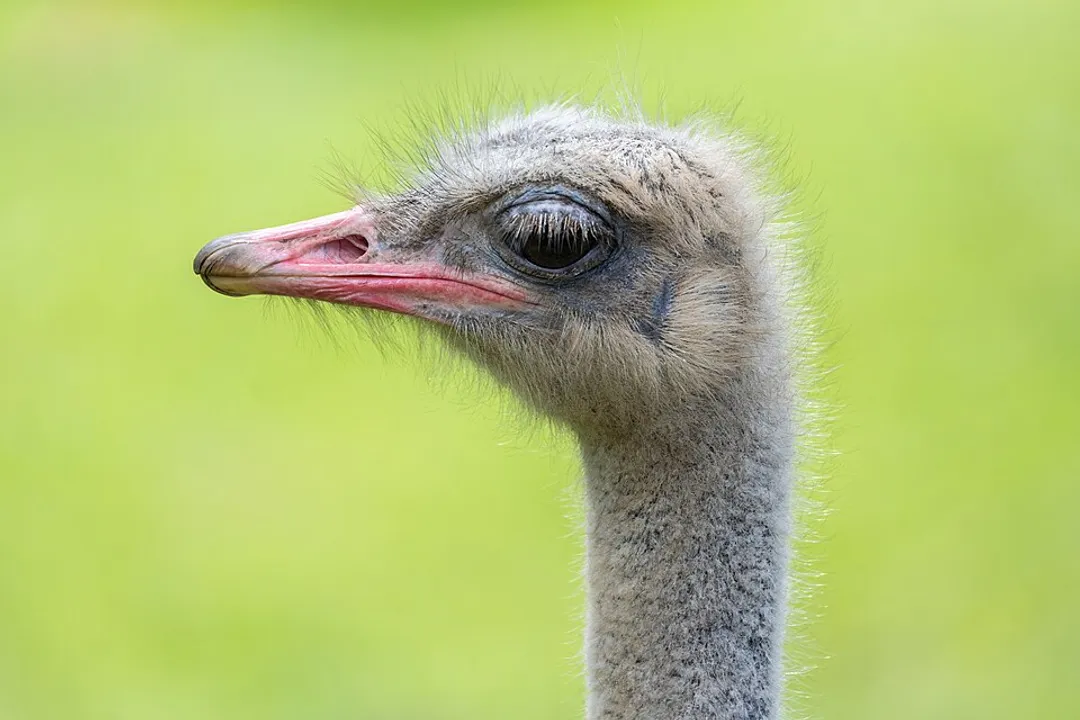
While its body is built for speed, its sensory apparatus is geared toward panoramic vigilance. The head of the ostrich is relatively small compared to its bulk, but it houses an eye of astonishing proportions. [1] The eyes of an ostrich are the largest of any land animal, measuring approximately two inches in diameter. [1][2][3][5] This huge visual organ grants the bird exceptional eyesight, allowing it to spot predators or potential resources from a great distance across the flat savanna landscape. [1]
The neck, which can reach lengths of up to six feet, functions as a high-mounted lookout tower. [1][3][5] This long neck, covered in sparse feathers, allows the bird to survey its environment far above the surrounding scrub, complementing the wide field of view granted by its massive eyes. The contrast between the massive eye and the relatively small head is a physical manifestation of the bird's reliance on sight over other senses in its open habitat.
# Heat Dissipation

The climate of its natural habitat—hot, open plains—demands specialized systems for temperature regulation. The ostrich’s plumage reflects this need rather than contradicting it. Its feathers are distinctly different from those of flying birds; they are loose, soft, and lack the interlocking barbules that create the tight, air-resistant structure needed for lift. [2][5] This airy, somewhat shaggy texture is far from being a hindrance; it actively assists in cooling. The loose structure allows for better airflow across the body surface, aiding in the dissipation of heat generated by exertion or the intense sun. [2]
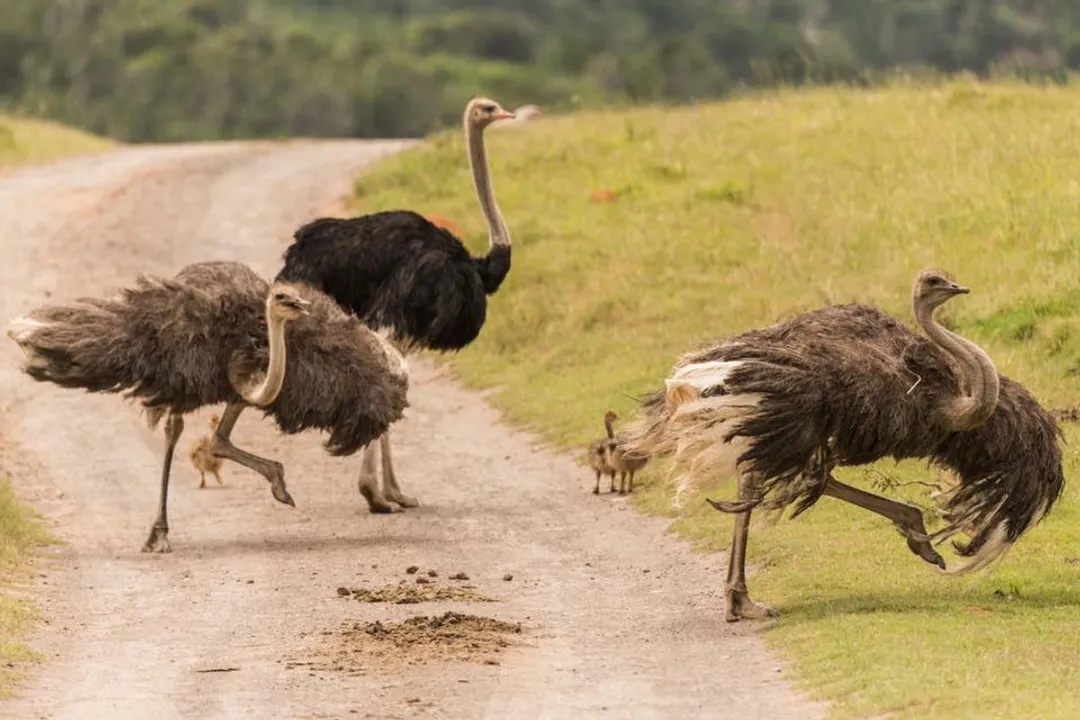
Sexual dimorphism is clearly visible in the feather coloration, which serves more than just identification. Adult males sport black body feathers contrasted by white wing and tail plumes, while females are generally covered in grayish-brown plumage. [2][5] Beyond insulation and display, the large wings are employed specifically for thermoregulation, often being spread wide like parasols to create shade over the bird or its young during the hottest parts of the day. [2][5]
# Internal Water Use
Living in environments where water scarcity is a constant threat has driven profound internal adaptations, particularly concerning fluid retention and waste processing. Ostriches are masters of water conservation. [4] They possess highly efficient kidneys that minimize water loss by excreting nitrogenous waste as uric acid rather than urea, which requires far less water for dissolution and removal. [4]
Furthermore, the structure of their nasal passages is adapted to recapture moisture. [4] As the bird exhales, the specialized turbinates within the nasal cavity condense water vapor from the breath, recycling it back into the body before the air leaves the nostrils. [4] This allows the ostrich to survive for extended periods without direct access to drinking water, extracting necessary moisture from the plants and seeds that form the bulk of its diet. [1][4] While they prefer water when available, this physiological trait grants them a significant survival buffer in arid conditions. [4]
# Wing Function
Despite being completely flightless, the ostrich retains large wings, a vestige of its flying ancestors. [2] However, these appendages have been repurposed for several critical functions that aid survival on the ground. [1][3][5]
The primary roles of the wings include:
- Balance: When running at high speed, the wings are crucial for counterbalance and steering, helping the massive bird make rapid directional changes without stumbling. [1][3][5]
- Display: During courtship rituals, the wings are fanned out, creating an impressive visual presentation used to attract mates. [5]
- Shade: As mentioned in heat dissipation, they are frequently used to cast shade upon eggs or chicks incubating on the ground, protecting the vulnerable young from direct overhead sun exposure. [2][5]
Considering the energy investment required to grow such large, albeit feather-lacking, wings, their continued presence suggests a strong selection pressure for their roles in balance and parental care over the minimal energy saved by not growing them.
# Grinding Apparatus
The ostrich's digestive system is adapted to process a mixed diet that includes tough plant matter, seeds, and occasional small animals. [1][5] Like many large herbivores, they rely on a strong muscular structure in their lower digestive tract to process food. A key component of this is the gizzard, a highly muscular part of the stomach. [1][5] To enhance the grinding action within this organ, ostriches deliberately swallow stones, known as gastroliths. [1][5] These ingested stones remain in the gizzard, acting like internal millstones to physically break down tough cellulose and seeds, increasing the surface area available for chemical digestion. This behavioral adaptation directly supports the physical digestive structure necessary for survival on low-quality forage. [5]
The physical adaptations of the ostrich—its ground-based speed, superior vision, and masterful water management—demonstrate a highly specialized response to the pressures of the African savanna. Each feature, from the two-toed foot to the hygroscopic nasal passage, contributes to its success as the dominant large bird on Earth today. [2][4]
#Videos
Ostriches| Ostrich| Ostrich Adaptation| Adaptation In Ostrich ...
Related Questions
#Citations
Amazing Adaptations: South African Ostrich
Common ostrich
Ostrich Adaptations: Lesson for Kids
Ostrich
Ostrich - San Francisco Zoo & Gardens
Ostriches| Ostrich| Ostrich Adaptation| Adaptation In Ostrich ...
Ostrich (African Plains)
Smart Biomechanical Adaptation Revealed by the Structure of ...
Adaptations
ostrich adaptation - Ericka Bookman