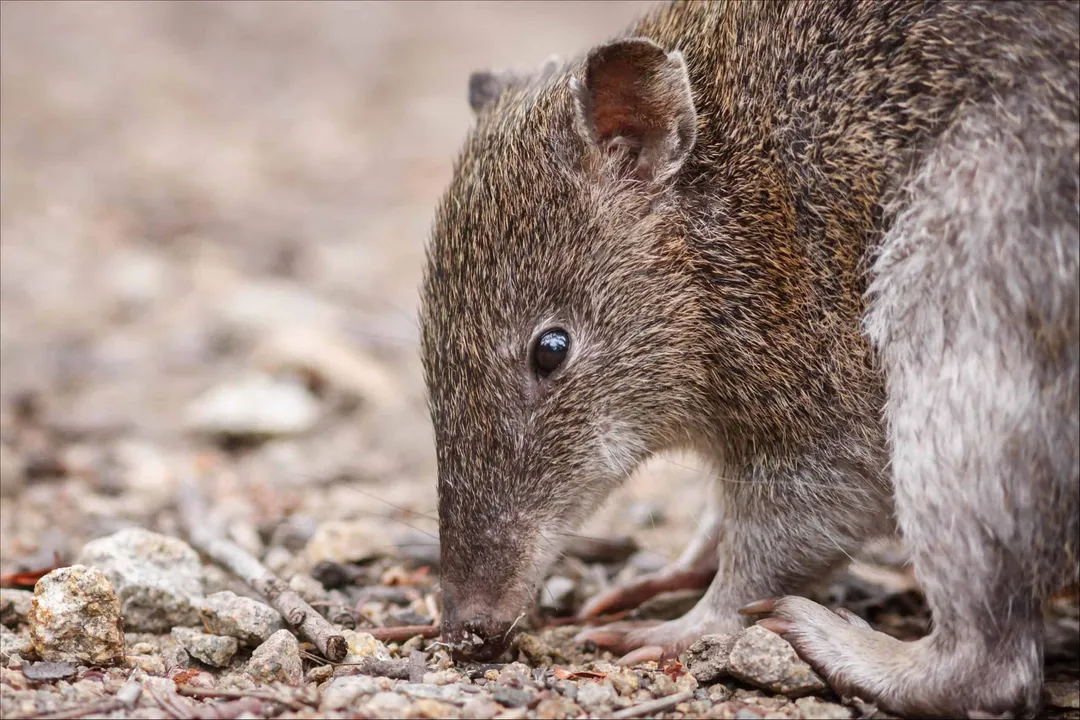
How do the hind limbs compare biomechanically to the forelimbs during the power stroke of digging for the bandicoot?
Hind limbs are optimized for elastic recoil, while forelimbs are optimized for static, isometric resistance and leverage
The bandicoot demonstrates a clear biomechanical compromise in its limb structure. The hind limbs are engineered for dynamic movement, optimized for the elastic recoil generated during their bounding locomotion, which serves their defense mechanism. Conversely, the forelimbs, when engaged in digging, must execute a powerful, downward thrust against the soil. This digging motion relies heavily on static, isometric resistance—the ability of the muscles and bone structure to firmly anchor the limb against the ground to displace soil—and generating leverage, contrasting sharply with the propulsive, recoiling nature of the hind limbs.