What primary evolutionary pressure is highlighted by the functional separation of hind and forelimb duties?
Answer
Survive first, eat second
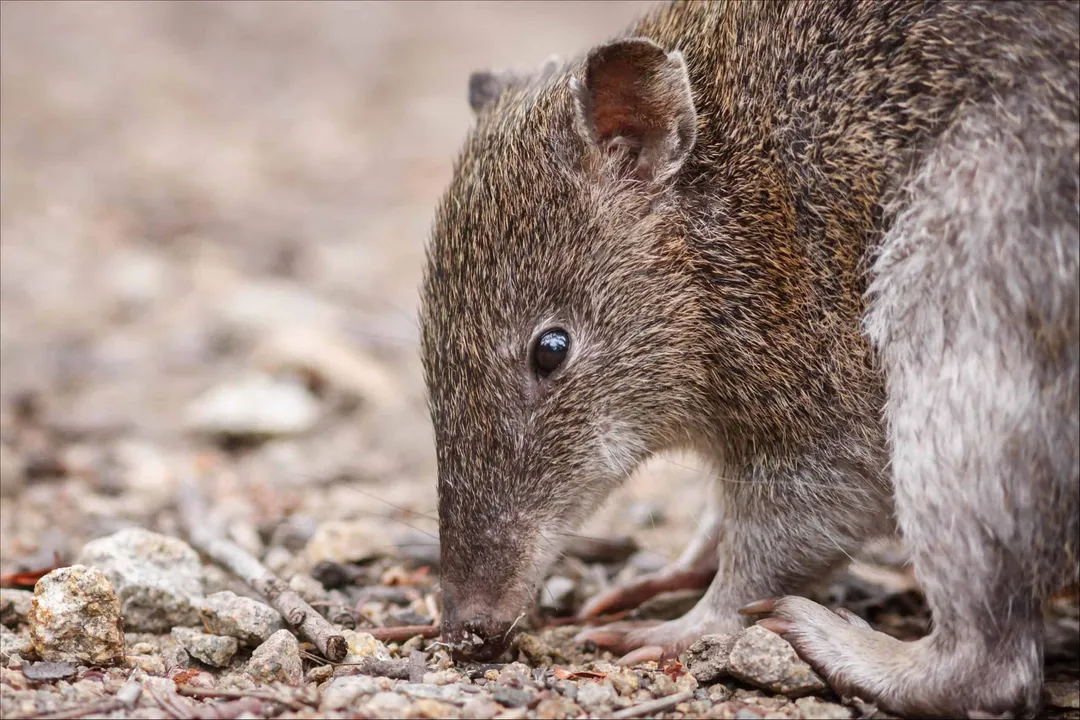
The distinct specialization evident in the limb sets—massive investment in the hind legs for explosive escape, and dedicated, specialized forelimbs for acquiring food—points directly to a fundamental evolutionary hierarchy of needs. The capacity to survive an immediate threat (evasion) takes precedence in the energetic budget, evidenced by the powerful defense mechanics built into the rear structure. Only after this survival mechanism is in place does the requirement for effective feeding come into play. The forelimbs, while specialized for foraging, must be sufficient to sustain the animal, but the massive escape system is the non-negotiable priority for persistence in their niche.
Related Questions
What system is optimized for elastic recoil in the bandicoot's disproportionately long hind limbs?How does the elongated snout of the Long-Nosed Bandicoot aid in foraging efficiency?Why do ground-dwelling bandicoots typically have tails short relative to body length?What characteristic of bandicoot teeth reflects their omnivorous diet requiring varied processing?What is the primary function of the earthy coloration and coarse fur seen on the Northern Brown Bandicoot?Which term describes the characteristic locomotion driven by the bandicoot's long and powerful hind legs?What primary evolutionary pressure is highlighted by the functional separation of hind and forelimb duties?What is the functional specialization of the bandicoot's shorter, immensely strong forelimbs?Due to their small, compact body size, what physiological tendency related to temperature regulation do bandicoots face?How do the hind limbs compare biomechanically to the forelimbs during the power stroke of digging for the bandicoot?