What is the functional specialization of the bandicoot's shorter, immensely strong forelimbs?
Answer
Excavation of buried invertebrates, grubs, and fungi using robust claws
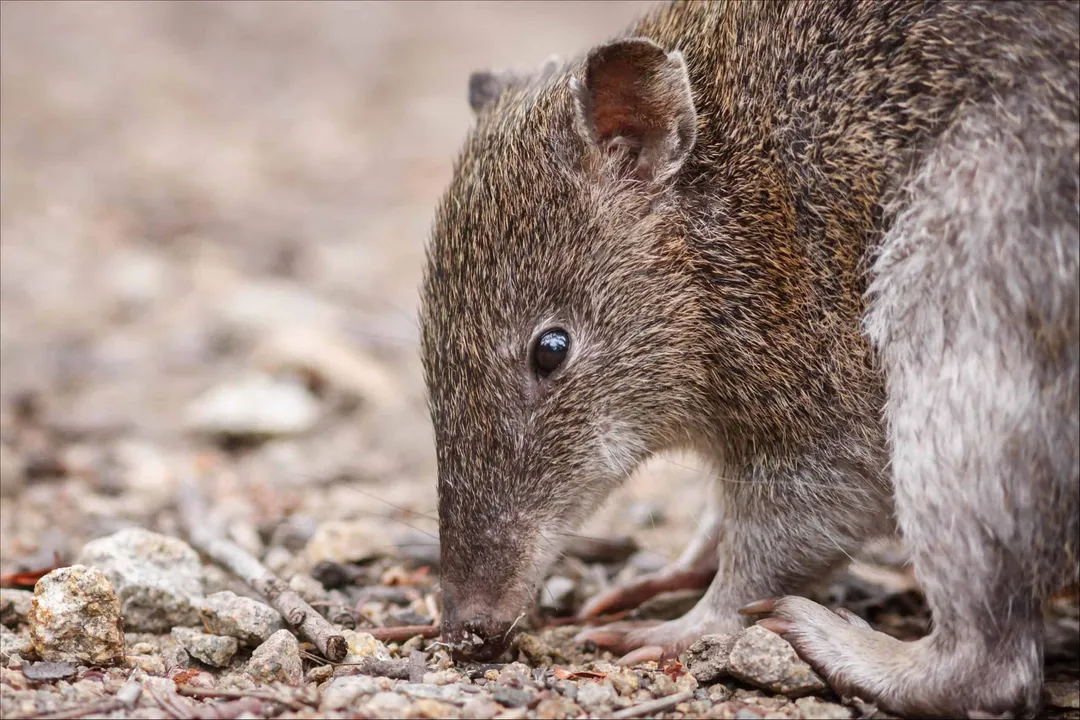
The forelimbs of the bandicoot represent a highly developed adaptation specifically for excavation, necessitated by their diet which includes many subterranean food sources like invertebrates, fungi, and small vertebrates. These shorter limbs are immensely strong and equipped with long, robust claws designed for forceful digging into soil. This function requires significant musculature supporting the pectoral girdle and specialized anchoring points within the body structure to withstand the reaction forces generated during the downward thrust, or power stroke, used to displace the earth and unearth prey.
Related Questions
What system is optimized for elastic recoil in the bandicoot's disproportionately long hind limbs?How does the elongated snout of the Long-Nosed Bandicoot aid in foraging efficiency?Why do ground-dwelling bandicoots typically have tails short relative to body length?What characteristic of bandicoot teeth reflects their omnivorous diet requiring varied processing?What is the primary function of the earthy coloration and coarse fur seen on the Northern Brown Bandicoot?Which term describes the characteristic locomotion driven by the bandicoot's long and powerful hind legs?What primary evolutionary pressure is highlighted by the functional separation of hind and forelimb duties?What is the functional specialization of the bandicoot's shorter, immensely strong forelimbs?Due to their small, compact body size, what physiological tendency related to temperature regulation do bandicoots face?How do the hind limbs compare biomechanically to the forelimbs during the power stroke of digging for the bandicoot?