What are the physical features of the black mamba?
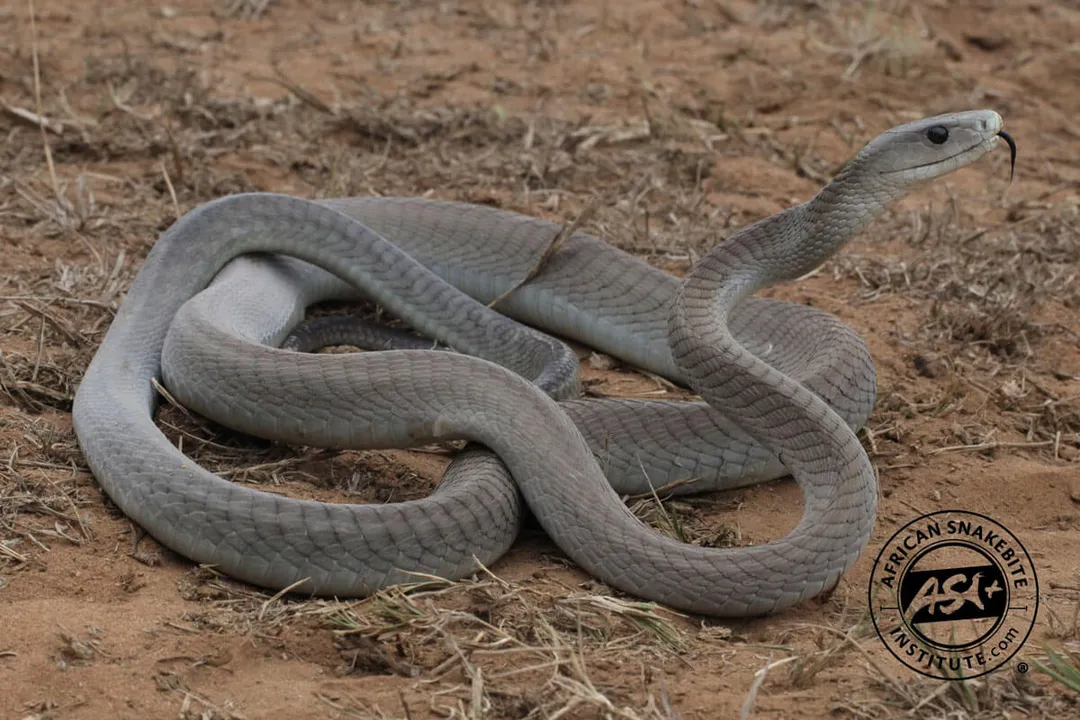
The reputation preceding the black mamba, Dendroaspis polylepis, often conjures images of pure black menace, yet a close examination of its physical attributes reveals a creature far more nuanced in its appearance than its ominous moniker suggests. This serpent, recognized as one of the longest venomous snakes in Africa, commands attention not solely through its danger, but through its distinctive, almost elegant, physical structure. [6][3] To truly understand this reptile, one must look past the dramatic black interior of its mouth and focus on the features of its elongated body, coloration, and specialized head structure. [4][5]
# Length Measures
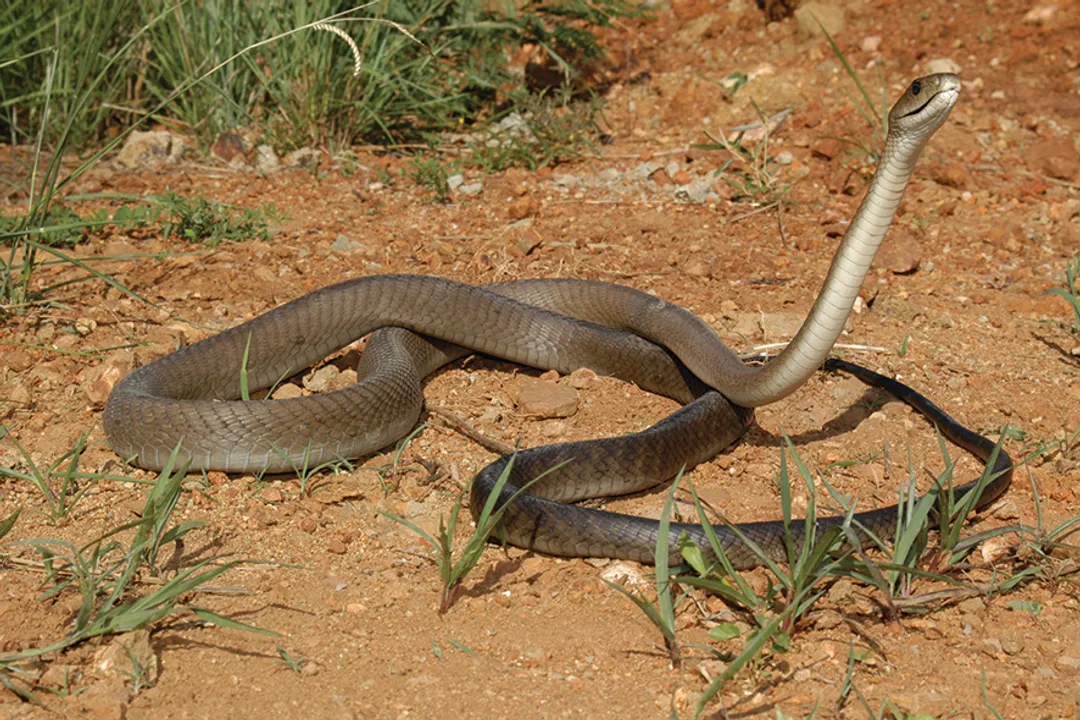
The sheer size of the black mamba is a defining physical characteristic, placing it among the world's most imposing elapids. [6] These snakes are known for their impressive length, a feature that often contributes significantly to human apprehension. While many adults commonly measure around 2.5 meters, or about 8.2 feet, the species is capable of reaching truly remarkable dimensions. [3] Reports of individuals approaching 4.5 meters, or nearly 15 feet, exist, solidifying its status as the longest venomous snake on the African continent. [3][4] A more typical, but still substantial, average length cited for an adult falls around 8 feet. [2]
It is interesting to consider how this length translates in the field. A snake approaching 14 feet in length possesses a surface area that allows for rapid heat absorption, critical for a cold-blooded animal residing in often warm, open habitats. [1][8] However, unlike some bulky constrictors, the black mamba maintains a remarkably slender profile for its length. [1][3] This attenuated build, rather than pure girth, is arguably more important to its natural history, contributing to its famed agility and ability to cover ground quickly, whether slithering or rising up to survey its surroundings. [6][8] A mamba that is long but lean can navigate dense scrub more efficiently than a thick-bodied snake of the same length, making its physical dimensions perfectly adapted for its preferred method of movement and detection. [4]
# Body Coloration
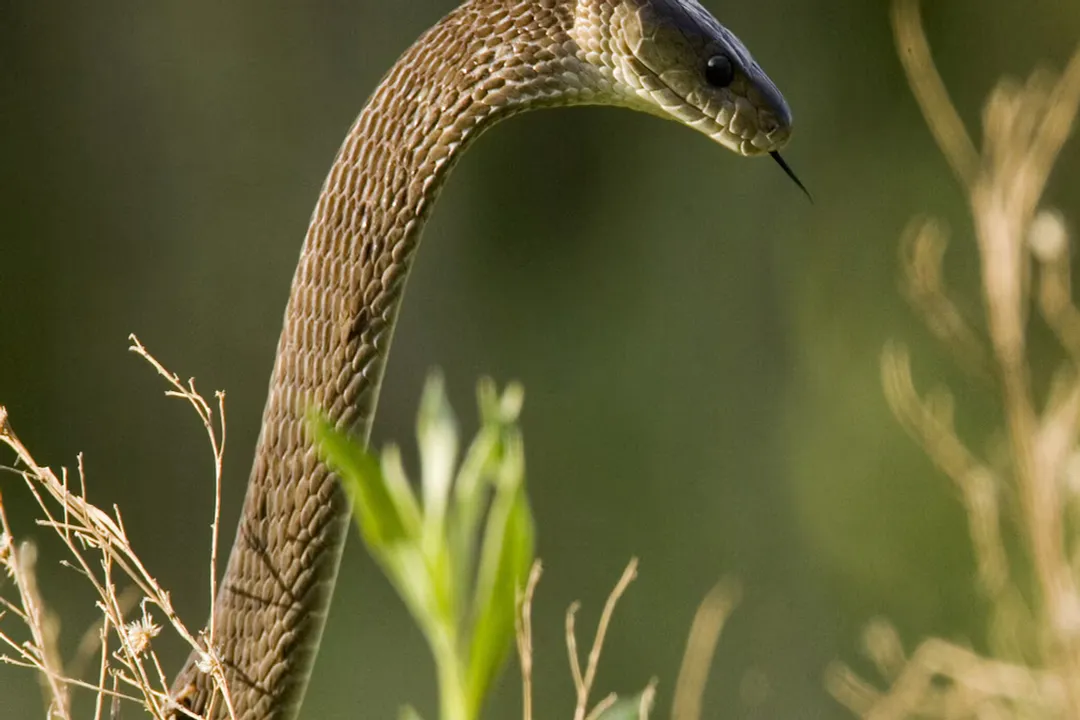
Perhaps the most significant disconnect between the snake's common name and its actual appearance lies in its skin tone. The name black mamba is highly misleading when applied to the exterior. [4][6] In reality, the snake's coloration is highly variable and often muted, serving as excellent camouflage within its diverse African habitats. [9] Adults typically display shades of olive, greenish-brown, or grey. [1][4] Some individuals lean toward a dusky, purplish-brown or even appear uniformly black, but this is the exception rather than the rule for the species overall. [1][6]
The skin is covered in smooth scales, which contribute to a sleek, almost glossy appearance when the snake is healthy and well-fed. [3] Juveniles present a distinct contrast to adults; hatchlings and younger mambas often exhibit a noticeably darker coloration, frequently appearing black or dark grey, which may lighten considerably as they mature. [8][9] This developmental shift in camouflage strategy suggests that younger, smaller snakes rely on a different visual presentation than their fully grown counterparts, perhaps blending better with shadowy leaf litter early in life before transitioning to the more earth-toned palette of the mature adult. [8]
To better illustrate this diversity, one can summarize the visible exterior tones:
| Life Stage | Common Color Range | Notable Feature |
|---|---|---|
| Juvenile | Dark grey to black | Often lighter belly area |
| Adult | Olive, brownish-grey, greenish-brown | Can occasionally be uniformly black |
| General | Subtle variations are common | Smooth, non-keeled scales |
# Defining Features
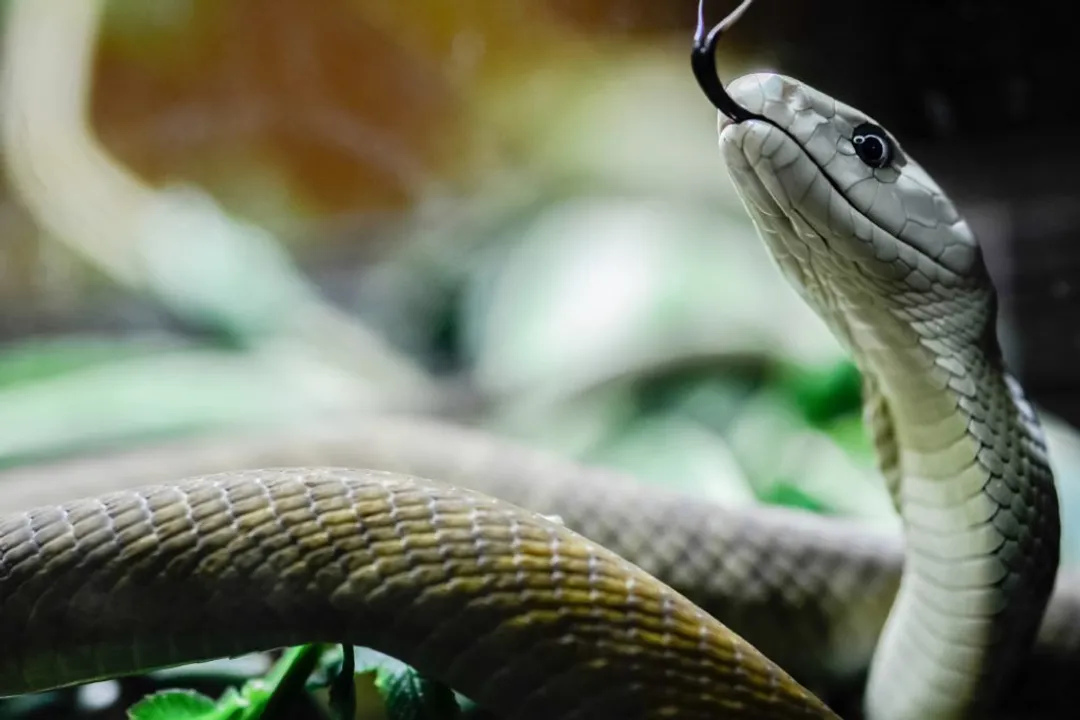
The physical hallmark that gives the snake its name, and the one feature that is consistently black across all age groups, is the inside of its mouth. [4][5][7] When threatened, the black mamba will gape widely, revealing the intense, inky black lining of its oral cavity, a startling visual display meant to intimidate potential threats. [4][7] This contrast between the typically muted exterior and the startling black interior is a crucial element of its defensive posture. [6]
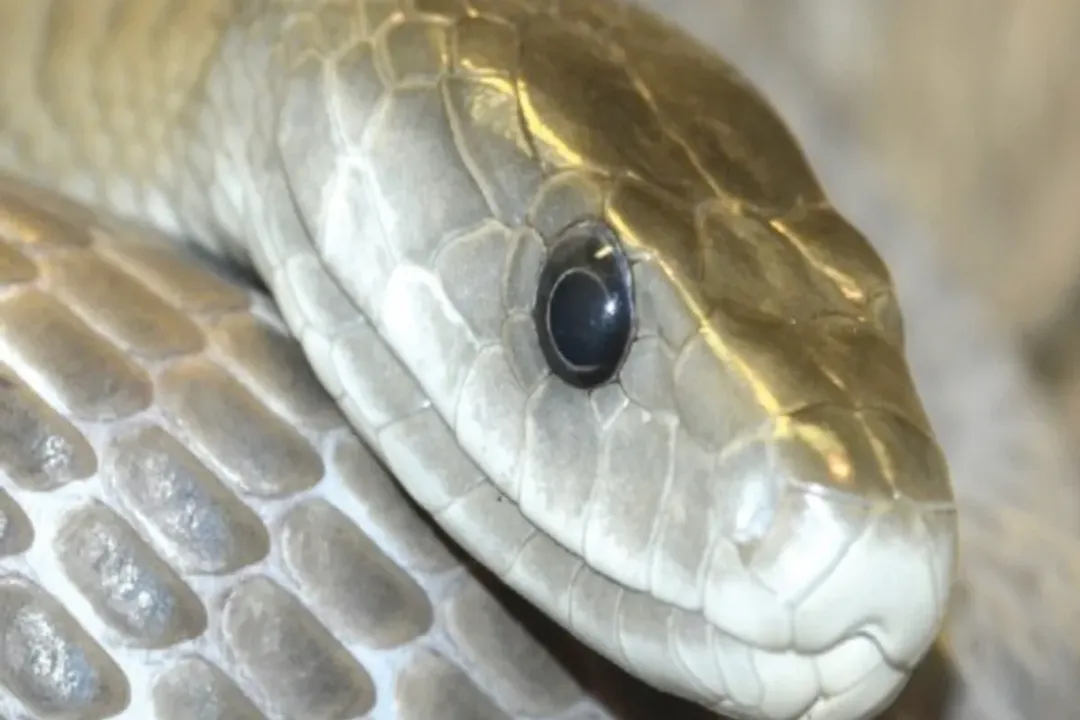
The head structure is another critical identifier for experts. The black mamba possesses a distinctly long and narrow head, often described as coffin-shaped. [3][7] This shape is characteristic of many elapids and provides the necessary profile to house the venom glands and the delivery system. Complementing this head shape are its large eyes, which are equipped with round pupils. [5] The combination of a slender body, an elongated head, and prominent eyes contributes to the snake's keen visual acuity, which is vital for hunting and navigation, distinguishing it from species that rely primarily on heat sensing or ground vibrations. [1][8]
# Dentition Apparatus
As a venomous elapid, the physical features related to venom delivery are paramount. The black mamba possesses fixed fangs located at the front of its upper jaw. [3][4] These fangs are specialized, hollow structures designed to inject venom deep into the victim during a strike. [3] While the exact length can vary, these structures are perfectly adapted to their delivery mechanism, representing the culmination of its physical evolution for subduing prey and defense. [4] The structure ensures that once a bite is administered, the venom is efficiently deposited, a physical necessity given the snake's generally non-constricting hunting style. [6]
The entire physical form—the flexible, muscular body, the smooth scales facilitating rapid movement, the specialized head shape, and the precise venom delivery system—works in concert. It is this integrated morphology, rather than any single exaggerated trait, that defines the physical presence of Dendroaspis polylepis in its natural environment across sub-Saharan Africa. [9][1]
Related Questions
#Citations
Black Mamba, facts and photos | National Geographic
What are the physical characteristics of a young black mamba?
Black mamba | Description, Behaviour, Venom, & Facts | Britannica
Dendroaspis polylepis (Black Mamba) - Animal Diversity Web
Black Mamba - Zoo & Snake Farm New Braunfels
Black Mamba - Facts, Diet, Habitat & Pictures on Animalia.bio
Black Mamba | Saint Louis Zoo
Black Mamba Fact vs. Fiction: Mythical Size and a Kiss of Death
Black mamba - SANBI