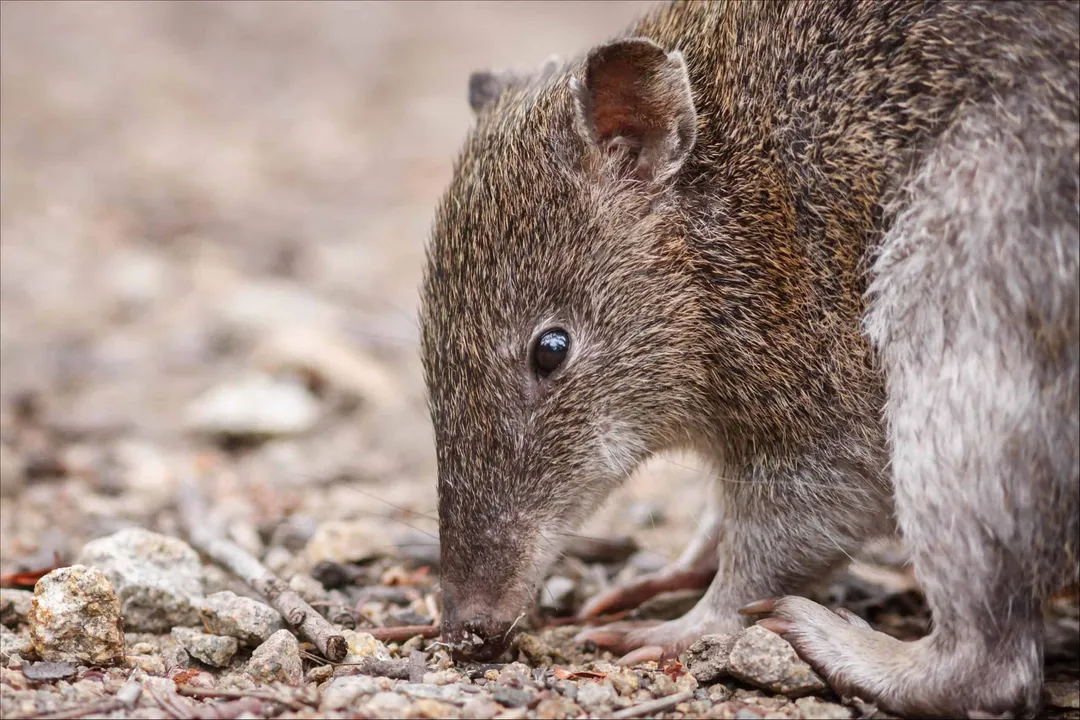
How does the elongated snout of the Long-Nosed Bandicoot aid in foraging efficiency?
It acts as an olfactory probe to confirm prey presence, reducing energy-draining excavation
The elongated, tapering snout is a crucial sensory adaptation housing an extensive network of olfactory tissues, granting the bandicoot an exceptional sense of smell. This acute sense of smell is the primary guide when rooting through leaf litter or damp soil searching for hidden food items like insect larvae or worms. By effectively sniffing out subterranean prey, the snout acts as a biological detector. This detection ability minimizes the necessity for energy-intensive, blind digging attempts. If the animal can confirm the location or presence of prey before digging commences, it drastically lowers the overall metabolic cost of foraging, ensuring that the energy expended yields a reliable caloric return.