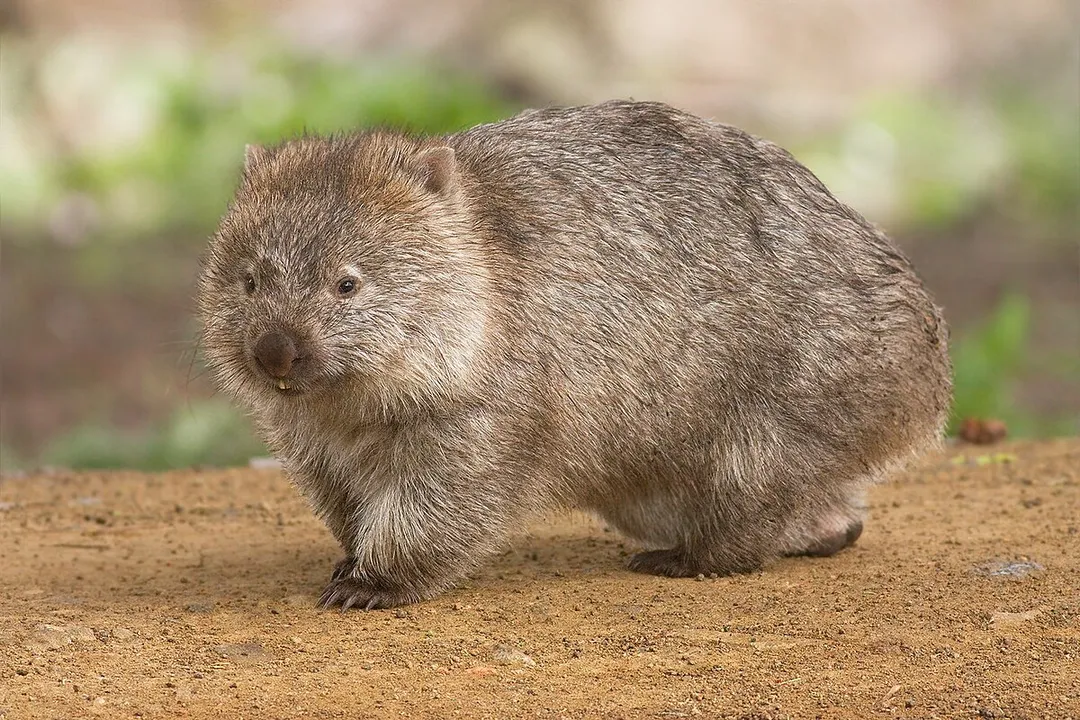
How does the wombat utilize its cartilaginous plate for defense when inside its burrow?
The wombat wedges its rump against the tunnel roof, blocking the entrance with an armored barrier.
The wombat employs a unique defensive strategy involving the exceptionally tough, cartilaginous plate situated on its rump. This bony shield is characterized by its thickness and a lack of numerous nerve endings, rendering it highly resistant to physical damage. When a predator, such as a dingo, attempts an attack from behind while the wombat is situated within its subterranean network, the wombat positions itself strategically. By bracing its armored rear end firmly against the ceiling or roof structure of the tunnel segment, it effectively converts this vulnerable exit area into an impregnable fortress. Furthermore, if the threat persists, the wombat can leverage its powerful hind legs to forcefully crush the intruder’s skull against that same reinforced roof structure, turning its posterior into both a shield and a weapon.