What are the physical characteristics of a salamander?
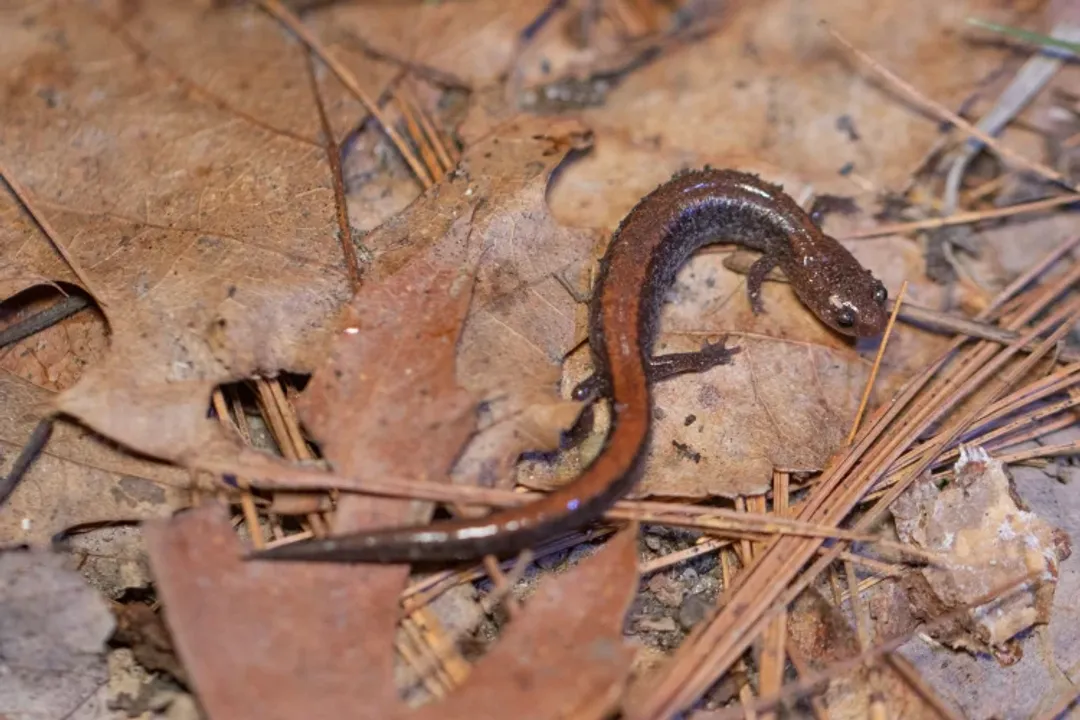
The physical attributes that define a salamander place it squarely within the amphibian class, setting it apart from both reptiles and the other major amphibian order, the frogs and toads. While the casual observer might mistake an adult salamander for a small lizard due to its general body shape, the underlying physiology—particularly the skin—is fundamentally different. [1][10] Salamanders are characterized by having a relatively long body, a distinct head, four limbs, and a tail, a configuration that distinguishes them from most frogs and toads which typically lack a tail in their adult stage. [1][9][10]
# Body Form

The classic salamander silhouette is often described as lizard-like, featuring a streamlined body well-suited for moving through leaf litter or navigating damp soil. [1] This quadrupedal stance, supported by four limbs, is the most common configuration. [10] However, this generalization has significant exceptions across the diverse order, Caudata. Some specialized groups, such as sirens or amphiumas, have evolved to be entirely legless, relying on serpentine movements for locomotion. [1] Despite these variations, the presence of a tail in adulthood remains a defining characteristic for the majority of species, differentiating them from adult anurans (frogs and toads). [1][9]
A further physical nuance exists within the group itself when comparing salamanders to newts. While newts are classified as salamanders, they often present with slightly rougher skin textures compared to their aquatic or semi-aquatic relatives, and tend to be more terrestrial during their adult lives. [10] Furthermore, like many amphibians, salamanders possess teeth, though these are typically only present on the lower jaw, though some species may also have teeth on the upper jaw or the palate. [1]
# Skin Surface

Perhaps the most crucial physical characteristic, one that dictates much of a salamander’s habitat and behavior, is its skin. Unlike reptiles whose skin is dry and scaly, amphibian skin is generally smooth, soft, and most importantly, permeable. [2][6] This permeability is key to their physiology because salamanders often rely on their skin to absorb necessary oxygen and water from the environment—a process known as cutaneous respiration. [1][6][10]
The need for continuous moisture directly influences where we find these creatures. A terrestrial salamander, such as the Tiger Salamander, needs to keep its skin damp to breathe efficiently and prevent desiccation. [2][10] In contrast, a fully aquatic species might have thinner skin adapted solely for water absorption and gas exchange in an aquatic setting. For example, the endangered San Marcos Salamander, found only in the headwaters of the San Marcos River in Texas, is entirely aquatic and appears relatively smooth, reflecting its life spent underwater. [4] This physiological requirement means that a salamander found in a dry, open area is often a sign that the local microclimate—perhaps under a rock or deep within moist soil—is providing the necessary humidity, even if the general climate appears dry. [6]
Coloration serves multiple purposes. In many species, the skin provides camouflage against the forest floor or aquatic vegetation. [2] However, some species use bright colors as a warning signal to potential predators. The Fire Salamander (Salamandra salamandra), for instance, is typically black with striking, easily visible spots or bands of yellow or orange. [8] This vibrant pattern serves as a clear visual cue that the animal is toxic or unpalatable, an example of aposematism manifested through physical appearance. [8]

# Appendages Support
The four limbs of most salamanders, while generally present, are not always designed for rapid, sustained locomotion like those of a lizard. They are often short and placed somewhat awkwardly at the sides of the body, leading to a somewhat clumsy, belly-crawling gait when moving across land. [1] Their utility is often geared toward stabilizing the body and enabling slow, deliberate movement through dense undergrowth or mud.
The tail is another significant feature. For most species, the tail is as long as the body and serves a dual purpose: balancing the animal during movement and acting as a defense mechanism. When threatened, many salamanders can shed their tails (autotomy) to distract a predator, allowing the main body to escape. [1] A fascinating physical capability, although not universal, is the ability to regenerate these lost appendages, including limbs and tails, often with remarkable precision. [1]
# Head Features
The head structure of a salamander is generally simple and somewhat triangular when viewed from above, tapering toward the snout. [1] Eyes are typically present, though in many terrestrial or subterranean species, they can be quite small, reflecting reduced reliance on vision in dark environments. [1] Their mouths are designed for catching and manipulating prey whole, as they do not chew their food in the manner of mammals. [1] As noted earlier, the presence of teeth, even if only on the lower jaw, is a physical trait relevant to how they capture and secure invertebrate prey. [1]
# Size Range
The physical dimensions of creatures in the salamander order span an enormous range, one of the widest among all tetrapods. [1] On one end of the spectrum are tiny, delicate species measuring just a couple of centimeters long. For example, the aforementioned San Marcos Salamander averages about 4 inches in total length. [4] On the extreme opposite end are giants like the Chinese Giant Salamander, which can exceed 5 feet in length. [1] This sheer variability means that "salamander" describes a physical form adapted to countless specific ecological niches, from the damp floor of a temperate forest to specialized cave systems.
# Respiration Design
The physical characteristic of permeable skin directly dictates the necessity of lungs, or the lack thereof, depending on the species' lifestyle. [1][6] While many salamanders possess lungs for breathing atmospheric air, their reliance on cutaneous respiration means that lung development can be reduced or even entirely absent in certain lineages. [1] For the lungless species, the entire gas exchange process relies on diffusion across that thin, moist skin surface, which places a hard limit on the animal's size and the dryness of its environment. [1][6] This physical constraint is an excellent example of how an internal organ system's presence or absence is intrinsically linked to the external covering and the environment it must inhabit.
Related Questions
#Citations
Salamander - Wikipedia
Salamanders - | Outdoor Alabama
Salamanders - Mass Audubon
San Marcos Salamander (Eurycea nana) | U.S. Fish & Wildlife Service
Salamander - an overview | ScienceDirect Topics
Salamanders - Soil Ecology Wiki
Salamandra salamandra | INFORMATION - Animal Diversity Web
Tiger Salamander | National Wildlife Federation
salamander - Kids | Britannica Kids | Homework Help
Salamander and Newt | San Diego Zoo Animals & Plants