What are the physical characteristics of a hyena?
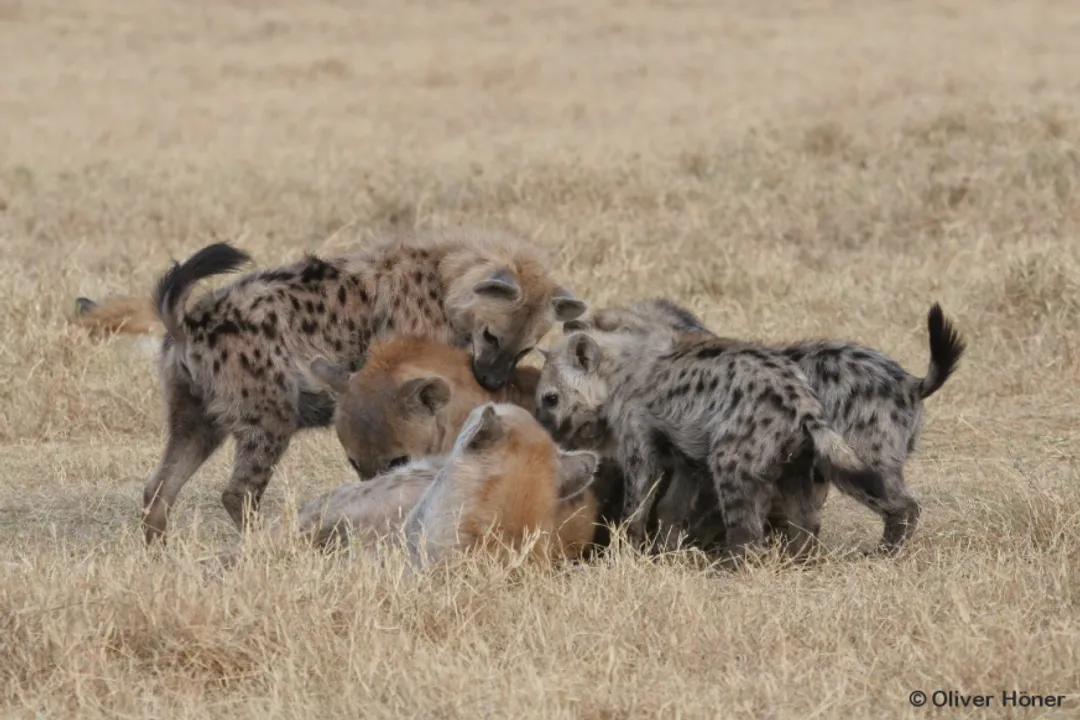
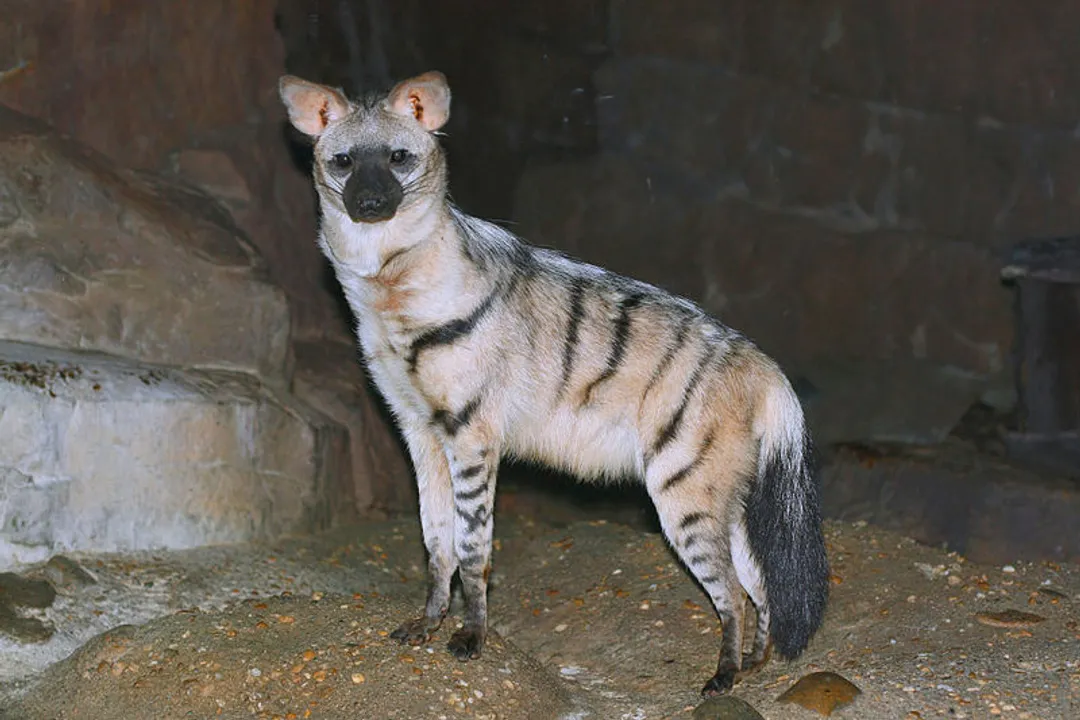
The appearance of hyenas often conjures images of shadowy scavengers, but a closer look at their physical makeup reveals a creature superbly adapted to its often harsh environment. While most people immediately picture the heavily built Spotted Hyena, the family Hyaenidae actually encompasses four distinct species—the Spotted, Brown, Striped, and the smaller Aardwolf—each possessing unique physical traits tailored to its specific lifestyle, though shared characteristics do tie them together. [2][9]
# Body Scale
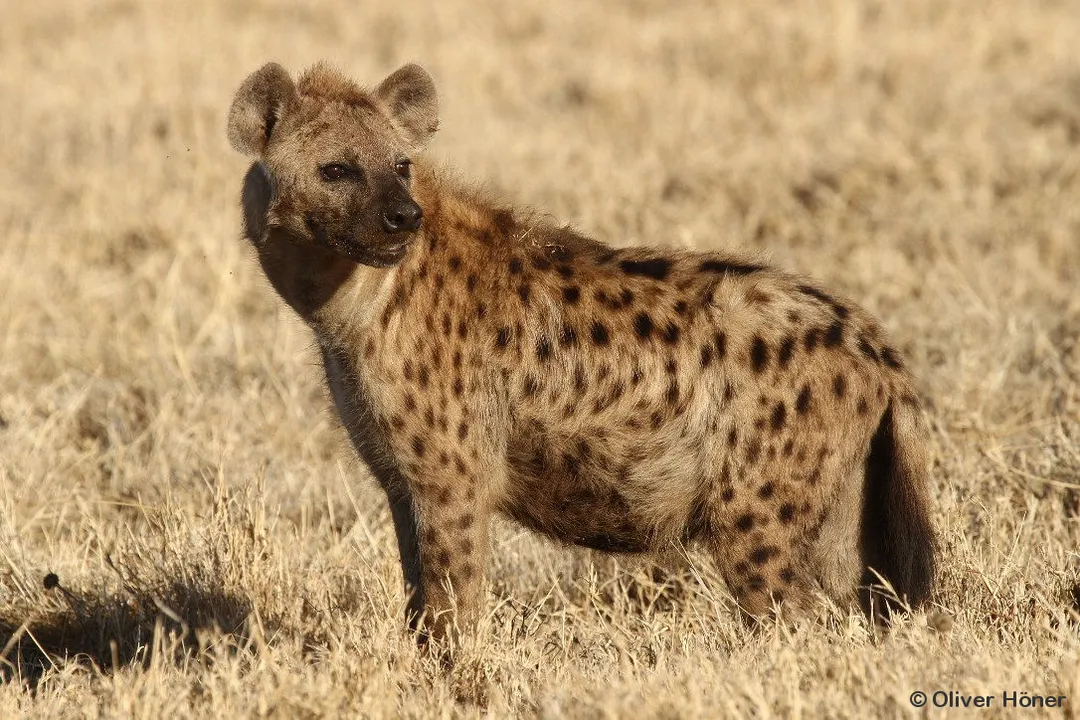
The sheer bulk of the Spotted Hyena sets it apart from many other African carnivores. Adult females are typically larger than males, a rare trait in mammals, sometimes weighing over 150 pounds, while males usually remain below this threshold. [1][3] A large female can stand nearly three feet tall at the shoulder. [4] Their size is considerable, often leading to them being confused with large dogs, though their overall build is far more specialized. In contrast, the Striped Hyena is generally smaller and lighter, and the Brown Hyena, while stout, has a distinct shaggier appearance. [2] Aardwolves are significantly smaller than their larger cousins, built more delicately for insect hunting. [9]
# Limb Structure
Perhaps the most immediately noticeable feature of the Spotted Hyena, and a key determinant of its gait, is its peculiar posture. Its forelegs are noticeably longer than its hind legs, resulting in a distinctive, sloping back that gives the animal a permanently hunched appearance when standing or moving slowly. [1][4] This powerful front assembly, consisting of strong shoulders and massive necks, isn't built for the blistering acceleration of a cheetah, but rather for sustained endurance and the ability to carry heavy weights over long distances across the savanna. [1] The way the forelimbs drive the body forward while the shorter hind legs stabilize the rear suggests an adaptation geared toward traversing vast territories while hauling substantial kills or scavenged bone fragments back to the den or clan members. This gait, which often appears as a sort of loping trot, conserves energy effectively over long patrols. [4]

# Massive Jaws
The head of a hyena is perhaps its most formidable physical characteristic, dominated by an exceptionally large skull and incredibly powerful jaw musculature. [1] The jaw structure of the Spotted Hyena is legendary; it possesses one of the strongest bites in the mammalian world, capable of exerting forces necessary to crush large bones. [4] This is not just anecdotal; the bone-crushing capability is a direct result of the sheer density of the bone structure and the powerful attachment points for the temporalis and masseter muscles. [1] While other carnivores, like lions, often focus on tearing flesh or suffocating prey, the physical investment in the hyena's jaw system highlights its primary ecological role as an unmatched bone processor and recycler. This allows the Spotted Clan to extract calories from marrow and minerals that other predators simply leave behind, turning a seeming carcass remnant into a valuable meal. [4] The ears are rounded and prominent, aiding in hearing, and the muzzle is broad. [1]
# Pelage Pattern
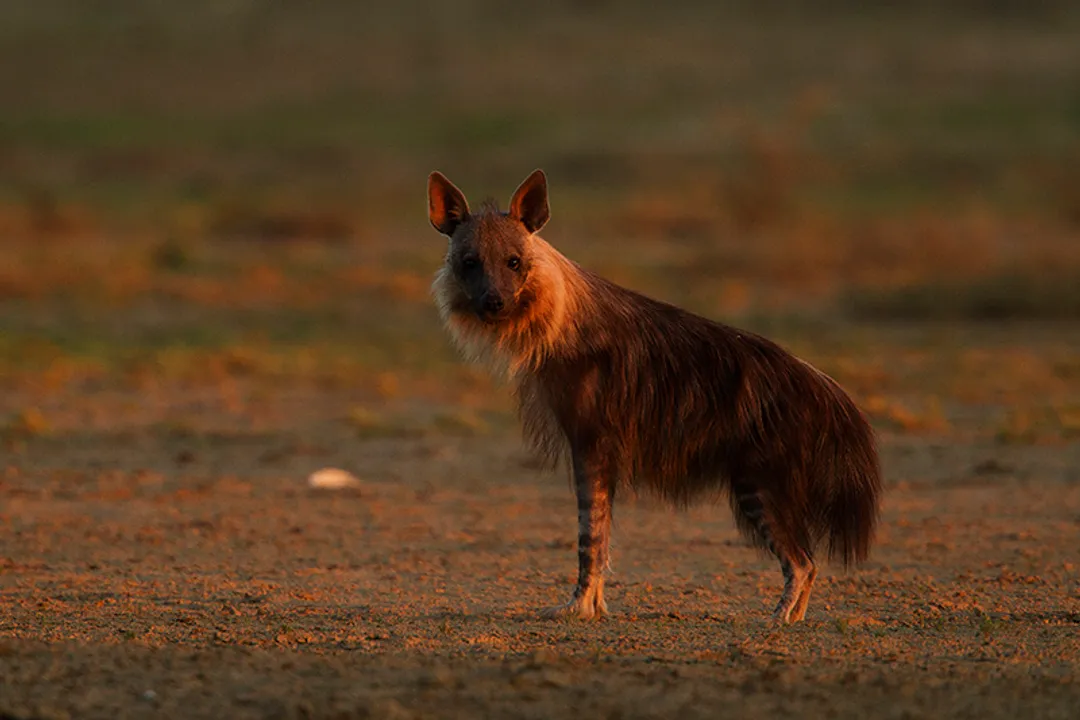
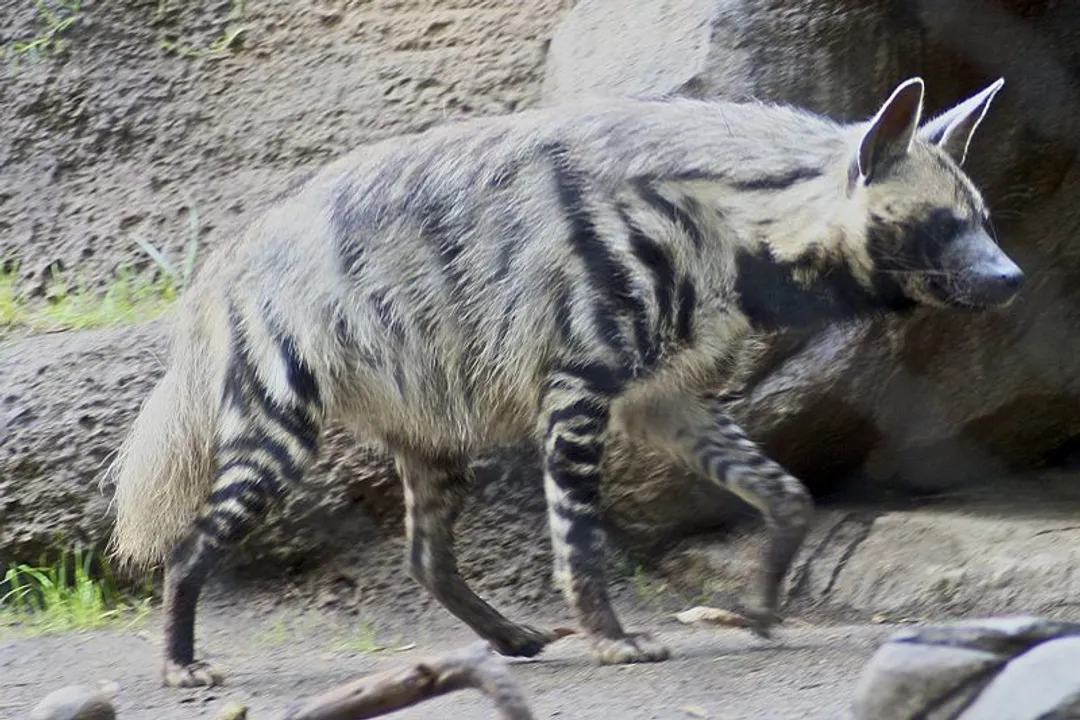
The exterior appearance varies significantly across the genus, defining the species visually. The Spotted Hyena features a coarse, short coat that ranges in color from sandy, grayish-brown to dark brown, covered with irregular dark brown or black spots that are unique to each individual, much like human fingerprints. [1][4] These spots tend to fade on the legs. [1] In contrast, the Striped Hyena displays a much shaggier, lighter-colored coat, typically grayish or yellowish, marked by distinct black vertical stripes running down its flanks and legs. [2] The Brown Hyena is perhaps the most visually distinct in terms of fur; it has very long, shaggy, dark brown fur, especially around the shoulders and back, giving it a somewhat unkempt, mop-like profile. [2]
# Dental Attributes
The teeth themselves are specialized tools reflecting the animal's diet. While flesh-eaters generally have sharp canines and shearing carnassials, the hyena’s molars are exceptionally thick and robust. [1] These back teeth are flattened and blunt, perfectly designed not for slicing, but for grinding and pulverizing dense material like bone. [1] This dentition complements the jaw strength, allowing the hyena to exploit every part of a carcass efficiently. Even the Aardwolf, which primarily eats termites, has reduced dentition compared to the bone-crushing Spotted Hyena, illustrating how physical structure directly maps to dietary specialization within the family. [9]
# Distinguishing Features by Species
To appreciate the physical characteristics fully, it is helpful to see them side-by-side, recognizing that generalizations about "the hyena" usually default to the most populous and aggressive species, the Spotted Hyena. [4]
| Feature | Spotted Hyena (Crocuta crocuta) | Striped Hyena (Hyaena hyaena) | Brown Hyena (Parahyaena brunnea) |
|---|---|---|---|
| Shoulder Slope | Pronounced (Forelegs much longer) [1] | Less pronounced | Moderate |
| Coat | Short, coarse, spotted [1][4] | Shaggy, light background, distinct vertical stripes [2] | Very long, shaggy, dark brown throughout [2] |
| Size | Largest and heaviest, females often larger than males [1] | Medium, slenderer build | Medium, appearing larger due to long fur |
| Face | Broad muzzle, rounded ears [1] | Pointed, more dog-like ears | Darker face contrasting with body fur |
Observing these variations makes it clear that while all are classified as hyenas, the Striped and Brown varieties have physical traits that suggest a greater reliance on scavenging less aggressively contested food sources or utilizing nocturnal foraging patterns, resulting in less extreme adaptations for direct physical confrontation or bone processing seen in the Spotted species. [2] For instance, the longer, shaggier fur of the Brown Hyena might offer better insulation in colder desert nights than the tight coat of its spotted relative. [2]

# Sensory Apparatus
Beyond the skull structure, the senses contribute to the hyena's physical ability to locate food and navigate territory. They possess excellent eyesight, which is crucial for nighttime activity, though many species are largely nocturnal or crepuscular. [4] Their hearing is also acutely developed, assisted by those large, rounded ears which help them detect the sounds of distant feeding or the calls of their own clan members across wide distances. [1] The sense of smell is equally vital for locating carrion or marking territory, features common across all carnivores but finely tuned in these scavengers and opportunistic hunters. [1]
Related Questions
#Citations
Spotted Hyena (Crocuta crocuta) Fact Sheet: Physical Characteristics
Hyena - Wikipedia
Spotted Hyena - Denver Zoo Conservation Alliance
Spotted Hyena | San Diego Zoo Animals & Plants
Hyena | African Mammal, Social Behavior & Adaptations | Britannica
Hyena Facts | East Africa Wildlife Guide - Natural Habitat Adventures
Spotted Hyena - Oakland Zoo
matrilineal societies - Ngorongoro Hyena Project
Striped hyena physical characteristics and features - Facebook
Spotted Hyena Facts! - National Geographic Kids