Why are Yellow-bellied Sapsuckers unlikely to be found in Wisconsin during the winter months?
Answer
The cold freezes the sap flow, pushing the birds south
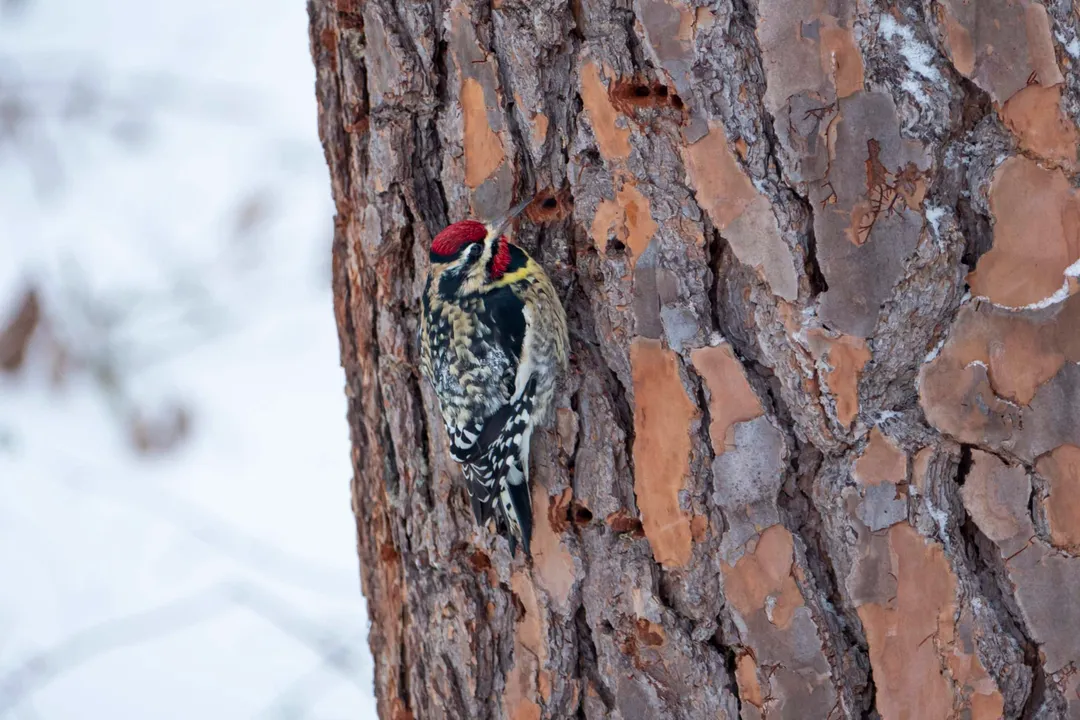
The reliability of a winter location depends critically on the availability of liquid sap. Wisconsin, being in the upper Midwest and a core breeding area in summer, experiences hard freezes in winter. These freezing temperatures halt the flow of sap from the trees, removing the bird's essential food source and compelling virtually all individuals to migrate farther south to regions where the climate remains mild enough for sap production to continue.
Related Questions
What is the primary purpose of the shallow holes, or "wells," drilled by the Yellow-bellied Sapsucker?Which tree species are frequently cited as prime targets for Yellow-bellied Sapsuckers in their northern breeding range?Where does the primary winter range of the Yellow-bellied Sapsucker center?Why are Yellow-bellied Sapsuckers unlikely to be found in Wisconsin during the winter months?What distinctive pattern identifies a sap gallery drilled by a Yellow-bellied Sapsucker?During which time period does the fall migration of the Yellow-bellied Sapsucker typically occur?Besides tree species, what structural characteristic of trees do Sapsuckers favor for drilling sap wells?How does the search strategy in coastal Texas in January contrast with searching Wisconsin during the summer?Which hardwood species are commonly used by Yellow-bellied Sapsuckers across their southern range?What secondary visual cue can help observers locate active Yellow-bellied Sapsucker wells?