How does the search strategy in coastal Texas in January contrast with searching Wisconsin during the summer?
Answer
Searching for a single, conspicuous feeder tree versus searching broad forested tracts
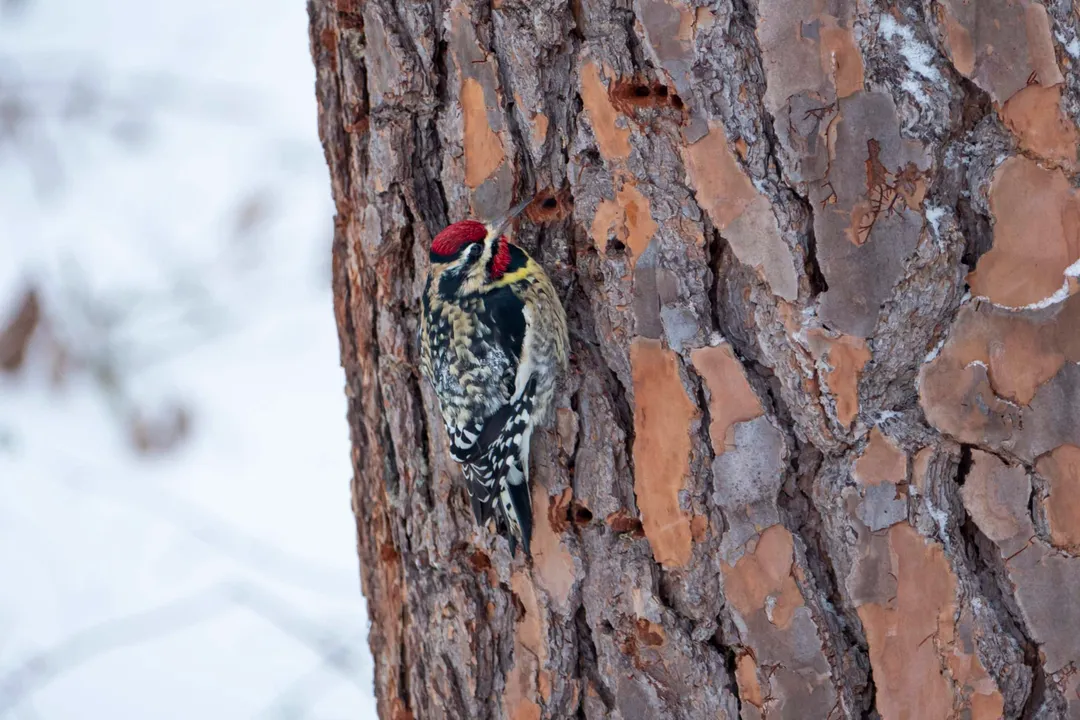
Successful birding relies heavily on adapting search strategy to the bird's current purpose and location. In Wisconsin during summer, the focus is on broad tracts of mature mixed forest searching for evidence of active breeding territories. Conversely, finding a winter resident in coastal Texas in January means looking for isolated, favored specimens, perhaps ornamental trees in parks or suburban settings, that manage to sustain sap flow in a populated area, making the search highly localized to individual trees.
Related Questions
What is the primary purpose of the shallow holes, or "wells," drilled by the Yellow-bellied Sapsucker?Which tree species are frequently cited as prime targets for Yellow-bellied Sapsuckers in their northern breeding range?Where does the primary winter range of the Yellow-bellied Sapsucker center?Why are Yellow-bellied Sapsuckers unlikely to be found in Wisconsin during the winter months?What distinctive pattern identifies a sap gallery drilled by a Yellow-bellied Sapsucker?During which time period does the fall migration of the Yellow-bellied Sapsucker typically occur?Besides tree species, what structural characteristic of trees do Sapsuckers favor for drilling sap wells?How does the search strategy in coastal Texas in January contrast with searching Wisconsin during the summer?Which hardwood species are commonly used by Yellow-bellied Sapsuckers across their southern range?What secondary visual cue can help observers locate active Yellow-bellied Sapsucker wells?