What characteristic feeding behavior defines the Yellow-bellied Sapsucker?
Answer
Drilling neat rows of small holes, or sap wells, into trees.
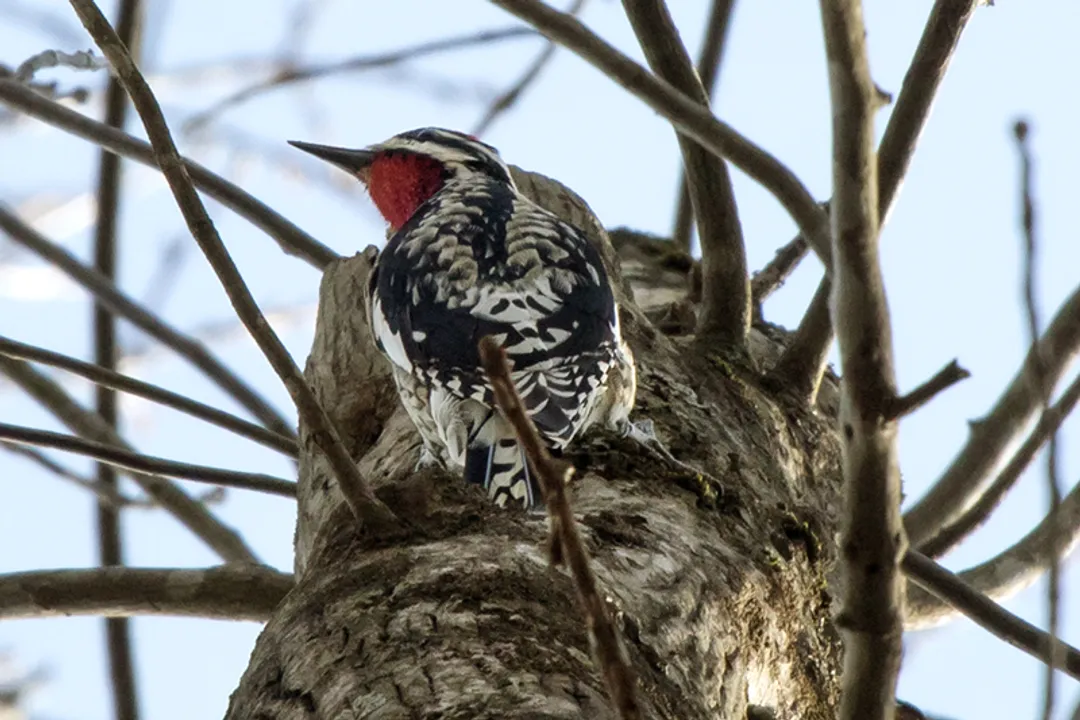
The defining activity that frequently identifies this species, even before clear visual confirmation of its plumage, is its specialized feeding method. This involves drilling symmetrical, neat rows of small holes directly into the tree bark. These openings are specifically created to allow the sap to flow freely, which the bird then drinks. These characteristic markings are referred to as sap wells, and observing their pattern—often in straight horizontal or vertical lines on birch or maple trunks—is considered a reliable indicator of the bird's presence, sometimes even stronger than a clear view of the bird itself.
Related Questions
What characteristic feeding behavior defines the Yellow-bellied Sapsucker?Which physical characteristic is highly conspicuous, appearing as a distinct white block on the wings?What term describes the specialized foot arrangement of the Yellow-bellied Sapsucker for clinging to vertical surfaces?How does the general size of the Yellow-bellied Sapsucker compare when viewed alongside a Red-bellied Woodpecker?What is the primary difference in head markings used to sex an adult Yellow-bellied Sapsucker in the field?What plumage characteristic distinguishes juveniles from mature Yellow-bellied Sapsuckers?What anatomical feature, besides the feet, is critical for support when the Yellow-bellied Sapsucker clings to vertical surfaces?Where is the red coloration found on an adult male that helps clearly flag his sex, alongside the throat patch?Why should field observers often prioritize looking for sap wells over confirming the belly color for identification?How do the bill and overall build of the Yellow-bellied Sapsucker relate to other woodpeckers?