Yellow Bellied Sapsucker Locations
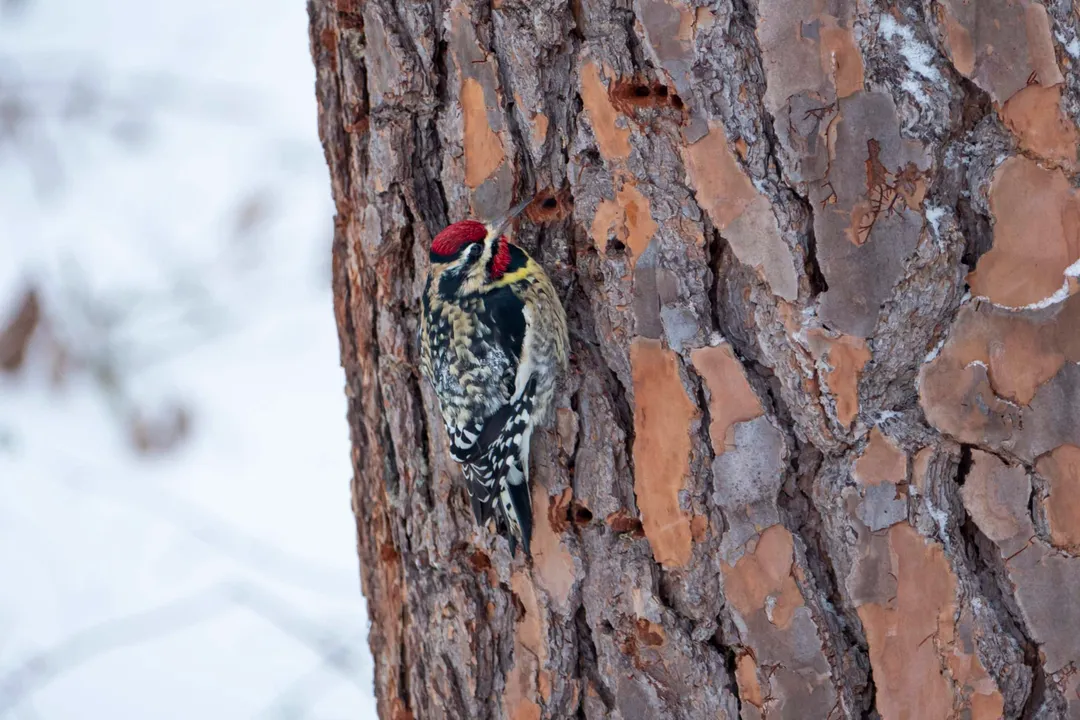
The Yellow-bellied Sapsucker presents a fascinating puzzle for birders when planning a search, as its presence is dictated almost entirely by the season and the availability of specific tree anatomy across North America. This member of the woodpecker family is not always where you expect a woodpecker to be, preferring to tap neat rows of shallow holes—or "wells"—to sip the flowing sap rather than excavating deep cavities for insects. [2][8] Determining the best location for a sighting requires understanding the bird's north-to-south migration, its preference for deciduous and mixed woods, and the subtle differences in its behavior between the breeding season and the non-breeding season. [8]
# Broad Distribution Map
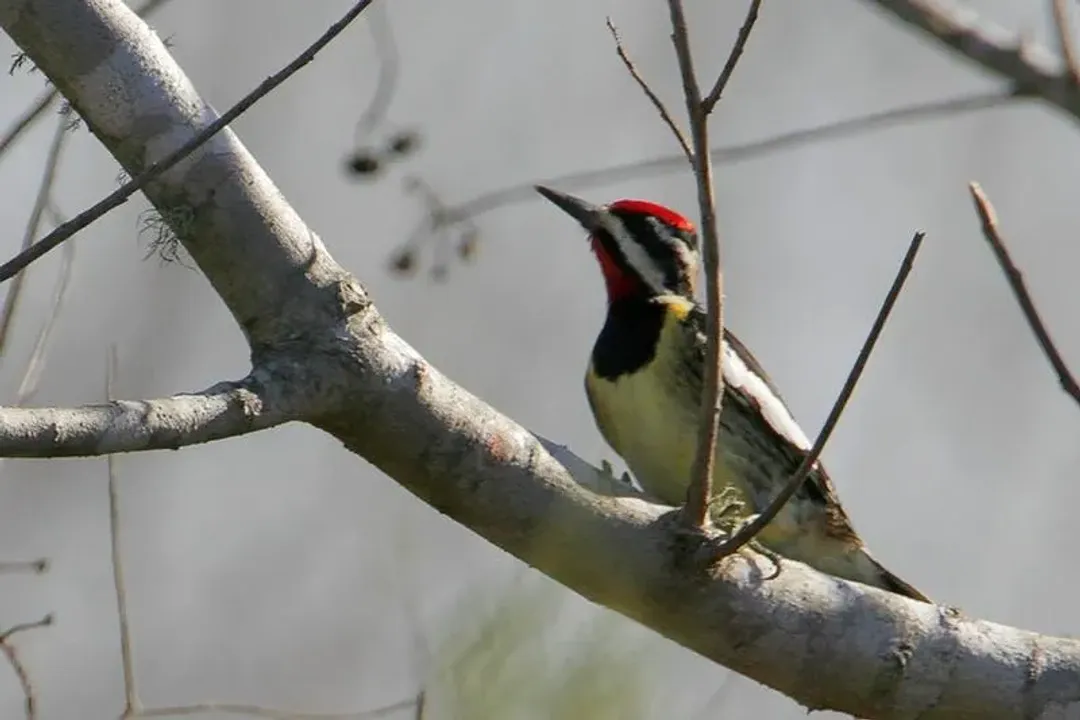
The overall distribution of the Yellow-bellied Sapsucker paints a picture of a bird strongly tied to the eastern half of the continent, though there are notable western exceptions. [1] Generally speaking, their range is expansive, covering significant portions of the United States and Canada. [1][3]
During the breeding season, the Sapsucker's range stretches across the northern tier of North America. This includes much of Canada, extending from the Pacific coast eastward through the boreal forests and into the maritime provinces. [1] In the United States, breeding populations concentrate heavily in the northern states, such as the upper Midwest, the Northeast, and across the higher elevations of the Appalachian range. [1][6] For instance, states like Wisconsin host them as breeding summer residents, where they are found in suitable woodlands throughout the warmer months. [4]
When autumn arrives, the story shifts to wintering grounds, which take the birds much farther south. The primary winter range centers on the southeastern United States, extending down through the Gulf Coast states and into Mexico, Central America, and the Caribbean islands. [1][2] While many birds pass through the central and southern U.S. on migration, consistently reliable winter locations are generally south of the Mason-Dixon line and west into Texas. [1][7]
The map reveals a gap in consistent year-round presence across the western United States, with only small, often scattered populations lingering or breeding in the Rocky Mountains or Pacific Northwest. [1] This migratory pattern means that a location that yields sightings in July may be completely barren by November, barring the presence of lingering migrants or overwintering individuals in milder climates. [3] Understanding this map is the first step; the next is understanding what kind of habitat they seek within those zones.
# Habitat Needs
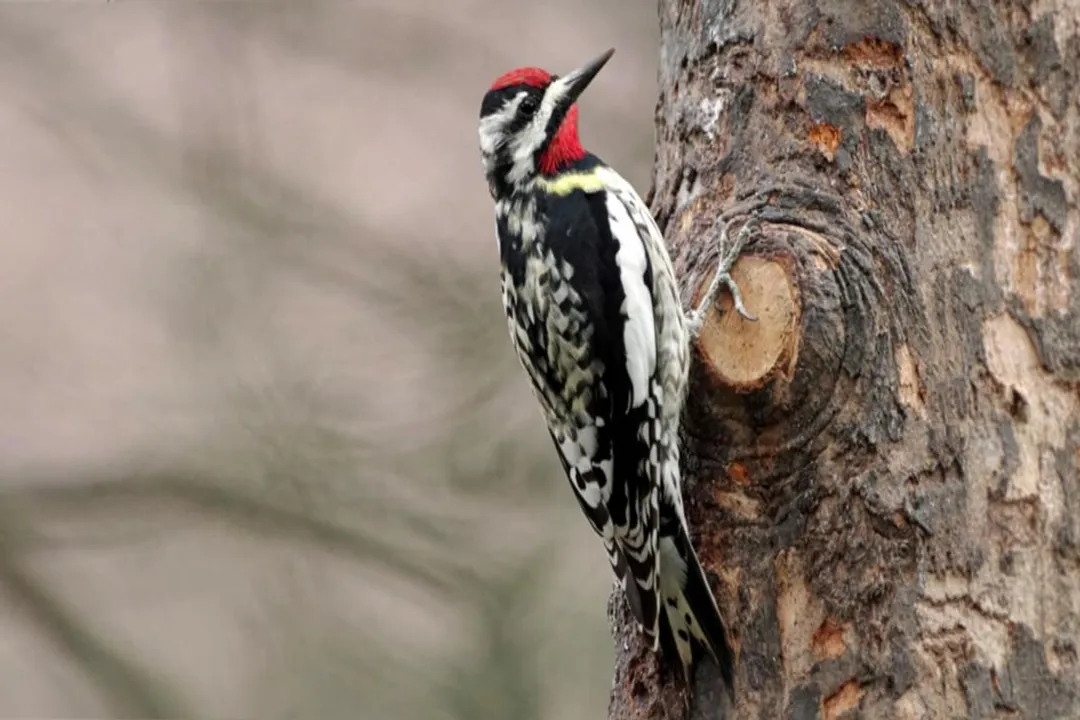
A bird whose survival strategy revolves around sap rather than wood-boring insects will naturally favor certain tree species and forest structures, regardless of whether it is nesting or pausing during migration. [2] The habitat requirements are consistent, though the intensity of use changes seasonally. [5]
The preferred environment is typically mature deciduous or mixed-wood forests. [2][8] Look for areas with ample standing trees, particularly those with smooth bark, which are easier for the Sapsucker to drill into and maintain its sap wells. [2][5]
Key tree species often associated with Yellow-bellied Sapsucker activity include:
- Aspen and Birch: These are frequently cited as prime targets, especially in the northern breeding range. [4][8]
- Maple: Various maple species are highly attractive due to their abundant spring sap flow. [2]
- Oak and Beech: These hardwood species are commonly used across their southern range, particularly during migration stopovers or wintering. [7][9]
It is important to note that while they prefer certain trees, they are adaptable. In a place like Connecticut, for example, they might be found in an orchard or a backyard with good tree cover, as long as the feeding structure is adequate. [9] A location rich in older, somewhat stressed, or moisture-loving trees often provides the best sap supply, making riparian areas or older woodlots particularly promising hunting grounds. [5] The key characteristic isn't just the type of tree, but the tree's suitability for creating and maintaining those rows of holes—neat, horizontal lines drilled through the bark to access the sugary liquid beneath. [2]
# Regional Sightings
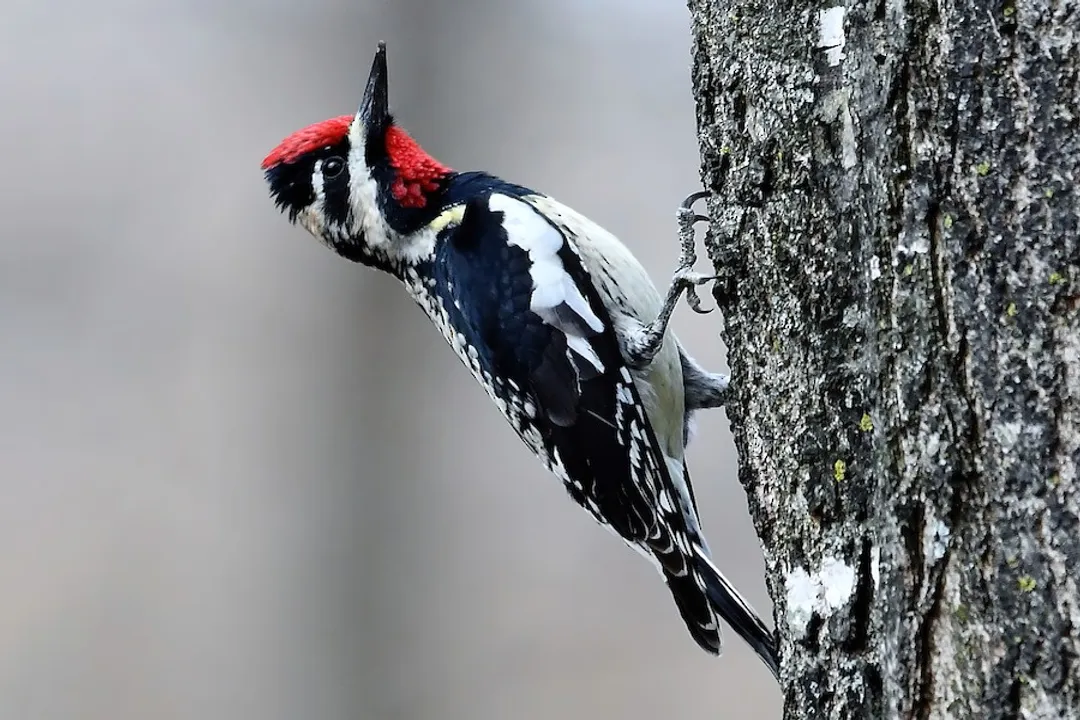
To move from general range information to practical birding strategy, it helps to look at specific regional patterns. How a bird appears in the Northeast differs significantly from its appearance along the Gulf Coast. [6][7]
# Northeast Presence
In states like Connecticut, the Sapsucker is primarily a migrant, passing through in spring and fall, with fewer individuals remaining to breed compared to further north. [9] If you are looking for them in December in this region, you are dependent on finding the few individuals that overwinter, usually sticking to sheltered woodlots or parks where preferred trees remain accessible and perhaps less disturbed. [9] Similarly, the overall conservation status in the Northeast has shown declines, suggesting that finding them requires focused effort in the remaining quality forest patches. [6]
# Wisconsin Woodlands
For birders in the upper Midwest, Wisconsin offers a more reliable summer opportunity. [4] During the breeding season, the Sapsucker's location is tied to mixed or deciduous forests, often found near swamps or along streams. [4] The key here is timing: if you visit in winter, you are unlikely to find them, as the cold freezes the sap flow, pushing the birds south. [4] Their presence in Wisconsin is a strong indicator of successful northern breeding territory.
# Gulf Coast Stopovers
The situation along the Gulf Coast, exemplified by Houston, Texas, is entirely different. [7] Here, the Yellow-bellied Sapsucker is typically a winter resident or a transient migrant passing through on its way to Central America. [7] When you find them here, they are often utilizing introduced or ornamental trees in suburban settings, parks, or along wooded edges near the coast, sometimes favoring species they might avoid further north, as long as the necessary sap is available during the winter months. [7] The location shifts from dense northern forest to scattered southern trees, demanding a different search technique—one focused on checking isolated, favored specimens in populated areas.
If you are tracking Sapsuckers across a large area, consider the contrast: in Wisconsin during the summer, you are searching broad forested tracts for signs of nesting activity, but in coastal Texas in January, you are likely looking for a single, conspicuous feeder tree in a park setting. [4][7] This difference in search strategy based on geography and season is crucial for successful location finding. An experienced observer knows that the type of location changes far more drastically than the bird's fundamental need for a sap source.
# Migration Corridors

The timing of a Yellow-bellied Sapsucker sighting is intrinsically linked to its location on the migratory route. [3] While they breed across vast northern territories, their movement south is relatively concentrated, which can create temporary hotspots.
Spring migration generally occurs from March through May, moving northward. [8] Fall migration follows from August through November, moving southward. [1] During these periods, the bird needs reliable refueling stops, which means any area with suitable woodland that falls along the expected migration path can temporarily host Sapsuckers, even if they do not breed or winter there. [3]
Consider the Central Flyway versus the Atlantic Flyway; while the core wintering grounds are in the Southeast, the density of migrants passing through intermediate states like Pennsylvania or Ohio can be significant for a few weeks. [1] If you are near the western edge of the main Eastern population, such as in the western Great Plains, sightings during migration might be your only chance to see one outside of the extreme northern breeding areas. [3] The birds are usually less conspicuous during migration than during breeding, as they are focused on feeding efficiently rather than establishing territory or drumming. [2]
# Identifying Active Feeding Locations
Finding the bird is often secondary to finding its work. The location that matters most might not be the bird itself, but the tree it is currently drilling, often referred to as a sap "gallery". [8] Learning to identify these galleries provides a reliable indicator of recent presence, even if the bird has temporarily moved to another tree nearby. [5]
The distinctive feeding pattern involves drilling small, neat holes, usually in straight horizontal rows, about an inch apart, often encircling the trunk or branch. [2][5] Unlike the larger, more irregular holes left by other woodpeckers seeking insects, Sapsucker wells are shallow and designed to encourage sap flow. [2]
Actionable Observation Tip: When searching a promising woodlot, don't just scan the canopy; methodically check the trunks and larger limbs of mature hardwoods, especially those that show signs of slight stress or that are near water sources where the sap might flow more readily. [5] If you find an area where multiple trees exhibit these rows—a true "sapsucker grove"—the probability of seeing the bird increases substantially. You are essentially locating their preferred restaurant cluster rather than just an occupied territory. Keep an eye out for flies or bees congregating at these wells, as they are often drawn to the sugary meal, providing a secondary visual cue to the bird's activity. [8]
# Tracking Overwintering Success
The reliability of a winter location is heavily dependent on local microclimate and food availability. [7][9] In the far north, the ground freezes hard, and sap stops flowing, forcing nearly all individuals south. [4] However, the southern edges of the range have pockets where birds overwinter reliably. [1]
For instance, while the bulk of the species moves past the central U.S., some might linger in areas like the Mid-Atlantic states or the upper South if a particularly warm stretch of weather or an abundance of favored winter-use trees (like oaks) keeps the sap accessible. [6][9] In these marginal zones, the Yellow-bellied Sapsucker's location for the entire winter might be confined to a single, protected patch of woods that sustains the sap flow longer than the surrounding landscape.
If you compare the northern states like Wisconsin, where winter sightings are extremely rare escapes, versus the Gulf states like Texas, where they are expected parts of the winter birding list, the reliability of the location changes drastically. [4][7] A December checklist in Houston expects the Sapsucker; a December checklist in Madison expects a rarity. [7][9] Knowing the difference between a core wintering area and a possible straggler zone is vital for managing expectations about where to look in the colder months.

# Locating Breeding Territories
Finding a Sapsucker when it is establishing a territory requires a different approach than finding a migrant refueling stop. [4][8] Breeding locations are tied to forest maturity and the presence of suitable nesting trees, which are often older hardwoods or conifers that can provide a secure cavity. [8]
In their breeding range, the bird's territorial advertisement—its slow, stuttering drumming—can help pinpoint their exact location within the woods. [2] While the range map shows general breeding areas across the North, an individual territory might cover several acres of preferred forest. [1] To maximize your chances of locating a breeding pair, focus on continuous tracts of mature mixed forest, particularly in the northern tier of the U.S. and throughout the Canadian provinces where this species finds its most secure footing. [1][4] The presence of young, regenerating forest mixed with older stands is often ideal, providing both sap feeding opportunities and suitable nesting cavities in the older growth. [5]
Related Questions
#Citations
Yellow-bellied Sapsucker Range Map - All About Birds
Yellow-bellied Sapsucker | Audubon Field Guide
Yellow-bellied Sapsucker Sphyrapicus varius - eBird
Yellow-bellied Sapsucker - Wisconsin All-Bird Conservation Plan
Yellow-bellied Sapsucker » HF&G - Cleveland Botanical Garden
Yellow-bellied Sapsucker - NH Audubon
Yellow-bellied Sapsucker | Bird Gallery - Houston Audubon Society
Connecticut Audubon Society Bird Finder for December 20