What is the primary sustenance sought by the Yellow-bellied Sapsucker using its unique drilling technique?
Answer
The sugary liquid flowing just beneath the bark
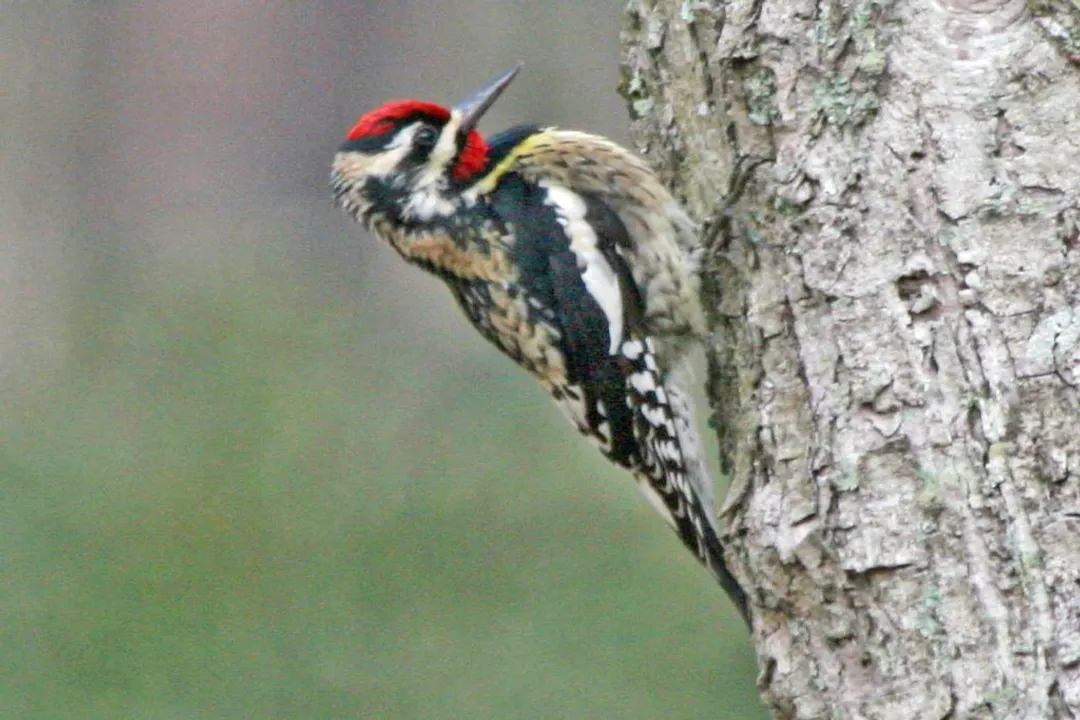
The fundamental difference setting the Yellow-bellied Sapsucker apart from many other woodpeckers is its feeding specialization. Instead of focusing heavily on excavating deep cavities to find insects embedded in the wood, this species prioritizes reaching the sweet, nutrient-rich sap that flows immediately under the bark. They drill small, specific holes, known as sap wells, repeatedly returning to lap up this oozing sap, which constitutes their primary diet for the majority of the year. While they do consume insects, these are generally secondary, captured only when they are inevitably attracted to the sugary flow.
#Videos
Yellow-bellied Sapsucker. A real bird! Exciting Facts for You!
Related Questions
What is the primary sustenance sought by the Yellow-bellied Sapsucker using its unique drilling technique?How are the head markings of an adult male Yellow-bellied Sapsucker described regarding throat and forehead color?What key difference exists between the throat patches of adult male and adult female Yellow-bellied Sapsuckers?What specific arrangement and spacing characterize the sap wells drilled by the Yellow-bellied Sapsucker?Which geographical areas are typically occupied by Yellow-bellied Sapsuckers during their breeding season?What environmental condition strongly correlates with the impetus for the majority of the Yellow-bellied Sapsucker population to migrate south?How is the typical vocalization of the Yellow-bellied Sapsucker during the breeding season characterized?What descriptive characteristic is often used to describe the Yellow-bellied Sapsucker's territorial drumming pattern?What material do Yellow-bellied Sapsuckers typically excavate for creating their nesting cavities?What potential negative impact can high densities of sap well drilling have on vulnerable or young sap-producing trees?