Yellow Aphids Locations
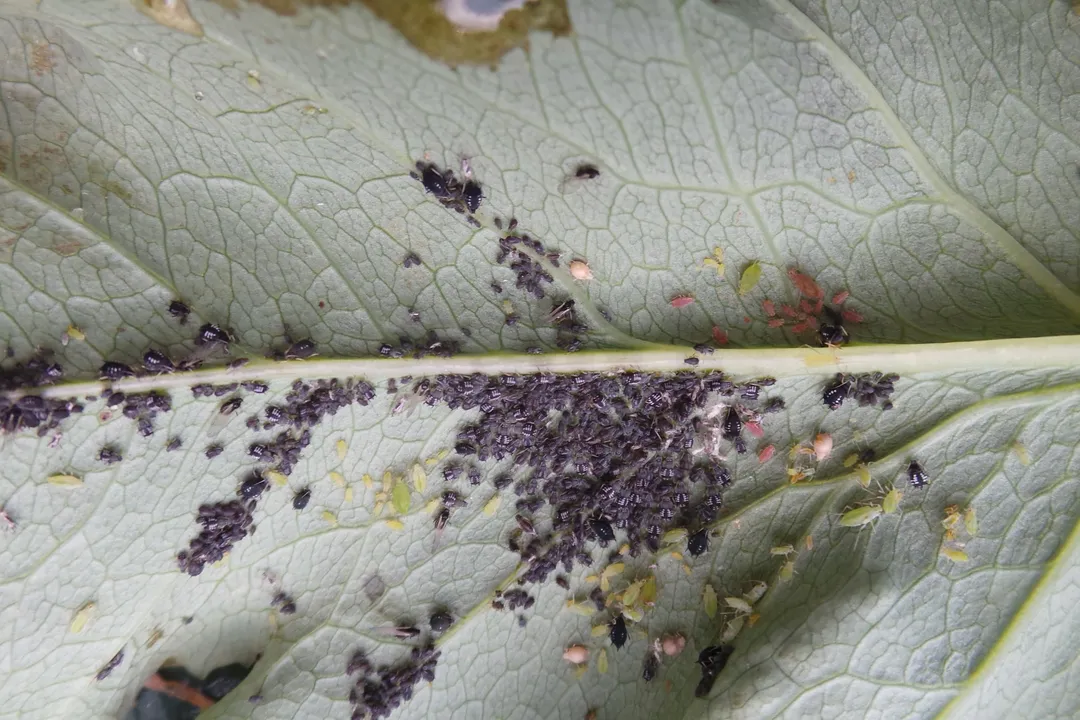
Distinguishing exactly where yellow aphids might be found depends heavily on identifying the specific plant they are colonizing, as different species of yellow aphids specialize in different hosts. These small, often brightly colored insects can cause significant aesthetic and sometimes developmental damage to a variety of vegetation across the United States, from home gardens to commercial orchards. [1][4] While the term "yellow aphid" is broad, entomological records point toward a few particularly common and well-documented types whose preferred habitats are quite specific.
# Specialist Hosts
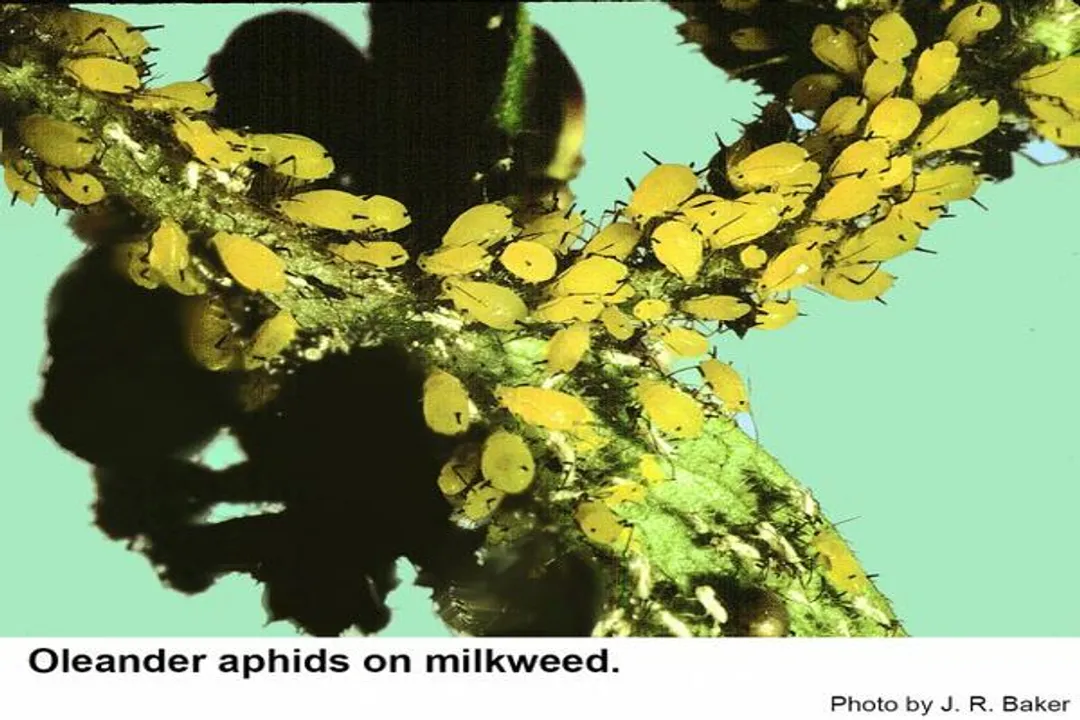
The most frequently discussed yellow aphid is arguably the Oleander Aphid, scientifically known as Aphis nerii. [3] This species is notorious for its vivid, bright yellow body, often contrasted with black legs and prominent black cornicles (the two small tubes on the rear abdomen). [3] If you find dense clusters of these insects, they are almost certainly confined to just two main groups of plants: oleander and milkweeds. [3][7]
For homeowners growing the ornamental shrub Nerium oleander, the aphids aggregate heavily on tender new growth, stems, and the undersides of leaves. [3][7] This preference for new, succulent tissue means that during spring and early summer growth flushes, infestations can explode rapidly. [6] A similar pattern occurs on plants belonging to the Asclepias genus, commonly known as milkweeds. [3] Given that milkweeds serve as essential host plants for Monarch butterflies, finding yellow aphids on them presents a direct management challenge for gardeners focused on supporting pollinators. [2] In these instances, the aphids are strictly associated with these specific host families, rarely venturing far even when populations peak. [3]
# Agricultural Pests
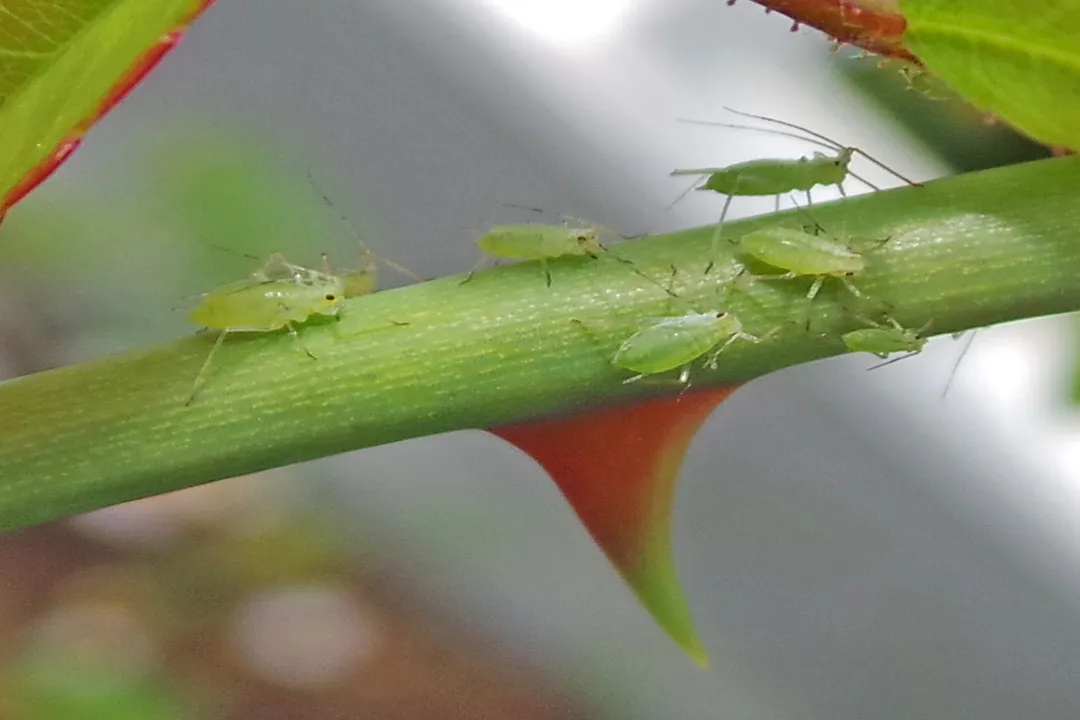
Beyond the ornamental and native plant settings, yellow aphids also appear in significant agricultural contexts, though the species involved may differ. In pecan production, for instance, growers contend with what is referred to as the Yellow Aphid Complex. [4] This complex is not a single species but rather a grouping of several aphid species that specifically target pecan (Carya illinoinensis) and hickory trees. [4]
While this group includes various species, their collective impact on the nut crop makes them an economic concern in areas where pecans are cultivated. [4] Unlike the Oleander Aphid, which is highly host-restricted, these pecan pests are found exclusively on their designated tree hosts, often causing yellowing or distortion of the developing leaves and nuts. [4] Observing yellow aphids on a pecan tree signals an entirely different management protocol compared to seeing them on a flowering shrub in the landscape. [1][4]
# Geographic Distribution
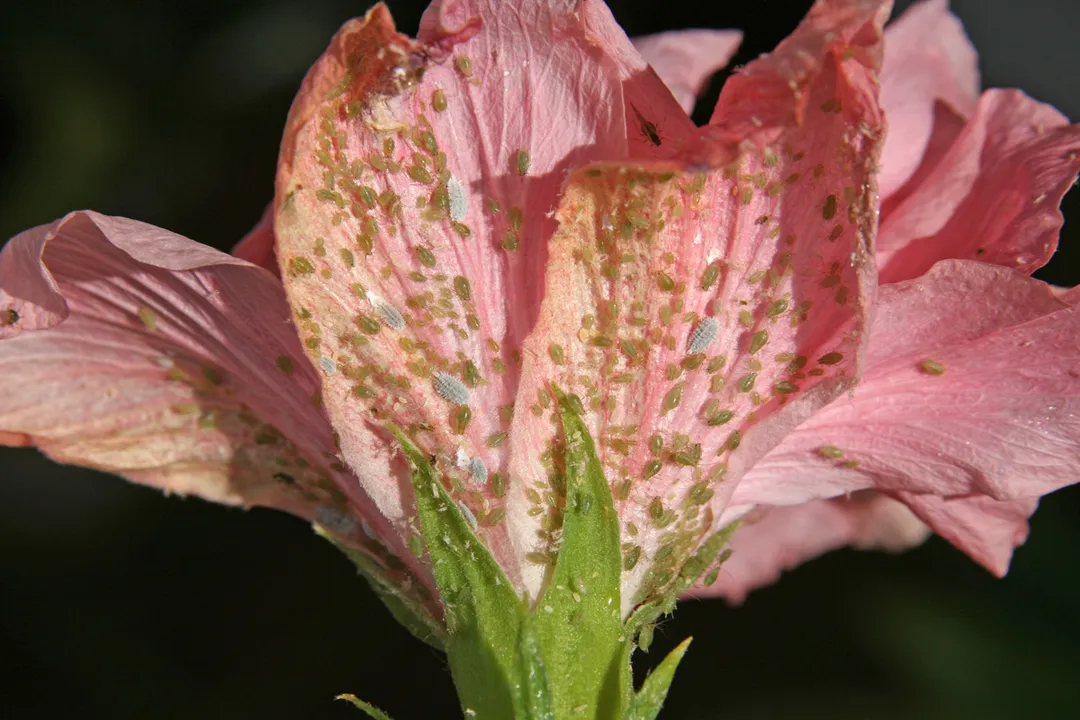
The locations where these aphids are reported often correlate directly with the cultivation or native range of their host plants, suggesting a broad distribution across warmer and temperate regions of North America. [6] Reports from states like Texas specifically highlight the presence and management concerns surrounding the Oleander Aphid on its namesake host. [3] Similarly, extension services in North Carolina monitor the Oleander Aphid, confirming its prevalence there alongside other general aphid populations. [7]
As you move further north, the distribution becomes more closely tied to overwintering success and the planting of susceptible ornamentals. Diagnostic services in areas like Ohio and Wisconsin often address aphid issues during the growing season, which would include the presence of species that overwinter locally or migrate in as the weather warms. [6][8] If you are inspecting plants in a region with mild winters, the aphids may be present year-round, simply cycling through generations. In colder climates, however, the initial sightings in spring are often the result of winged forms migrating from warmer regions or overwintering successfully on hardy host plants like established oleanders. [8]
A helpful way to narrow down your location concern is to look at the type of plant infestation. If you are in a commercial fruit-growing area, suspecting a host-specific complex is key. [4] If you are near a flowering hedge or a patch of native prairie plants, the Oleander Aphid on milkweed is the likely culprit. [3]
# Observation Tactics
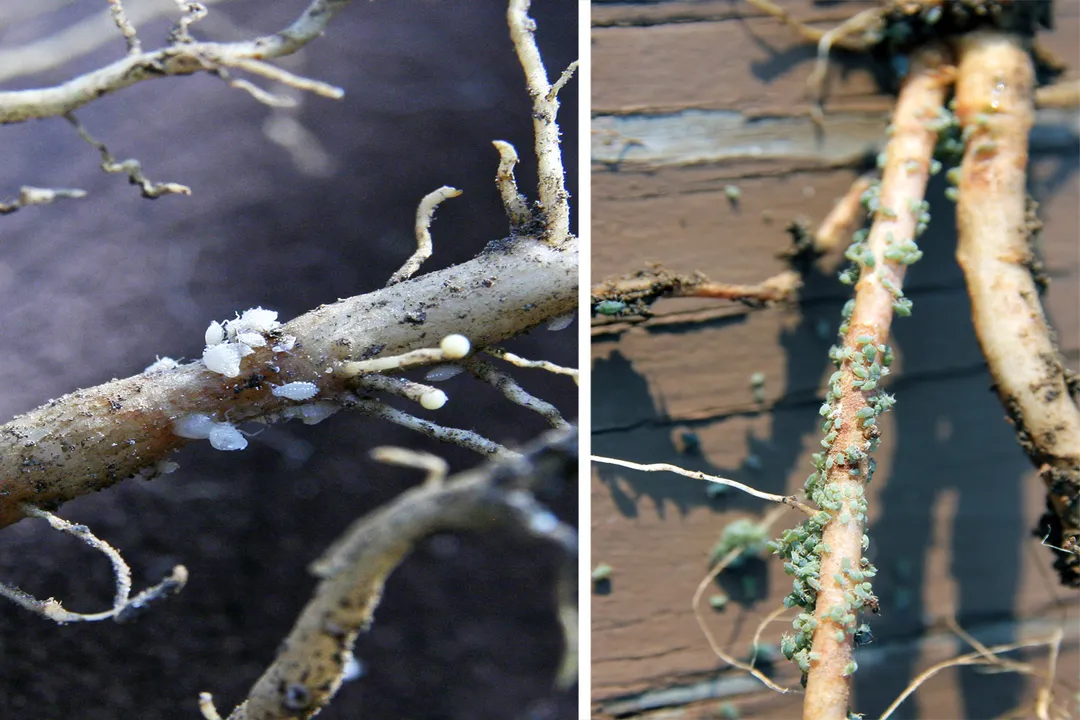
Successfully finding the yellow aphids requires knowing where they prefer to feed and hide. Because they are small—often barely larger than a pinhead—they blend in with the pale color of new leaf shoots or the fuzzy surface of some milkweed stems. [2][3]
When scouting, focus your attention on the newest parts of the plant first. This is where aphids concentrate to access the most nutrient-rich sap. [6] Check the undersides of leaves, especially where the leaf attaches to the stem, as this offers protection from direct sun and wind, making colonization easier. [7] If you see honeydew—that sticky, shiny excretion left by feeding aphids—you can often trace it back to a hidden cluster of yellow insects, even if the aphids themselves are camouflaged. [6]
One useful observation is noticing the accompanying insect activity. Aphids attract predators and parasites. If you see lady beetles, lacewing larvae, or parasitic wasp eggs (tiny, often pearly-white or tan capsules on the aphid's body), you have confirmed a living colony, even if the aphids are not immediately obvious. [1][8] Conversely, if you see mummified aphids (swollen, brassy, or grayish shells), it means natural enemies have already been at work, and the active infestation may already be declining. [1]
When assessing a potential infestation on a milkweed plant, for example, a practical first step is to visually segment the plant. If the aphids are concentrated only on the newest terminal buds, a focused application of a strong jet of water might dislodge them without needing chemical intervention, as these specialists rarely establish on older, tougher stems. [2] This targeted approach is often effective precisely because their feeding location is so localized to the actively growing tips. [3] If the infestation is sparse across many plants, perhaps only affecting one or two stems per plant, you can often manage it simply by pruning off the affected growing tips entirely.
# Comparing Aphid Types
It is worth noting the difference between the Oleander Aphid and other generalist yellow aphids that might appear transiently on various garden vegetables or flowers. [8] While A. nerii is strictly tied to Nerium and Asclepias, [3] other species might be yellow and show up on brassicas, potatoes, or peppers. [8] These generalists are often migratory and may disappear as quickly as they arrive once the weather shifts or they find a better food source. [8] The key differentiator remains the host plant: if the pest is on oleander or milkweed, it is the Oleander Aphid; if it is on a wide variety of unrelated garden plants, it is likely a more mobile, less specialized pest. [3][7]
The physical appearance also offers clues. The Oleander Aphid is typically uniform, bright yellow. [3] Aphids within the Pecan Yellow Aphid Complex can sometimes exhibit slight color variations or be accompanied by darker species, making identification within that complex more nuanced for the grower. [4] For the home gardener, however, if the plant is oleander or milkweed, the bright yellow body with black legs and cornicles is the telltale sign of A. nerii. [3]
In summary, locating yellow aphids means looking at two main arenas: the ornamental/native garden, dominated by the Oleander Aphid on its specific hosts, and the commercial orchard, where complexes of aphids target pecan trees. [3][4] By understanding these host preferences, a gardener or grower can narrow the search area immediately, turning a general hunt into a specific inspection of known vulnerable plants. [7]
Related Questions
#Citations
Oleander Aphid, Aphis nerii Boyer de Fonscolombe ... - UF/IFAS EDIS
How do you guys manage yellow aphids : r/MonarchButterfly - Reddit
Oleander Aphid - Field Guide to Common Texas Insects
Yellow Aphid Complex / Pecan / Agriculture - UC IPM
How to get rid of yellow aphids on milkweed? - Facebook
Aphids, Host Preference, and Plant Taxonomy - | BYGL
Oleander Aphid | NC State Extension Publications
Aphids, in-depth - Wisconsin Horticulture