What secondary visual cue can help observers locate active Yellow-bellied Sapsucker wells?
Answer
Flies or bees congregating at the sugary meal
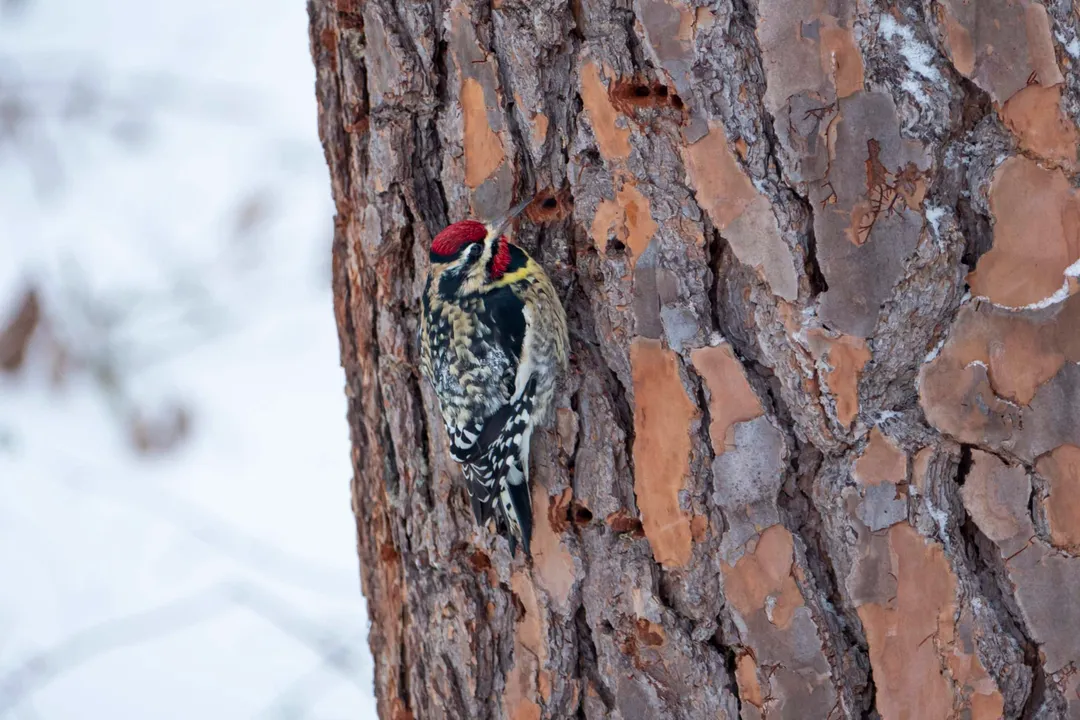
Locating the Sapsucker can sometimes be achieved by observing the indirect effects of its feeding. The shallow wells drilled into the bark produce a sugary liquid that attracts other insects. Observers should keep an eye out for flies or bees gathering at these sites, as the presence of these insects feeding on the sap serves as a secondary, reliable visual indicator that the bird has recently been active at that specific location.
Related Questions
What is the primary purpose of the shallow holes, or "wells," drilled by the Yellow-bellied Sapsucker?Which tree species are frequently cited as prime targets for Yellow-bellied Sapsuckers in their northern breeding range?Where does the primary winter range of the Yellow-bellied Sapsucker center?Why are Yellow-bellied Sapsuckers unlikely to be found in Wisconsin during the winter months?What distinctive pattern identifies a sap gallery drilled by a Yellow-bellied Sapsucker?During which time period does the fall migration of the Yellow-bellied Sapsucker typically occur?Besides tree species, what structural characteristic of trees do Sapsuckers favor for drilling sap wells?How does the search strategy in coastal Texas in January contrast with searching Wisconsin during the summer?Which hardwood species are commonly used by Yellow-bellied Sapsuckers across their southern range?What secondary visual cue can help observers locate active Yellow-bellied Sapsucker wells?