Which host type is frequently associated with feeding I. pacificus nymphs in the Pacific states?
Answer
Lizards
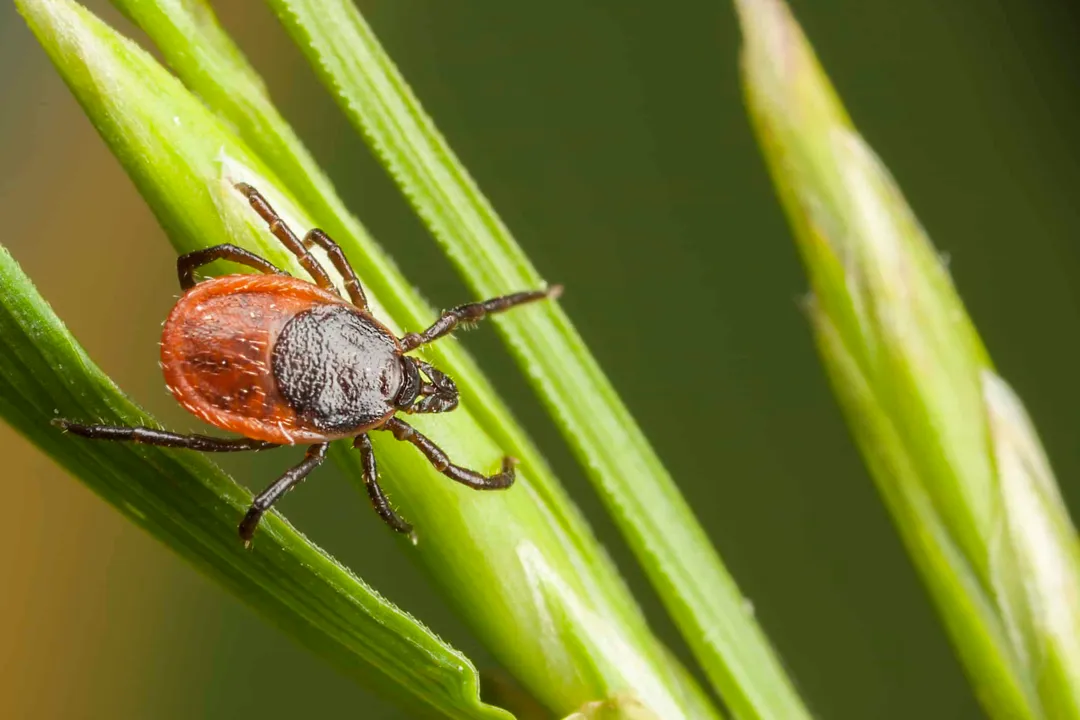
The ecological niche filled by the nymph stage of the Western Blacklegged Tick differs geographically from its eastern relative, influencing pathogen dynamics. While the nymphs of *I. scapularis* are often linked to small rodents such as mice, the nymphs of *I. pacificus* in the Pacific states frequently utilize lizards as their host during their feeding period. This difference in host preference among the immature stages is a biological distinction that can influence the rates and types of pathogens carried by the local tick population.
Related Questions
How many legs do the newly hatched larvae of Ixodes pacificus possess?What feature limits blood consumption in the adult male I. pacificus?What is the defining color pattern of an unfed adult female I. pacificus?Roughly what size is the nymph stage of the Western Blacklegged Tick described as?Which physical structure is absent on Ixodes genus members like I. pacificus?How much larger can the adult female I. pacificus become after engorging?What clothing color is recommended for easily spotting dark-colored I. pacificus ticks?How does the coloration of the Western female differ from the Eastern I. scapularis female?Which host type is frequently associated with feeding I. pacificus nymphs in the Pacific states?As a hard tick belonging to Ixodidae, what protects the back of Ixodes pacificus?