As a hard tick belonging to Ixodidae, what protects the back of Ixodes pacificus?
Answer
A tough, sclerotized shield
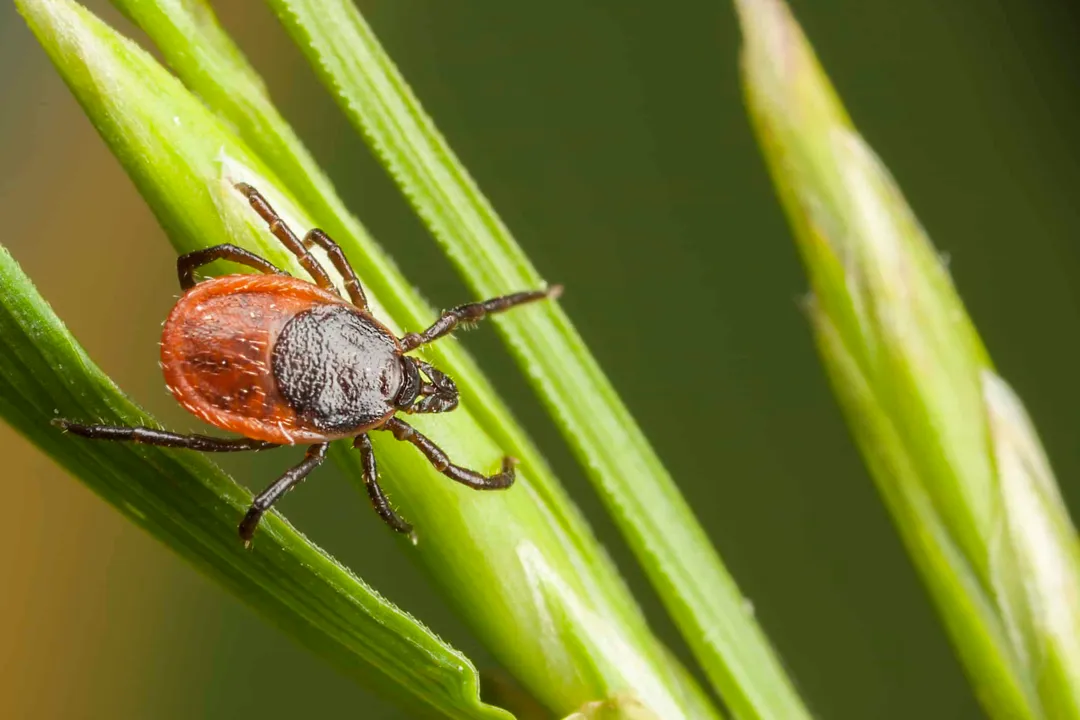
The classification of *Ixodes pacificus* places it within the Ixodidae family, which defines it as a hard tick. This categorization is based on a critical structural component: the presence of a tough, sclerotized shield covering a significant portion of its dorsal surface. This rigid shield provides substantial physical protection to the tick's vital organs. While the female's abdomen can stretch considerably due to partial coverage by this shield, the shield itself remains the defining hard outer layer characteristic of this group of ticks.
Related Questions
How many legs do the newly hatched larvae of Ixodes pacificus possess?What feature limits blood consumption in the adult male I. pacificus?What is the defining color pattern of an unfed adult female I. pacificus?Roughly what size is the nymph stage of the Western Blacklegged Tick described as?Which physical structure is absent on Ixodes genus members like I. pacificus?How much larger can the adult female I. pacificus become after engorging?What clothing color is recommended for easily spotting dark-colored I. pacificus ticks?How does the coloration of the Western female differ from the Eastern I. scapularis female?Which host type is frequently associated with feeding I. pacificus nymphs in the Pacific states?As a hard tick belonging to Ixodidae, what protects the back of Ixodes pacificus?