Western Rat Snake Physical Characteristics
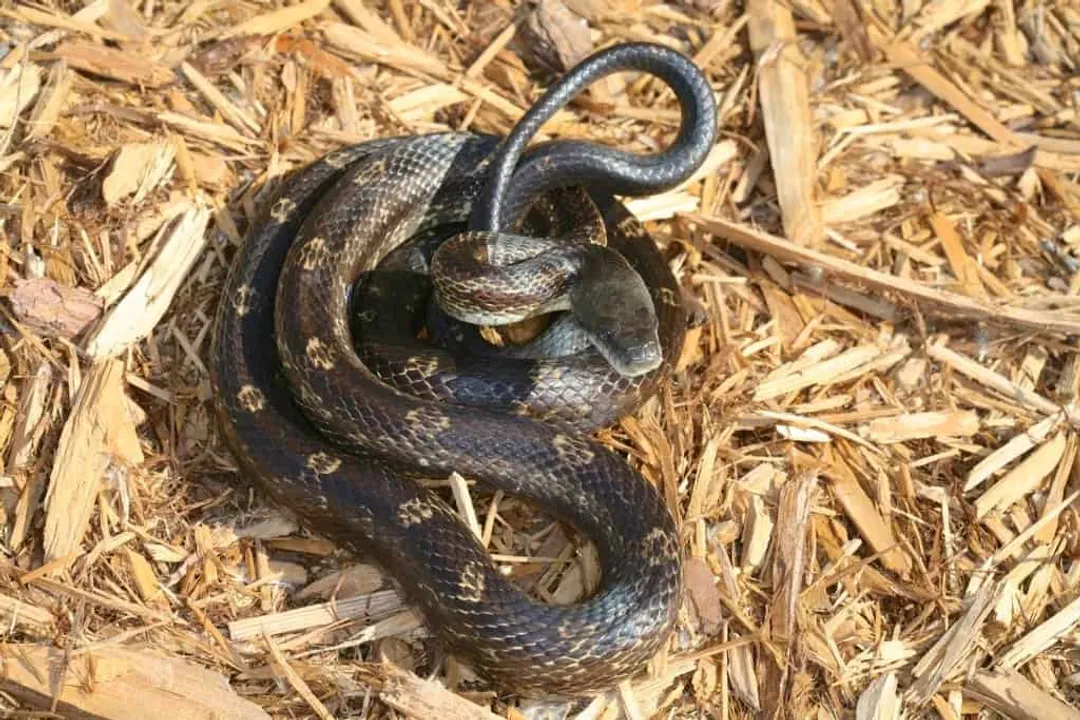
The physical description of the Western Rat Snake, Pantherophis obsoletus, presents a fascinating study in reptilian maturation, particularly because the appearance of a young specimen can be strikingly different from that of a mature adult. This snake is a common sight across its range, often recognized more by its size and climbing prowess than by its initial coloration. [4][7] When assessing this species, observers must be prepared for significant physical variance based primarily on age. [3]
# Body Dimensions
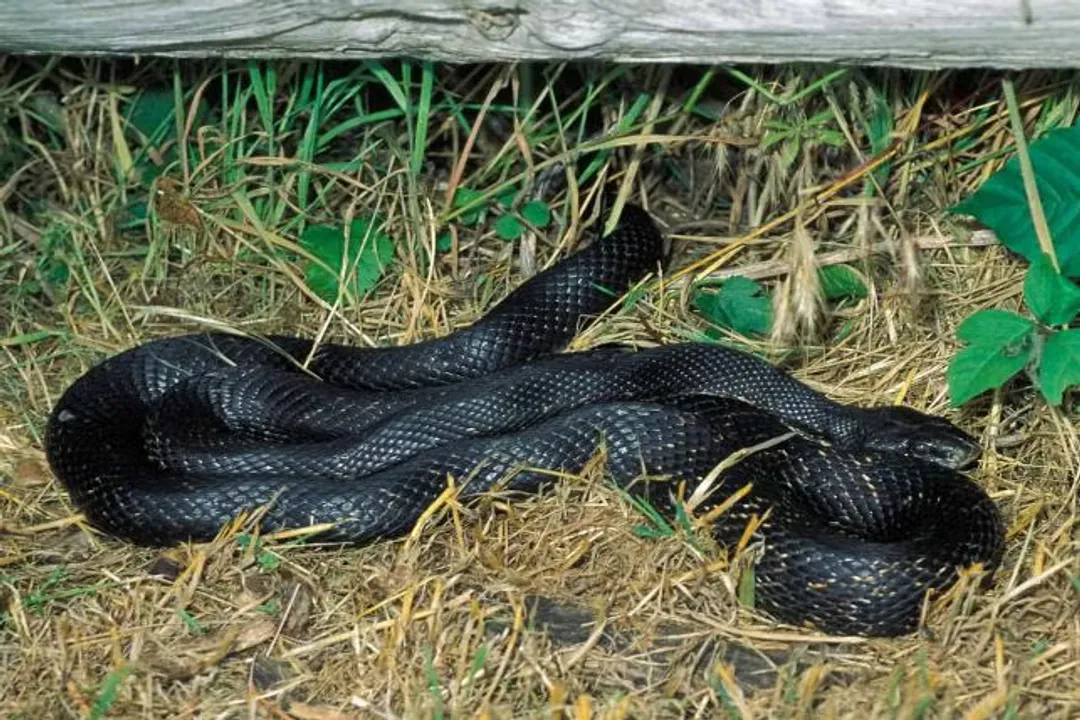
Western Rat Snakes are among the longer, more slender snakes found in North America. [4] While they are generally not considered exceptionally heavy-bodied, their length certainly commands attention. [5] Adult males and females typically reach total lengths between 3 to 5 feet. [1] However, exceptional individuals have been documented reaching impressive lengths of 6 feet or even slightly more. [1][4] The actual length of a snake is dependent on its environment, local food availability, and overall health. [6] Younger snakes are naturally much smaller, beginning life around 10 to 14 inches long after hatching. [3]
The build tends to be relatively slender for its length, allowing it to navigate complex environments efficiently. [5] While the overall impression might be one of length, it is the scale structure that truly defines the texture of the skin.
# Scale Texture
A consistent physical trait across most of its life stages involves the texture of the scales along the back. The dorsal scales—those running down the center of the snake's back—are distinctly keeled. [1][3][8] Keeled means that each scale possesses a slight ridge running down its center, giving the snake a somewhat rough or matte appearance rather than a shiny, smooth finish. [3][8] In contrast, the scales on the snake’s belly, the ventral scales, are typically smooth. [8] This mix of rough dorsal scales and smooth ventral scales is a key identification marker when handling or closely observing the animal.
When comparing the Western Rat Snake to other local colubrids, such as some of the smooth-scaled kingsnakes or the smooth scales of many juvenile North American snakes, the prominent keeling on the dorsal surface of P. obsoletus becomes a reliable distinguishing feature, even when patterns might be confusing. [6] This roughness assists in grip, which is particularly useful given their affinity for climbing. [5]
# Color Shift Maturation
Perhaps the most confusing physical characteristic for identification is the dramatic shift in pattern and color as the snake grows from a juvenile into an adult. [3][4] This transformation is gradual but profound. [3]
# Juvenile Appearance
Hatchlings and younger juveniles are rarely the solid black color associated with adults. [4] Instead, they typically sport a background color that can range from light gray, yellowish-tan, or olive to brownish hues. [3][4] Overlaid upon this lighter background are prominent, dark blotches that run down the length of the body. [3][4] These blotches are usually dark brown or black and are often bordered by a lighter color, creating a visually striking, patterned look. [3] The head itself usually retains some patterning, often featuring dark stripes extending from the eyes. [3] This highly patterned phase provides excellent camouflage among leaf litter and patchy ground cover. [4]
# Adult Coloration
As the snake matures, the background color darkens significantly, and the blotches tend to fuse together. [3] In many older individuals across its range, the snake develops a nearly uniform, solid dark coloration, often appearing jet black, especially in the eastern parts of its historical distribution. [4][7] However, solid black is not universal; some adults may retain a dark gray or brownish cast. [1][7] Even in dark adults, observers might occasionally note faint remnants of the original blotches, appearing as slightly lighter, dusky shadows along the flanks. [3]
The extent of melanism—the development of dark pigmentation—can vary geographically. In regions where the species is frequently found climbing trees or basking on dark bark, an almost entirely black adult phenotype is highly advantageous for camouflage against shadow and rough surfaces. [1] Conversely, individuals in more open, sun-drenched habitats might retain a lighter, more mottled gray or even slightly yellowish appearance into adulthood, though this is less common than the solid dark form. [6] Observing the transition from pattern to plain dark color is a reliable indicator that you are observing a Western Rat Snake undergoing normal maturation. [3]
# Head and Facial Features
The head of the Western Rat Snake is generally distinct from its neck, although this distinction can become slightly less pronounced in very large, thick-bodied adults. [5] The snout shape is typically rounded, and they possess relatively large eyes. [4] While the head itself often shares the overall dark coloration of the body in adults, juveniles retain facial markings that can aid in identification. [3]
For many colubrids, the presence or absence of loreal pits (heat-sensing pits) is key, but as an ophidian in the family Colubridae, the Western Rat Snake lacks these pits, confirming it is non-venomous. [4][7] Furthermore, their pupils are round, another important distinction when comparing them to pit vipers, which possess elliptical or vertical pupils. [4] Though not strictly a physical characteristic of the snake's body, the absence of these venomous traits is a vital part of understanding the species' physical presentation.
# Size Range Comparison
To put the physical dimensions into perspective, consider the following typical measurements derived from multiple field observations across the range where this species is documented:
| Life Stage | Typical Total Length Range | Scale Texture (Dorsal) | Primary Color/Pattern |
|---|---|---|---|
| Hatchling | 10 – 14 inches | Keeled | Light background with distinct dark blotches [3][4] |
| Juvenile | Up to 3 feet | Keeled | Blotched pattern becomes more defined/contrasting [3] |
| Adult | 3 – 5 feet (Max 6+ ft) | Keeled | Often solid black or very dark gray; pattern fades [1][7] |
This table highlights the reliance on scale texture as a fixed trait, while coloration and pattern show extreme plasticity with age. [3]
# Distinguishing Features Summary
When trying to confirm the identity of a Western Rat Snake based purely on physical attributes, a few key characteristics stand out, requiring the observer to look past simple color:
- Keeled Dorsal Scales: This is the most consistent tactile identifier. [3]
- Absence of Pits and Round Pupils: Confirms non-venomous status visually. [4]
- Pattern Progression: If patterned, the pattern should be dark blotches on a lighter ground color, typical of a juvenile or subadult. [3]
- Body Proportion: A relatively long, muscular build that supports significant climbing capabilities. [5]
It is interesting to consider the functional purpose behind this extreme visual metamorphosis. The juvenile pattern, rich in high-contrast markings, mimics dappled sunlight filtering through dense underbrush, offering protection while the snake is small and vulnerable on the forest floor. [4] Once the snake attains a size where ground predators pose less threat, or where vertical habitats (like tree trunks and barns) become primary foraging areas, shifting to a nearly uniform dark color allows it to blend into the shadows and bark texture more effectively, reducing visibility to aerial predators or prey alike. [1] This change represents an adaptation not just to size, but to the preferred microhabitat associated with that size. [5]
The head shape, being distinct from the neck, combined with the large eyes, contributes to the snake’s alert appearance, often noted by observers who witness its agility both on the ground and high in vegetation. [5] While there is some variation in specific scale counts or minute head scale arrangements, for the general reader, focusing on the size, the keeled back, and the age-dependent color shift provides the most accurate way to recognize Pantherophis obsoletus. [1][7]
Related Questions
#Citations
Western Ratsnake | Missouri Department of Conservation
Western Rat Snake (A Guide to Snakes of Southeast Texas)
Western Rat Snake (Pantherophis obsoletus)
Western Rat Snake - Pantherophis obsoletus - A-Z Animals
Western ratsnake - oksnakes.org
Western Rat Snake (Pantherophis obsoletus) - HerpNet.net
Pantherophis obsoletus - Wikipedia
Pantherophis obsoletus, the Western Rat Snake - floridensis
Western Rat Snake - Facts, Diet, Habitat & Pictures on Animalia.bio