Western Gorilla Physical Characteristics
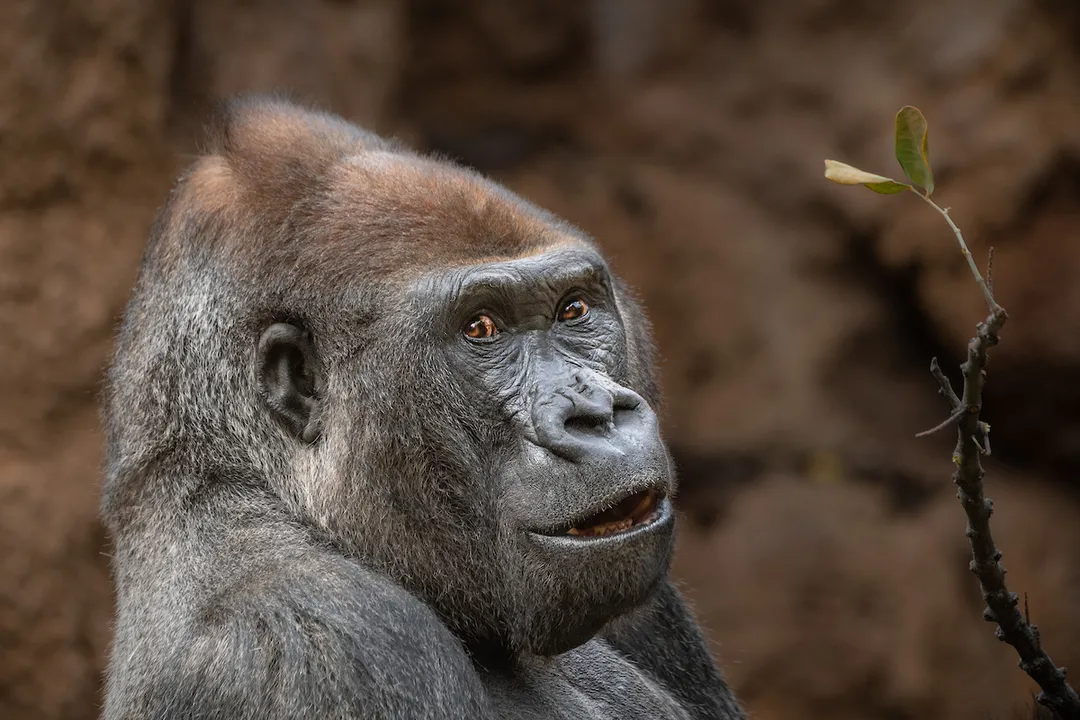
The Western Gorilla, scientifically known as Gorilla gorilla, represents one of the two recognized species of gorillas, distinct from their Eastern cousins (Gorilla beringei). [6] Within this species, the Western Lowland Gorilla (G. g. gorilla) is the most frequently encountered subspecies in the wild and within conservation efforts today. [1][4][6] These magnificent apes possess a unique suite of physical traits that define them, from their impressive stature to the characteristic markings of their mature males. [2] Understanding these characteristics gives us a clearer picture of the animal that navigates the forests of Central and West Africa. [4]
# Size Stature
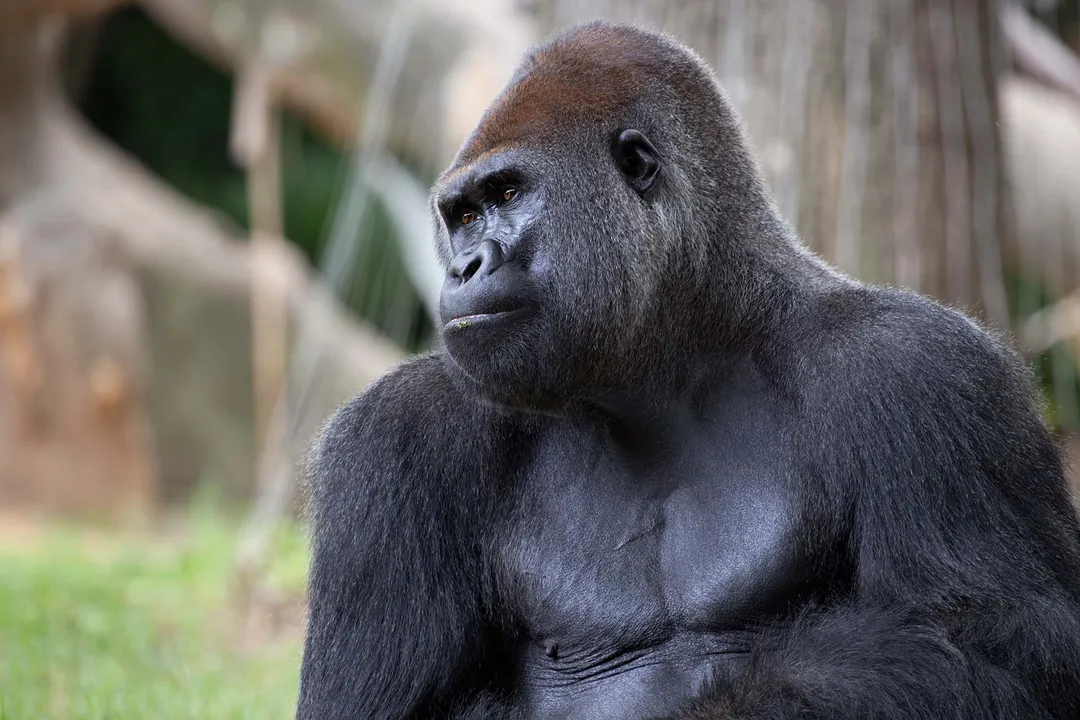
Western Gorillas exhibit significant sexual dimorphism, meaning males are substantially larger and heavier than females. [6] An adult male, often referred to as a silverback once mature, can stand between 5.5 and 5.9 feet tall when standing upright, though they generally move quadrupedally. [1][2][5] In terms of mass, these large males typically weigh in the range of 300 to 400 pounds, which translates to about 136 to 181 kilograms. [1][2][5] By contrast, the females are considerably smaller, often weighing around half as much as the males. [6] Females generally weigh between 150 and 200 pounds (68 to 91 kg) and reach a height of approximately 4.9 feet (1.5 meters). [2][5] When compared generally to Eastern Gorillas, Western Gorillas tend to be slightly smaller in overall size. [6] It is fascinating to consider that even the largest silverback, while tall, spends most of its time on all fours, suggesting the vertical measurement is more a measure of potential height than habitual posture. [2]
# Fur Coloration
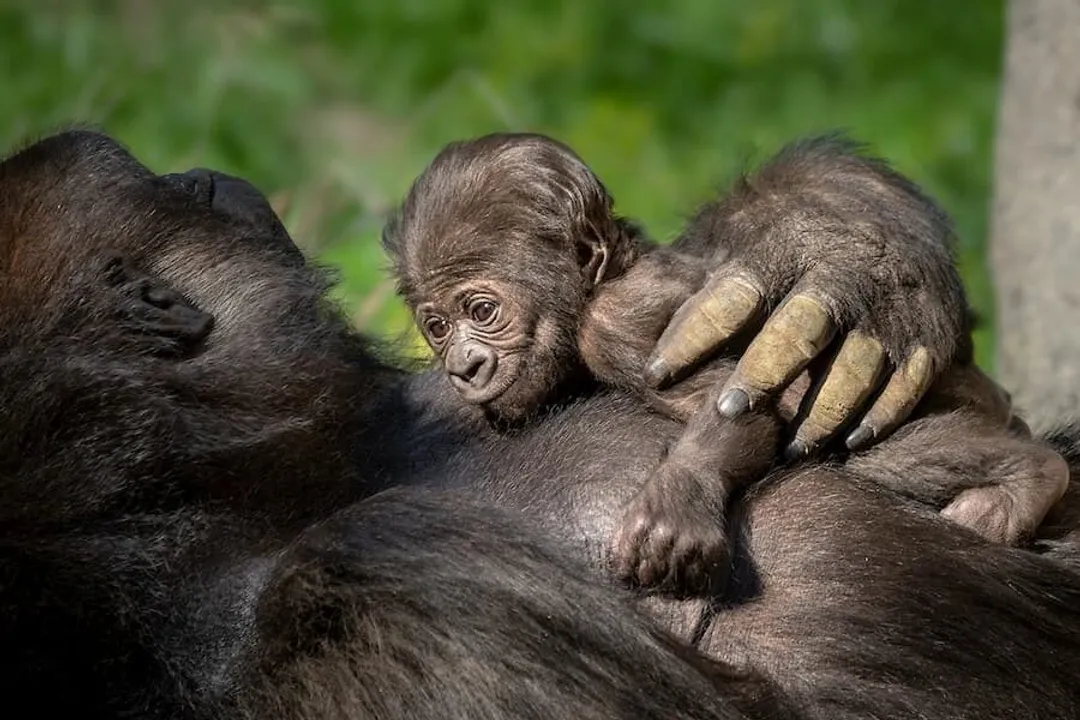
The coat of the Western Gorilla is predominantly black. [6] However, this description gains nuance when we look at the maturation process, particularly in males. [1] As males reach full maturity and take on the role of group leader, they develop a distinct saddle of silver or gray hair that spreads across their backs. [2][5] This prominent feature is the source of the term "silverback," clearly signaling their status as dominant adults within the social structure. [1][2][5] Females generally lack this distinct silvering, maintaining their darker fur throughout their lives. [6] Furthermore, some reports note that older males might display a reddish-brown crown atop their heads, adding another subtle layer of variation to their overall dark coloration. [6]
# Body Proportions
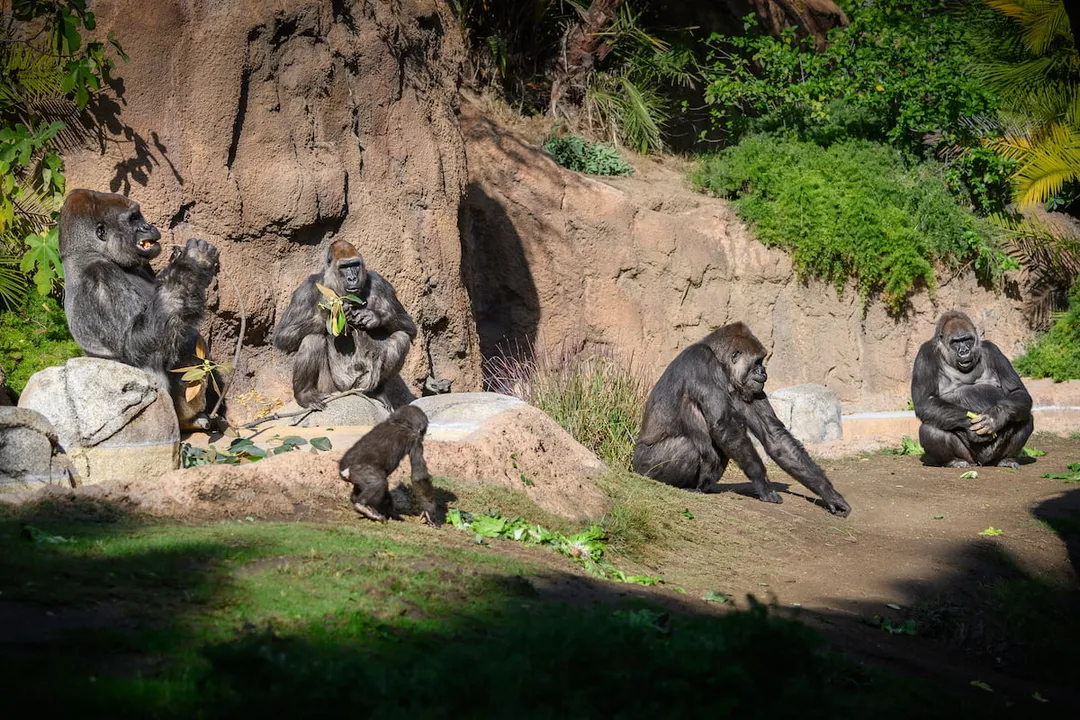
Like other great apes, the body structure of the Western Gorilla reflects a life spent moving through dense forest environments. [2] A notable characteristic is the length of their arms relative to their legs; their arms are noticeably longer than their lower limbs. [2][6] This adaptation supports their primary method of terrestrial movement. [2] They also possess a very broad chest, indicative of the sheer muscle mass required to support their substantial weight. [6] Physically, they share general primate features such as small ears and prominent brow ridges above their eyes. [2] Their nostrils are also described as being large features of their facial structure. [2]
# Locomotion Style
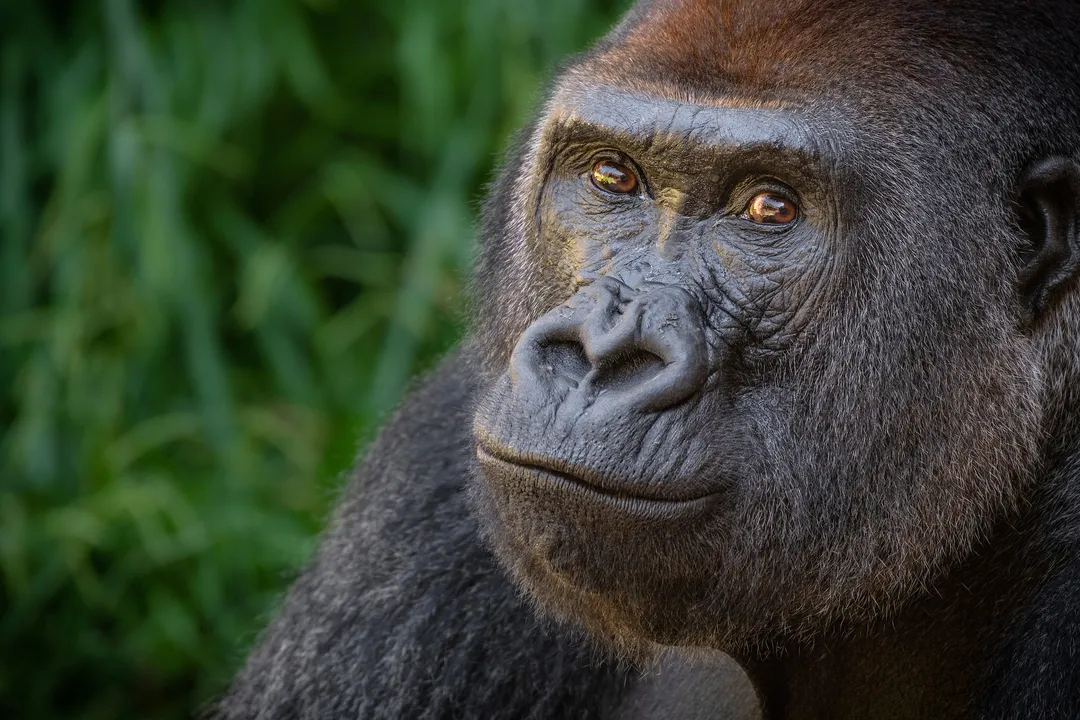
The standard mode of getting around for Western Gorillas is knuckle-walking. [2][6] This form of quadrupedal locomotion involves supporting their upper body weight on the knuckles of their hands rather than the palms. [2] This specialized walking style is essential for navigating the forest floor efficiently while keeping their powerful arms available for support and occasional climbing. [6] The structure of their hands and feet is perfectly suited for this kind of ground-based movement, differentiating them from more arboreal primates. [2]
# Subspecies Context
While we often speak of the Western Gorilla generally, it is important to acknowledge the two recognized subspecies, as physical variations can occur across geographic lines, though specific comparative data on subtle physical differences between the two subspecies is often harder to generalize across all sources. [6] The Western Lowland Gorilla (G. g. gorilla) is the one most commonly referenced in general descriptions. [1][6] The second subspecies is the Cross River Gorilla (G. g. diehli). [6] Although both fall under the Gorilla gorilla umbrella, conservation status and specific habitat distribution separate them significantly. [6] It’s worth noting that while the Lowland subspecies is considered Endangered, the Cross River subspecies faces even more immediate threats, even though their core physical characteristics remain within the species' description. [4] If you picture a gorilla from a documentary, it is very likely the Lowland subspecies you are observing. [1]
| Feature | Adult Male (Silverback) | Adult Female |
|---|---|---|
| Approximate Height (Erect) | 5.5 – 5.9 ft (1.7 – 1.8 m) | ~4.9 ft (1.5 m) |
| Approximate Weight | 300 – 400 lbs (136 – 181 kg) | 150 – 200 lbs (68 – 91 kg) |
| Back Hair | Silver/Gray Saddle Patch | Dark/Black |
| General Build | Massive, Broad Chest | Significantly Smaller (Approx. half male size) |
| [1][2][5][6] |
The sheer weight difference between the sexes—with males being up to twice the mass of females—is a critical factor shaping group dynamics. This disparity likely necessitates the male's powerful musculature, not just for display, but for physical tasks like clearing dense undergrowth or asserting dominance during feeding competition, even though their main travel method is knuckle-walking. [2][6] A silverback's enormous chest, mentioned in source materials, isn't just for show; it houses the massive lung capacity and muscle groups required to maintain his imposing physical presence and defend his group across the often-challenging terrain of their lowland habitats. [6]
Another interesting physical observation relates to the apparent disproportion in limb length. The fact that their arms are longer than their legs, while common among knuckle-walkers, means that their center of gravity is positioned further forward when they are upright, which makes the knuckles-forward posture not just a tradition, but a necessity for balancing that substantial upper body mass effectively on the forest floor. [2] This anatomical constraint dictates their daily physical engagements with the environment, contrasting sharply with the adaptations seen in purely bipedal primates.
The inclusion of the Western Gorilla in general factsheets often centers on the Lowland subspecies due to their relative abundance in captivity and monitoring efforts. [1][4] This means that the physical descriptions widely circulated—the height, the weight, the overall appearance—are overwhelmingly derived from observing G. g. gorilla, even when the discussion pertains to the broader Gorilla gorilla species. [6]
Related Questions
#Citations
Western lowland gorilla - National Zoo
Physical Characteristics - Western Lowland Gorilla ... - LibGuides
Gorilla gorilla (western gorilla) | INFORMATION - Animal Diversity Web
Western Lowland Gorilla | World Wildlife Fund
Western Lowland Gorilla Facts and Information - Seaworld.org
Western gorilla - Wikipedia
Western Lowland Gorilla - Zoo Atlanta
Western Lowland Gorilla - Philadelphia Zoo
Western Lowland Gorilla - Los Angeles Zoo and Botanical Gardens