How does the coloration of the Western female differ from the Eastern I. scapularis female?
Answer
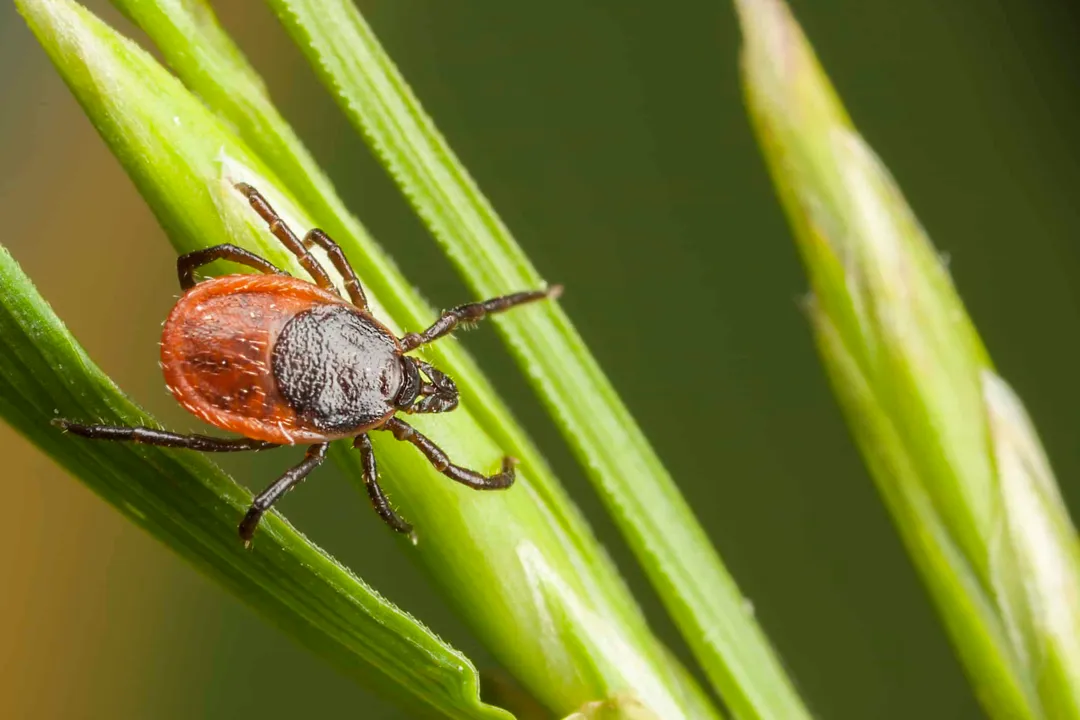
Western female has a distinct orange abdomen adjacent to a darker scutum
When comparing the morphology of the Western Blacklegged Tick (*I. pacificus*) female to its eastern relative (*I. scapularis*), subtle but important color differences exist, assuming the tick is unfed. The Western female displays a specific pattern featuring a brown-black scutum that contrasts sharply with a pronounced orange abdomen. In contrast, the Eastern counterpart’s adult female is generally characterized by being brown to reddish-orange throughout the body, lacking the distinct two-toned pattern seen in the Western species where the abdomen color is so noticeably different from the scutum.
Related Questions
How many legs do the newly hatched larvae of Ixodes pacificus possess?What feature limits blood consumption in the adult male I. pacificus?What is the defining color pattern of an unfed adult female I. pacificus?Roughly what size is the nymph stage of the Western Blacklegged Tick described as?Which physical structure is absent on Ixodes genus members like I. pacificus?How much larger can the adult female I. pacificus become after engorging?What clothing color is recommended for easily spotting dark-colored I. pacificus ticks?How does the coloration of the Western female differ from the Eastern I. scapularis female?Which host type is frequently associated with feeding I. pacificus nymphs in the Pacific states?As a hard tick belonging to Ixodidae, what protects the back of Ixodes pacificus?